Sightlines · a mini film course
One Day, One Room, One Held Breath
Every film in this set makes the same wager: that the tightest constraints produce the highest pressure. Each unfolds across a single day — often close to real time — and most lock themselves into a single space: a war room, a control booth, a bar, a taxi, an ambulance, a trading floor after midnight. But the deeper through-line is what these films do inside those walls. Again and again, they're about the gap between seeing and doing — people who can perceive a crisis with total clarity and find that action is blocked, delayed, distant, or useless. Watch how each one handles that gap: some jam the machinery of the thriller and make you feel the jam; one or two floor the accelerator in defiance. Together they form a spectrum, from pure velocity to pure witness.
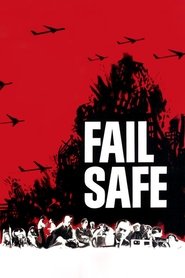
Fail Safe (1964)
Sidney Lumet shoots his nuclear-crisis drama in flat, institutional black-and-white light — no shadows, no atmosphere, nothing to hide behind — and lets the camera watch faces under procedural stress rather than chase spectacle. He'd built this grammar in Twelve Angry Men: an ensemble sealed in rooms, close-ups doing the work of action scenes. Notice how the film gives you a full-throttle thriller — bombers, generals, the President on the telephone — but no villain anywhere. The system itself is the antagonist, and the more elaborate the safeguard, the more elaborate the failure. It's the tragic version of a story Kubrick told as farce the same year.
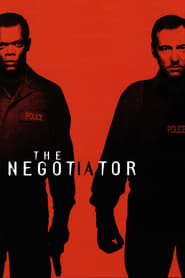
The Negotiator (1998)
Two professionals on a phone line, neither able to see the other's face — the whole film hangs on what one expert listener can read in another's tone, hesitation, and habits. Russell Carpenter's polished camerawork does quiet heavy lifting to keep a static siege visually alive. Watch for the film's real subject: a man whose career is built on earning strangers' trust discovering his own institution has turned on him, forced to stake everything on one stranger. Its ancestors are the great 1970s siege pictures — Dog Day Afternoon, The Taking of Pelham One Two Three — and it inherits their faith that a duel of voices can carry a thriller.

September 5 (2024)
A hostage film in which the hostages never appear. Fehlbaum confines us to the ABC Sports control room in Munich, 1972, and the atrocity happens a few hundred yards away — technically just down the road, yet the film makes it unreachable, present only as monitor feeds, telexes, and a broadcaster's voice. Watch the faces lit from below by screen glow: these people are seeing exactly what you're seeing, an image of the event, never the event. The film borrows the beat-by-beat choreography of the live control booth from Broadcast News and the process-as-suspense discipline of All the President's Men, and turns them toward a harder question — what it costs to transmit catastrophe live.
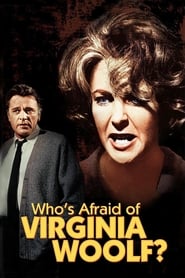
Who's Afraid of Virginia Woolf? (1966)
Haskell Wexler's Oscar-winning black-and-white camera prowls a cramped faculty house like a documentary crew embedded in a war zone — hard light, deep shadow, pushed-in close-ups. Notice how the film keeps the surface of action (drinks poured, a car driven, even a shotgun produced) while none of it changes anything; the real violence is entirely verbal, a night of "games" performed for an audience of two bewildered guests. Watch how a marriage becomes a closed room, and talk becomes the weapon, the shield, and the bond all at once.
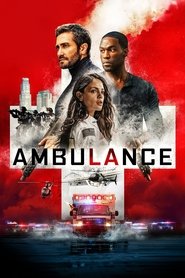
Ambulance (2022)
The defiant outlier: where the other films block action, Michael Bay refuses to let it stop for a single frame. Everything is answered with a maneuver — the robbery fails, the brothers drive. Watch for his signature invention here: FPV racing drones used not as a stunt shot but as the film's whole nervous system, a camera that drops off skyscrapers and threads between moving cars, behaving less like a witness than like a body hurled into the chase. And notice the sardonic engine under the spectacle: the whole catastrophe is set in motion by the cost of American medical care, and it unfolds inside an ambulance.
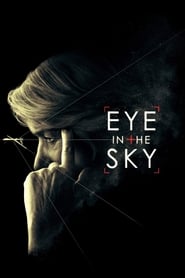
Eye in the Sky (2015)
A war movie in which nobody can pull the trigger. Hood keeps two visual worlds strictly apart — the cool, monitor-lit command rooms and the warm, dusty street where a nine-year-old girl sells bread — and the film's suspense lives in the refrain "refer up," as a lethal decision is passed sideways and upward through five rooms on three continents until responsibility dissolves. Watch how the film keeps cutting between the loaf and the reticle, collapsing the very distance the technology promises. Its DNA runs straight back to Fail Safe and 12 Angry Men: irreversible decisions litigated in real time by people in sealed rooms.
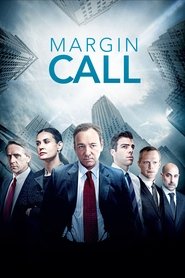
Margin Call (2011)
It opens on a pause: a young analyst, alone on an emptied trading floor after midnight, sees a chart resolve into a line that says the firm is already dead — and he just sits with it. Frank DeMarco shoots the investment bank as glass, steel, and electronic glow, using the building's reflective surfaces and vertical strata (trading floor, executive suites, elevators between) as a map of power. Watch how the film finds no villain, only a chain of people each acting rationally within their own incentives — catastrophe as an emergent property. It's 12 Angry Men's relay of persuasion transplanted to Lower Manhattan.

4 Months, 3 Weeks and 2 Days (2007)
Oleg Mutu's camera shadows Otilia at close range in long unbroken takes, handheld with only a breathing subtlety — closeness without melodrama. The paradox to watch: Otilia does almost nothing but act — borrowing, booking, lying, carrying — and none of it can undo or resolve anything. The clock runs, the form is taut as a thriller, and the trap only tightens. Save your attention for a dinner-party scene where the camera sits across the table and simply refuses to move; her held, unreleased face is the whole film. This is the crown jewel of the Romanian New Wave, built on the Dardenne brothers' at-the-shoulder grammar.
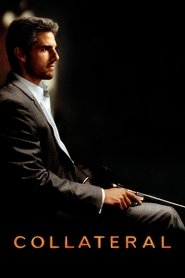
Collateral (2004)
Michael Mann shoots nocturnal Los Angeles on early digital cameras that drink in sodium light and skyglow — a flat, drained, beautiful basin where millions live in proximity without contact. The cab is the chamber; the city streams past the windows. Watch for a moment when two coyotes cross an empty boulevard and the whole thriller simply stops so that two men can look at them — nothing in the plot needs the shot, which is why it's the key. Max has told himself for twelve years that his real life is about to begin; he sees the city with perfect clarity and acts on none of it. The coyotes are his mirror.
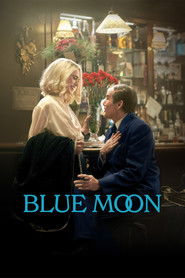
Blue Moon (2025)
One evening, one bar, one man who will not go home. On the night Oklahoma! opens — the future of the American musical arriving a few blocks away — Lorenz Hart sits at Sardi's with a drink and a monologue, and everything a movie hero would do in his position is already foreclosed. All he commands is language. Shane F. Kelly shoots warm, lamplit two-shots and patient singles that privilege the listening face; watch how Linklater, veteran of Tape and Before Sunset, builds an entire drama from talk in real time — a music film about songwriting with almost no music performed, and all the more aching for it.
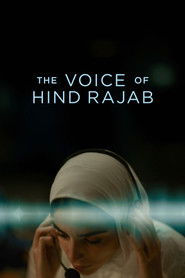
The Voice of Hind Rajab (2025)
The camera never leaves the Red Crescent operations room; the besieged car in Gaza, where a six-year-old girl's voice comes up through a phone line, is never shown. Watch what Ben Hania asks faces to do: a dispatcher in a headset, a trembling green waveform on a screen — trained, competent people who can hear everything and reach nothing, every impulse to act running into walls of coordination and permission. Ben Hania has long worked the seam between authentic record and restaging, and here that discipline becomes the film's moral core: witness as its own unbearable form of drama.
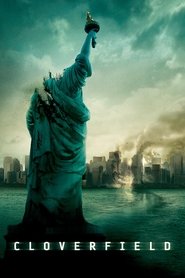
Cloverfield (2008)
A giant-monster movie with the hero's-eye view amputated. Reeves gives us the city-leveling catastrophe of the kaiju tradition, but entirely through a consumer camcorder held — badly — by an amateur named Hud, who lowers the lens at the worst moments and catches the creature only in half-second glimpses before a whip-pan tears it away. Watch how the form obeys the fiction of the tape: automatic exposure hunting, lost subjects, only the sounds the camera would hear. When a monument lies in the street as inexplicable junk at sidewalk scale, we get not a hero's reaction but a recording of one — history as something that happens to you while you film it.
Watch these together and the constraint stops looking like a gimmick and starts looking like an argument. One room, one day, one crisis: strip a story down that far and what's left is the human face under pressure — reading a voice on a phone, holding still at a dinner table, lit blue by a monitor showing something it cannot change. You'll start noticing where each film puts its camera when action becomes impossible: does it chase, or does it watch? Bay's plummeting drone and Mungiu's motionless dinner shot are opposite answers to the same question. And you'll notice how often the villain isn't a person at all but a system — a failsafe, a chain of command, an incentive structure, a broadcast apparatus — which may be why these films, spanning sixty years, feel like one long conversation about the same held breath.