Sightlines · a mini film course
The Room That Watches Back: Eleven Films Where Space Closes In and the Camera Refuses to Blink
Every film in this set traps its people somewhere — a war room, a sand pit, a summer house, a prison, a courtroom, a villa, a family home — and then does something quietly radical: it stops rescuing them. These are chamber films, most of them shot in black and white, and nearly all of them arrive at the same discovery from different directions: when characters can no longer act their way out of a situation, the film has to find something else to do with its time. What it finds is looking. The camera watches rather than chases. Faces are held past the point of expression. Time is allowed to stretch until it becomes the subject itself. Watch these eleven together and you'll see a whole secret history of cinema — the moment when the deed stopped mattering and the watching began.
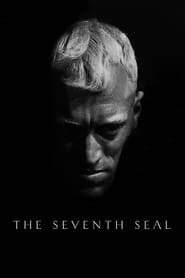
The Seventh Seal (1957)
Notice how still the famous chess game is — a knight and a white-faced figure on a grey beach, pieces shifting, nothing deciding. Gunnar Fischer shoots faces against overexposed skies and deep shadow, borrowing the high-contrast look of silent Expressionism, so that the medieval landscape presses down on the figures inside it. Watch for a man who perceives everything around him — plague, penitents, terror — and keeps searching for one gesture that will count. The film's power lives in that gap between seeing and doing.

Wild Strawberries (1957)
The opening dream hands you the film's whole method: a clock with no hands, a pocket watch with a blank face. Time here isn't a schedule to act against — it's an element the old professor stands inside and looks at. Watch how Fischer subtly shifts the light between the present-day car journey and the memory sequences, giving each layer of time its own texture, and how the film lets its protagonist wander through his own past as an observer, a ghost at his own life. The influence runs straight back to Sjöström's The Phantom Carriage — and Sjöström himself is in the lead role, a casting choice that folds film history into the film.
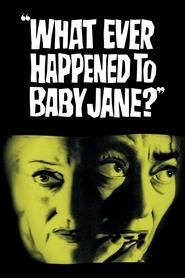
What Ever Happened to Baby Jane? (1962)
Ernest Haller, who once lit Bette Davis to glamour in her Warners heyday, photographs her here in pitiless flat frontal light — the crew itself enacts the film's theme of stars confronting their own pasts. Watch the mirror scenes: past and present pressed into a single face, the child star and the aging woman trapped in the same skin. The black-and-white is a deliberate choice in 1962, welding the sisters to a past they can't leave. This is the founding film of a whole cycle, and you can feel it inventing its genre as it goes.
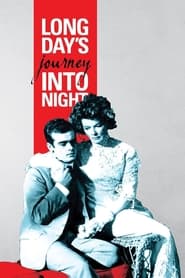
Long Day's Journey Into Night (1962)
Watch how the room shrinks without a wall ever moving. Lumet and cinematographer Boris Kaufman planned a progressive lens strategy — longer and longer focal lengths as day curdles into fog-bound night — so the air between family members flattens until they seem pressed onto the same suffocating plane. Almost everything here is known before breakfast; nothing can be fixed by doing. So the film becomes a study of listening faces, monologue after monologue, with the fog off the Sound rolling in as the past does.
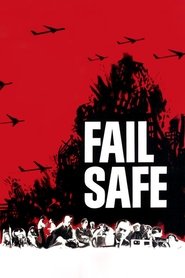
Fail Safe (1964)
Everything here is built like a thriller — generals, bombers, a President on a telephone, a ticking clock — but watch what's missing: there is no villain. The system itself is the antagonist, and the more elaborate the safeguard, the more elaborate the failure. Gerald Hirschfeld shoots the bunkers and war rooms in flat, high-key institutional light, refusing all atmosphere, so that nothing distracts from faces under procedural stress. Lumet carries over the chamber-pressure grammar of 12 Angry Men — an ensemble locked in rooms, watched at close range — and lets the dread come from restraint.
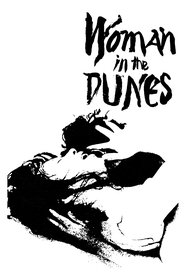
Woman in the Dunes (1964)
Hiroshi Segawa's camera treats sand as skin — grains pooling on a sleeping body, lit so hard you can count them, until you can't tell geology from flesh. A man falls into a pit and the film becomes a slow weathering rather than a story. Watch how every confident action he attempts feeds back into the trap, and how the film's real drama shifts from escape to endurance. This is landscape as psychological cage, radicalized: the dunes don't just surround the characters, they act.
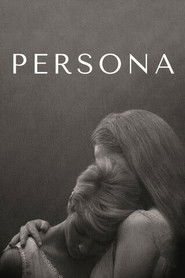
Persona (1966)
Sven Nykvist strips away expressionist lighting for a severe naturalism, and the film's real landscape becomes two faces, often filling the entire frame. Watch how long Bergman holds them — past expression, until you stop reading a face for information and start reading it like weather. One woman talks; one woman watches and will not speak; and the film asks what speech does to someone who won't reply. The lineage runs from Dreyer's Joan of Arc, where the close-up first became a place to live rather than a punctuation mark.

Salò, or the 120 Days of Sodom (1976)
Approach with care — this is the most demanding film here — but watch its most unnerving choice: the cool, even, deliberately undramatic light of Tonino Delli Colli, framing horror like an official document. A rationalist villa, polished floors, tasteful furniture — and beneath the decorum, pure appetite. Pasolini borrows Dante's architecture, replacing narrative arc with a graded descent through circles, and pays constant attention to watching itself: instruments of viewing, arranged distances, the connoisseur's eye. The film's coldness is its argument.
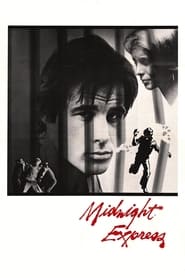
Midnight Express (1978)
Listen before you look: Giorgio Moroder's synthesizer pulse under the opening is the film's real narrator, a heartbeat that speeds, flattens, and goes feral. Michael Seresin's photography tracks the descent — bright, hot, exposed Mediterranean light at the start, darkening into expressionist pools as the film moves inside the prison, staged as a series of descending circles. Watch how the prison genre's familiar architecture (the ordeal, the sadistic overseer) gets pulled downward into something rawer: a cinema of compulsion, of a world sliding toward exhaustion.
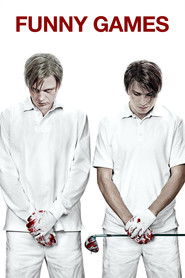
Funny Games (1997)
Jürgen Jürges shoots a home-invasion thriller with everything the genre needs surgically removed: long static takes, frontal symmetrical framing, even undramatic light, violence kept offscreen. The most extraordinary shot simply holds — on a living room, on aftermath, far past comfort, refusing the cut that would release you. Watch what that refusal does to you: the film's real subject is your own appetite for what thrillers usually deliver. Every convention of the siege film is present and then denied.
Primal Fear (1996) & Funny Games (2008)
A closing double bill about performance and complicity. In Primal Fear, watch Edward Norton's face in the holding cell — Michael Chapman's camera adds nothing, just holds long enough for one person to become another with no cut to hide the seam, inside the one genre (the courtroom drama) built to establish what's true. In Haneke's 2008 Funny Games — a near shot-for-shot English-language translation of his own film — watch how casting becomes a weapon: recognizable stars, a holiday house, golf clubs in the corner, every familiar signal of the genre loaded and then interrogated. Haneke made it in the middle of the American torture-horror cycle, aiming his mirror directly at the audience that cycle had trained.
Why watch these together? Because they teach each other. Bergman's held faces prepare you for Haneke's held rooms; Lumet's shrinking lenses in the Tyrone house echo the tightening pit of the dunes; the villain-less machinery of Fail Safe rhymes with the reasonless captivities of Teshigahara and Buñuel's heirs. Across four decades and five national cinemas, these films keep making the same wager: that confinement sharpens attention, that a camera which refuses to blink can show you more than one that chases, and that the most suspenseful thing in cinema is not what happens next — it's being made to keep looking. Give them your patience. They will teach you a new way to watch.