Sightlines · a mini film course
The Whole Room at Once: Ensembles, Drifters, and the Camera That Watches
Here is a set of films bound by a shared conviction: that a group of people — a porn crew, a sales office, a ballroom full of dancers, a suburban kitchen crowded with construction workers — can be filmed as one living thing. Every film here is an ensemble piece in some sense, and every one of them slows down, stretches out, or refuses to cut in ways that let you feel people existing together rather than watching a plot process them. The lineage is real and traceable: Cassavetes' handheld intimacy feeds the New Hollywood of Lucas and Pollack, Altman's mosaic method flows into Paul Thomas Anderson, and Tarantino shuffles the deck entirely. Across all eleven, watch for one recurring figure: the person who sees their situation with total clarity and cannot act on it — the drifter, the dreamer, the exhausted dancer, the salesman whose pitch no longer lands. These are movies where the camera watches rather than chases, and where what a character can't do is the whole story.
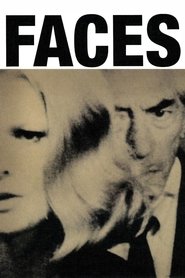
Faces (1968)
Start here, at the root of the tree. Al Ruban's handheld camera presses a foot from people's teeth and stays — catching pores, sweat, and the tiny muscular betrayals of people laughing too hard at jokes that aren't funny. Watch how the laughter never lands anywhere; it curdles, and the film holds on it past comfort. Cassavetes invented a way to photograph the gap between what a face performs and what it feels, and everything else in this program borrows from it.
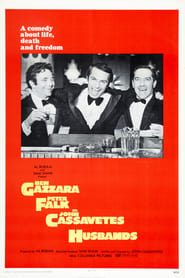
Husbands (1970)
Cassavetes hardens the Faces method into something rougher: long lenses hunting for faces, catching them off-balance, half-cut by the frame. Watch how three grieving men fill every silence with clowning, drinking, and bullying — feeling ordered up on command because the real feeling has no shape they can use. The famous bar-singing scene is the key: an audition for an emotion nobody in the room can reach.
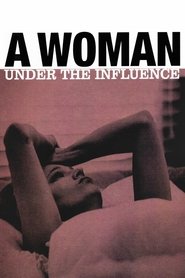
A Woman Under the Influence (1974)
Watch Gena Rowlands' hands. This film locates its drama not in events but in gesture — a woman serving spaghetti to a kitchen full of strangers, wanting to be loved and unsure how much warmth a Tuesday morning is allowed to hold. The handheld, long-lens camera keeps you at conversational distance, so you feel the temperature of a room change before anyone speaks. Nothing "happens," and everything does.
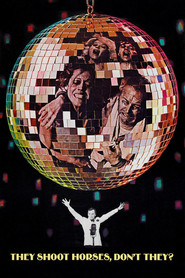
They Shoot Horses, Don't They? (1969)
One seaside ballroom, a Depression-era dance marathon, and a camera that refuses the safe seat in the bleachers — Philip Lathrop puts it on the floor, circling and weaving among the couples so you share their dizziness and fatigue. Watch how the widescreen frame crowds with propped-up bodies while the emcee's relentless cheer ("Yowza, yowza, yowza") sells exhaustion as entertainment. Space becomes a trap, and lasting replaces acting.

American Graffiti (1973)
Haskell Wexler's neon-lit naturalism — saturated reds, ambers, chrome reflections, faces caught in passing headlights — makes one night of cruising feel both vivid and already lost. Watch the shape of the thing: the strip is a loop you drive to be seen, not to arrive, and Lucas makes that loop the structure of the film. Notice too the wall-to-wall radio, pop songs doing the emotional work dialogue won't.
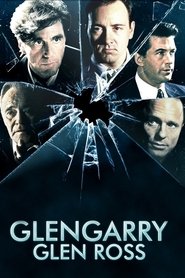
Glengarry Glen Ross (1992)
A chamber piece: one office, one restaurant, rain-streaked blacks and cold fluorescent pallor. Watch Jack Lemmon work a phone — the practiced warmth holding for a beat, then the eyes hunting for a door that isn't there. Mamet's dialogue is verbal blood-sport in the Sweet Smell of Success tradition, and the film trusts its ensemble to carry the confinement rather than "opening up" the play. Salesmen are pure action made human; watch what happens when the action stops landing.
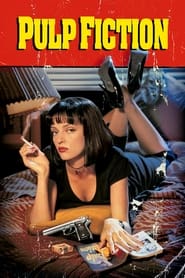
Pulp Fiction (1994)
The famous move: Tarantino takes the one thing movies always promised to keep straight — the order of before and after — and shuffles it into chapters you enter like rooms. Watch how easily you accept it, and watch the counterintuitive restraint underneath: long takes, slowly drifting frames, medium shots that let conversations about foot massages and fast food breathe at full length between eruptions of violence. The chapter structure descends from Kubrick's The Killing and Godard's Bande à part; the ritual patience of the hitmen from Melville.
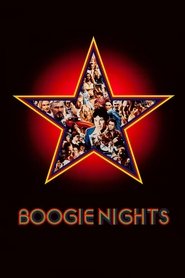
Boogie Nights (1997)
Watch the opening shot: the camera drops off a neon marquee in Reseda, glides through a club door, and introduces the entire cast in a single unbroken take — handed from character to character like a guest who knows everybody, finally settling on a seventeen-year-old busboy. That shot is the film's whole philosophy: these people are a single organism, a chosen family, and Anderson and cinematographer Robert Elswit's roving Steadicam refuses to cut them apart. The debt to Goodfellas' Copacabana plunge and Nashville's mosaic is proudly worn.
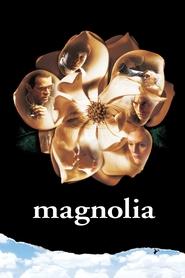
Magnolia (1999)
Anderson at maximum ambition: a multi-strand San Fernando Valley ensemble, restless Steadicam threading corridors, whip pans, anamorphic widescreen. Watch how the prologue — three "true" coincidences narrated like statistics — trains you to read the film as a web of connections rather than a chain of causes. Then watch the corners of the frame: the film plants recurring numbers and signs, quietly asking whether these lives are meant or merely adjacent, and making you do the work of suspecting design.
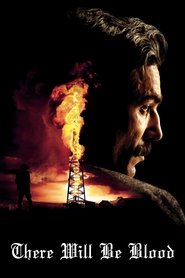
There Will Be Blood (2007)
The same director, the same cinematographer, and a total reversal of method: where Boogie Nights glides, this watches with stern patience. The opening is roughly fifteen minutes of nearly wordless cinema — a man prospecting alone, breaking his leg, hauling himself across rock — with no conventional score. You learn him the way you learn an animal: by watching what he does to survive. Watch for the deep-focus staging inherited from Citizen Kane, figures arranged across the depth of the frame so power is visible without a cut.
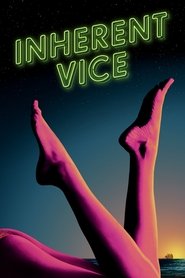
Inherent Vice (2014)
The Chandler detective template turned inside out: a private eye who perceives everything and acts on almost nothing, carried through his own case, baked and bewildered. Watch Elswit shoot through doorways, windows, and smoke, keeping Doc's face at the center of a plot that swells past anything one head can hold — the point, inherited from Altman's The Long Goodbye, being that mood and milieu outlast comprehension. Watch for the little note-to-self gestures; they're the film in miniature.
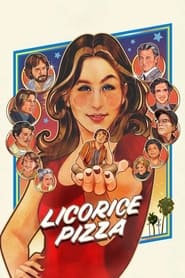
Licorice Pizza (2021)
Anderson closes the loop back to American Graffiti: California kids, episodic drift, a night-and-day structure that accumulates rather than resolves. Watch the running — the film keeps putting a long lens on people sprinting toward each other so the space compresses and the distance seems to refuse to close. There's no goal, no objective being pursued; the characters tumble sideways through the Valley, and the film's buoyancy comes precisely from letting time stretch instead of driving toward a payoff.
Why watch these together? Because you'll see a technique become a tradition. Cassavetes' close, patient, actor-hunting camera gives the New Hollywood permission to let people drift; Lucas and Pollack build whole films out of circling and enduring; Anderson inherits both the Altman mosaic and the Cassavetes proximity and spends a career braiding them — gliding through crowds in Boogie Nights, standing still in There Will Be Blood, going hazy in Inherent Vice, running in place in Licorice Pizza. Watched in a row, the films teach you to notice things plot-driven cinema hides: how long a shot holds, whether the camera chases or waits, how a room full of people can be filmed as one body, and how much drama lives in the moment when someone sees their situation perfectly clearly — and can do nothing about it. That's not a failure of these movies. It's their subject.