Sightlines · a mini film course
Watching Men Watch: The Crime Film as a Study in Looking
Here's a secret about this watchlist: it's not really about crime. Across four decades — from Times Square in 1971 to Harlem in 2007, from Sicilian tenements to Brooklyn housing projects — these eleven films keep circling the same obsession: what it means to look, to be looked at, and to carry yourself in a world where being seen can save you or destroy you. Some of these movies follow men whose survival depends on invisibility. Others follow men who can see everything with terrible clarity and can do almost nothing about it. Nearly all of them slow the camera down — it watches rather than chases — and ask you, the viewer, to do the same. Watch how a coat, a walk, a glass of milk, or a held close-up can carry more meaning than a page of dialogue. That's the course.
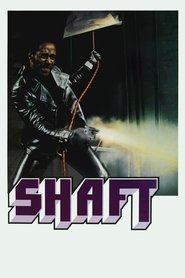
Shaft (1971)
Start here, with the walk. Gordon Parks — a Life magazine photographer before he was a filmmaker — opens by following John Shaft up out of the subway into real Times Square crowds and traffic, Isaac Hayes's wah-wah guitar carrying him into the frame before he speaks. Watch how Parks frames him: centered, planted in doorways, shot from slightly below so the city sits under his eyeline. The posture itself is the argument — a Black man moving through Harlem, midtown, and the Village with unbothered command, answering to no one. The bearing tells you everything before the plot does.
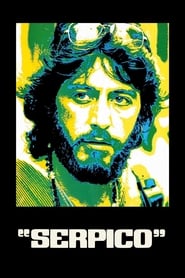
Serpico (1973)
Lumet opens at the destination — a wounded man in the back of a speeding car — and then rewinds, so you spend the film watching how rather than what. Notice the deliberately unglamorous look: available light, grey-and-amber working-class interiors, a camera that accompanies Al Pacino rather than elevating him. This is a cop movie that quietly removes the cop movie's engine: Frank sees the corruption with total clarity, and the more he sees, the less his seeing can change. Watch what integrity costs, refusal by refusal.
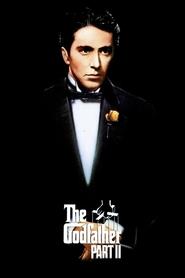
The Godfather Part II (1974)
Coppola braids two eras — young Vito's rise and Michael's reign — and Gordon Willis lights them as two different worlds: harsh Mediterranean daylight and warm tenement amber against deepening shadow and enclosure. Watch how the film uses waiting: its boldest moments aren't acts but endurances, the camera holding on a face after the action is over. Borrowed from Visconti is the trick of framing powerful men small against grand architecture — notice how often Michael is dwarfed by the rooms he owns.
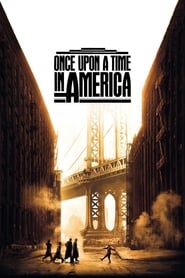
Once Upon a Time in America (1984)
Leone's four-hour memory palace, made by an Italian dreaming America from Cinecittà. Watch the light: the childhood and Prohibition passages glow honeyed and amber — sunlight through dust — while other eras cool and grey. Morricone's score was written before filming, and scenes were staged to the music, so let the dilated, operatic pacing wash over you rather than fighting it. And watch De Niro's stillness: this is a film where a man mostly looks — through a peephole, across a banquet table — and the looking is the drama.
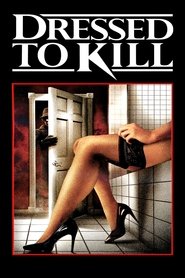
Dressed to Kill (1980)
De Palma is the great engineer of the implicated glance. The centerpiece to savor: a nearly wordless museum sequence, minutes long, built entirely out of looking — who sees whom, who knows they're seen, what the camera knows that nobody inside the frame does. Notice the gliding camera, the mirrors that double and fragment figures, and the split-diopter shots keeping near and far in simultaneous sharp focus. De Palma makes watching pleasurable, then makes you aware of your own pleasure. That discomfort is the design.
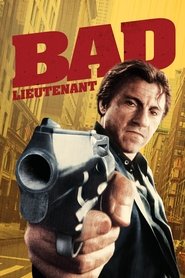
Bad Lieutenant (1992)
Ferrara's camera does something rare: it refuses to cut when cutting would be a mercy. Ken Kelsch shoots in grimy, handheld naturalism, favoring the long observational hold over tidy shot/reverse-shot coverage — so when Harvey Keitel's unnamed Lieutenant spirals, you watch compulsion run its full course in real time. This is the dirty-cop movie stripped of its thriller engine and rebuilt as a raw Catholic question about sin and grace. Cheapness and exposure are treated here as expressive virtues, not limitations.
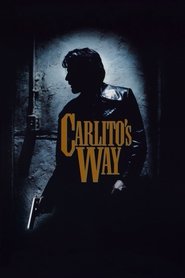
Carlito's Way (1993)
De Palma again, in his most classical register — and watch what the opening does: the film shows you its ending first, so you spend two hours not wondering what happens but watching a man understand how. The camera is never neutral — it tilts to suggest instability, tracks in to isolate Pacino, pulls back to show him hemmed in by space. New York here isn't a backdrop but a force field: the tenements, the amber bars, the old obligations all press in on a man sincerely trying to become someone else.
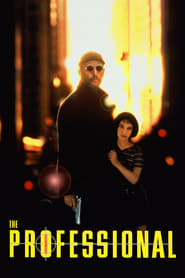
Léon: The Professional (1994)
Before Léon kills anyone in front of us, we watch him tend things: a glass of milk, sit-ups in the dark, a houseplant he calls his only friend "because it has no roots — like me." Besson inherits the silent-professional grammar of Melville's Le Samouraï — procedure as character — and then keeps switching it off, letting Thierry Arbogast's warm ambers and golds hold on Jean Reno's immobile face. Watch the alternation: clockwork action, then stillness, and the whole film living in the gap between them.
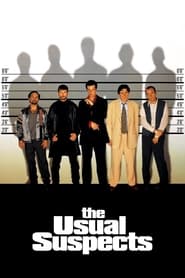
The Usual Suspects (1995)
A man sits in a bureaucratic white-box interrogation room and narrates; the film shows you what he describes, fully lit, fully scored, fully convincing. That's the game: cinema's oldest contract says the image is evidence, and Singer keeps the contract's form while quietly asking whether you should trust it. Watch how the flashbacks carry every visual marker of memory — shadows, tightening faces, John Ottman's hushed theme — and ask yourself, as you go, what you're actually accepting and why. Watch faces. Watch bodies. Watch how identity is performed.
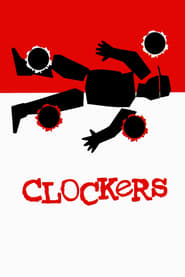
Clockers (1995)
Spike Lee opens on crime-scene photographs — flat, evidentiary, uncomfortable — and loads his whole argument into your discomfort before the plot exists. Malik Hassan Sayeed's debut cinematography rejects the sun-baked naturalism of the era's hood films for heat-struck, over-saturated color and lurid contrast: this is a film about how images of Black suffering circulate, made to prevent you from consuming them casually. Watch the detective story build its machinery — clues, witnesses, confessions — and notice how the film questions whether that machinery delivers truth or just a story someone needs to be true.
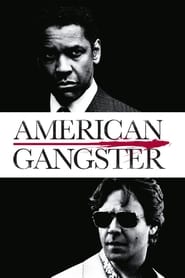
American Gangster (2007)
Watch the wardrobe. Frank Lucas dresses like an accountant — conservative, mid-priced, forgettable — because invisibility is the first principle of his business; the film's turning point is a coat, and the camera finds the men watching him before he registers he's been seen. Harris Savides builds the whole film on a chromatic opposition: the amber warmth of Lucas's world against the institutional grey of Russell Crowe's honest-cop strand (which descends straight from Serpico — you'll recognize the lineage). Notice too the language: this gangster film speaks pure entrepreneurship — branding, market share, product quality — and means it analytically, not satirically.
Why watch these together? Because they teach each other. Serpico's grey institutional exhaustion resurfaces thirty-four years later in American Gangster's cop strand. Shaft's sovereign walk through New York is the posture American Gangster's Frank Lucas studies and revises. De Palma's museum sequence and Singer's interrogation room are two answers to the same question — how much can a film make you complicit in looking? — and Lee's opening slideshow is a third, angrier one. Leone and Coppola both braid time so that past and present comment on each other; Ferrara and Besson both discover that the most powerful thing a crime film can do is stop — hold on a face, refuse the cut, let time stretch. By the end you'll have developed a specific muscle: the ability to read a whole social world in a coat, a limp, a glass of milk, a man climbing subway stairs. That's not trivia. That's how movies think.