Sightlines · a mini film course
When Soldiers Can Only Watch: The War Film Turned Inside Out
Most war movies run on a simple engine: someone sees a problem, acts, and the world changes. The twelve films on your list are fascinating because, in one way or another, they tamper with that engine — slowing it, jamming it, or running it at full power so you can hear exactly what it does. Again and again, these films give us people who see everything and can do almost nothing: a boy in a bunk listening to sonar crawl along the hull, a sniper frozen for hours behind a scope, a child watching adults decide her world, a photographer whose only available action is the click of a shutter. Watching them together, you start to notice that the real drama isn't the battle — it's the gap between seeing and doing, and what each filmmaker builds inside that gap.
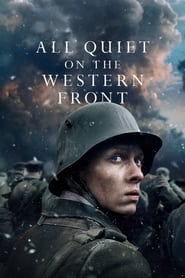
All Quiet on the Western Front (2022)
Watch the opening minutes closely: a uniform is stripped from one body, laundered, stitched, folded, and reissued — filmed with no music and the flat rhythm of a factory inventory. Before anyone speaks a word of disillusionment, the film has shown you the whole war as a machine that consumes bodies and recycles the packaging. Notice too the cross-cutting between comfortable rooms where decisions are made and the mud where they're carried out — a structure Berger borrows directly from Kubrick's Paths of Glory. This is also the first German-language adaptation of Remarque's novel, correcting a decades-long absence.
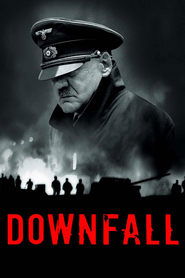
Downfall (2004)
The key image is a hand moving across a map, commanding armies that may no longer exist. The film's tension lives in that gap between the confident ritual of the map room and the street above. Klausmann's handheld camera stays punishingly close to faces in narrow corridors and shallow focus — not the jittery agitation of combat footage, but a slow tightening, a technique Hirschbiegel developed in the institutional pressure-cooker of Das Experiment. Watch how a closed system keeps performing its procedures even as reality stops answering.
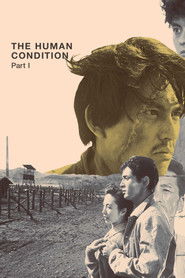
The Human Condition I: No Greater Love (1959)
Miyajima's widescreen photography is the star here: fence lines, watchtowers, and rows of laborers organize the enormous frame into grids of confinement, while the Manchurian plain stretches so wide that a single man looks like a comma in a long, indifferent sentence. The film hands its idealist protagonist exactly what he wants — a chance to prove humane treatment works — and then lets you watch the sheer scale of the frame press down on him. Notice how social pressure is composed into the image, foreground and background at once, in the tradition of Mizoguchi and Toland.
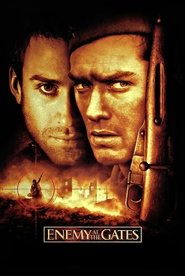
Enemy at the Gates (2001)
A war film built on stillness: two men lying motionless for hours, each waiting for the other's first betraying movement. The opening river-crossing gives you the visceral, handheld chaos the post-Saving Private Ryan cycle demanded — steel blues, ash grays, warm flares of fire — but the film's real engine is the duel of patience afterward. Watch how often Fraisse's camera gives you a man whose entire existence has narrowed to an eye at a lens: a watcher with a rifle, seeing as a form of action.
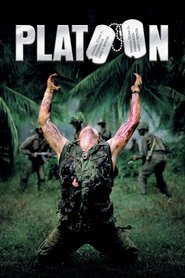
Platoon (1986)
The famous image — a man in a helicopter, rising above the canopy, seeing everything and able to change nothing — tells you what kind of war film this is. Stone plants Richardson's camera down among the infantry, with partial sightlines and geography that dissolves into flares and muzzle-flash, so that you're as disoriented as the grunts. Stone called his narrator "a partly passive vessel": watch how the film keeps the machinery of missions and objectives while quietly cutting the wire between what its hero sees and what he can do.
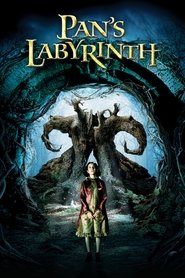
Pan's Labyrinth (2006)
Hold onto the image of a girl drawing a door on a blank wall with chalk — an exit visible only to her. Del Toro made two films at once, a brutal 1944 war picture and a fairy tale, and refused to rank them: the deep trick is that the film never tells you which is true, and both readings are built to bear full weight. Watch Navarro's Oscar-winning color logic — cold steel blues for the captain's world, warm ambers for the fantasy spaces — and notice how disobedience, not bravery, is the virtue the film keeps testing.
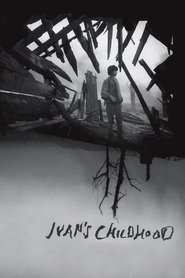
Ivan's Childhood (1962)
Tarkovsky welds two films together with the hardest cuts he can make: the boy's luminous dreams — birch trees, water, light through leaves — slammed against deep-focus night photography of missions through German lines, with no dissolve and no consoling music at the seam. Watch how Yusov presses the child's small figure against vast, threatening skies, and how the dreams explain nothing about the plot — they exist as a stolen life, held up beside the life that replaced it. This is Soviet Thaw cinema at its most formally daring.
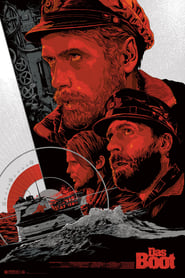
Das Boot (1981)
The defining scene isn't an attack — it's a sound: a sonar ping crawling along the hull while every man freezes, and stillness becomes the only available move. Vacano's camera hurls itself through the boat's real cramped dimensions in available-feeling light — sickly instrument-green, amber bunk-gloom — so the submarine reads as a lived-in machine, not a set. Notice how the film codified nearly everything later submarine movies inherit: the silent running, the dive past crush depth, the pinging hull as pure dread.
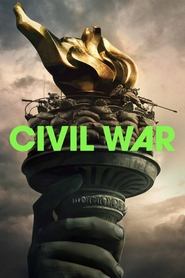
Civil War (2024)
Watch your own body the first time it happens: mid-firefight, motion stops, one perfectly composed still fills the screen, a shutter clicks, and motion resumes — as if nothing had been taken out of it. Something had. Garland builds the whole film on that device, turning the war movie into a question about witnessing: is documenting suffering moral seriousness or a sublimated thrill? Hardy's camera behaves like a fifth member of the press team — handheld, searching, sometimes caught flat-footed by violence at the edge of the frame.
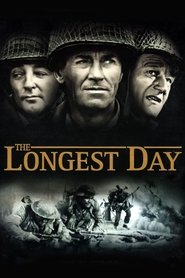
The Longest Day (1962)
Here is the classical engine running at full, magnificent power: a global situation bearing down — the Atlantic Wall, the locked weather, two massed armies — answered by one colossal deed. The Oscar-winning black-and-white CinemaScope deliberately echoes combat photojournalism, filling deep compositions with masses of men and machines. But keep one figure in mind: the paratrooper snagged on a church steeple, bells hammering his ears, watching the battle below without being able to join it. He's the exception that shows you what everything around him is.
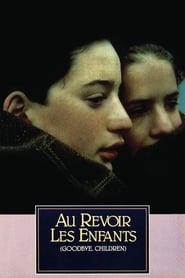
Au Revoir les Enfants (1987)
The entire film is built to deliver a single glance lasting less than a second — and to make sure it can accomplish nothing. Malle, dramatizing a morning from his own childhood, could never say what that glance cost, and the film honors that uncertainty. Berta's cold, tonally narrow palette of winter grays and browns matches the film's discipline: watch how the young lead performs almost entirely through watchfulness rather than action, the camera holding at the observational distance Malle inherits from The 400 Blows.
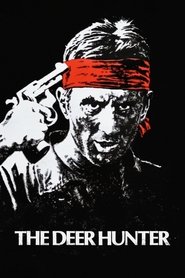
The Deer Hunter (1978)
Open on the deer, the sights, the creed compressed into two words: "one shot." A man who knows exactly what he wants, acting on the world and mastering it — and the film spends three hours taking that image apart. Watch Zsigmond's rhythm of scale: the hunter as a speck against monumental ranges, the burnished golden interiors of bar and wedding hall, the alternation between vast space and the thin human line moving through it. It's the frontier idiom of The Searchers transposed to Pennsylvania steel country, and it makes ritual — the hunt, the wedding, the Mass — the real subject.
Watched together, these films become a conversation about what a person can actually do inside history's machinery. The Longest Day and the opening of The Deer Hunter show you the confident classical grammar — see, act, transform — at its purest, so that everything else on the list registers as deliberate sabotage: Das Boot replacing action with listening, Downfall with ritual disconnected from reality, Ivan's Childhood and Pan's Labyrinth with dream and fairy tale as the only exits, Civil War and Au Revoir les Enfants with the act of witnessing itself, in all its moral weight. Watch for the moments when the camera stops chasing and starts watching, when space closes like a trap, when time is allowed to stretch until you feel it. That's where these films live — and where, over twelve viewings, you'll start seeing the war film's whole hidden architecture.