Sightlines · a mini film course
Watching the War Machine: Twelve Films About Seeing More Than You Can Do
There's a moment in nearly every one of these films where someone stops acting and simply looks — a man frozen while sonar pings crawl along a hull, a boy suspended from a church steeple over a battle he can't join, a photographer clicking the shutter while violence rages on. That's the through-line of this set. These are all war films, but they're really films about the gap between witnessing and doing: what happens when soldiers, scouts, journalists, and children see everything and can change almost nothing. Watch how each film builds that gap — through sound, through confinement, through the camera's decision to watch rather than chase — and a hidden conversation across eighty years of cinema opens up.

Rome, Open City (1945)
Start here, because this is where something breaks — productively — in how movies work. Rossellini shot in the actual rubble of occupied Rome, with off-center framings and figures caught mid-gesture, so the film feels discovered rather than staged. Watch for how the story refuses the tidy rules you've absorbed from Hollywood: events land without warning, unearned by setup, exactly the way catastrophe lands in life. Notice too the unlikely alliance at the film's spine — a Communist and a priest — and how the film treats their solidarity without sentimentality.
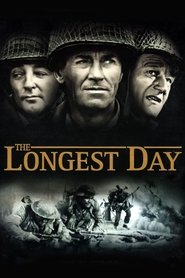
The Longest Day (1962)
Here's the older grammar at full, magnificent power: a global situation (the Atlantic Wall, the weather over the Channel, two massed armies) pressing down until one colossal answering deed is forced out. Watch the black-and-white CinemaScope frames, deliberately styled after combat photojournalism, packed deep with men and machines — war as collective effort, no single hero. Then keep an eye out for the paratrooper snagged on a church steeple, watching the battle below without being able to touch it. He's a small crack in the film's confident machinery, and he points toward everything else on this list.
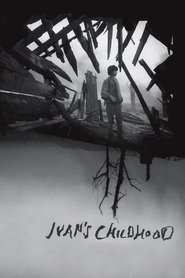
Ivan's Childhood (1962)
Tarkovsky welds two films together with the hardest cuts he can make: the war scenes — deep-focus night photography, a small boy pressed against vast threatening skies, reeds and mist and river crossings — and the dreams, shot in radiant, sunlit contrast. Watch for how he refuses to soften the seam between them: no dissolves, no consoling music, just a jolt from birch light to ruined windmill. The dreams explain nothing about the plot; that's the point. They're what the war has stolen, held up next to what it left.
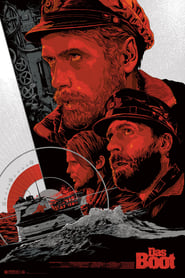
Das Boot (1981)
The great confinement thriller. Petersen's camera squeezes through a real, cramped submarine set lit by instrument-panel green and bunk-lamp amber, so the boat feels lived-in rather than lit. But the film's real innovation is what it does with stillness: watch the silent-running sequences, where the only available move is no move at all — engines dead, faces tilted up toward a sound, a dripping valve suddenly deafening. Sound becomes the whole drama. It codified conventions every submarine film since has borrowed.
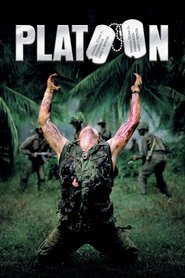
Platoon (1986)
Stone plants the camera in the mud with the infantry — handheld, partial sightlines, geography dissolving into flares and muzzle-flash — so you know only what a grunt knows. Watch for how the film keeps the machinery of a combat picture (patrols, objectives, a perimeter) while quietly making its narrator a watcher more than an agent; Stone himself called Taylor "a partly passive vessel." Notice too the two sergeants framed as rival fathers — the film's true battlefield is moral inheritance.

Full Metal Jacket (1987)
Kubrick splits the film into two visual worlds and lets you feel the split. In boot camp: symmetry, geometric drilling formations, long lenses flattening recruits into interchangeable ranks — an architecture of erased identity. Watch especially the close-ups, faces where something is visibly gathering without yet discharging — Vincent D'Onofrio gained seventy pounds so the unraveling would carry physical weight. And listen for Kubrick's signature trick, inherited from his own earlier films: cheerful pop music laid ironically against images of institutional violence.
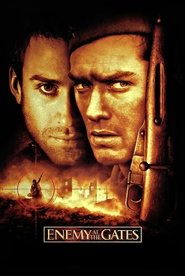
Enemy at the Gates (2001)
A war film built almost entirely out of waiting. Annaud stages a sniper duel across the frozen ruins of Stalingrad — steel blues, ash grays, punctuated by the warm flare of fire — and the engine of suspense is two men lying motionless for hours, each watching for the other's first betraying movement. Watch how often the camera gives you an eye pressed to a lens: this is a film about looking as a weapon, and about a soldier caught between two tyrannies, the enemy ahead and his own state behind. The opening river-crossing sequence is the handheld showcase.
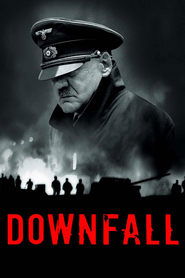
Downfall (2004)
A chamber piece in a bunker. Klausmann's camera stays close — shallow focus, narrow corridors, faces trapped in the frame — as the machinery of command grinds on in a vacuum: conferences proceed, orders issue to armies that no longer exist, and generals report phantoms in the measured tones of men reporting facts. Watch the map room: a hand moves and pins move, while the street above says otherwise. It's the most chilling study on this list of what happens when the link between deciding and doing has snapped — and nobody will say so aloud.
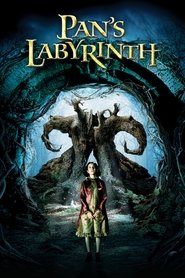
Pan's Labyrinth (2006)
Del Toro and cinematographer Guillermo Navarro build the film on a disciplined color logic — cold steel blues for the fascist captain's world, warm ambers for the fairy-tale spaces — and then refuse to tell you which world is real. Watch the chalk door: a child draws an exit onto a wall that, for everyone with power over her, is solid stone. Every magical object can be read two ways, and the film makes that undecidability load-bearing rather than a gimmick. Watch also how disobedience — a girl's, a housekeeper's, a doctor's — becomes the film's moral center in both stories at once.
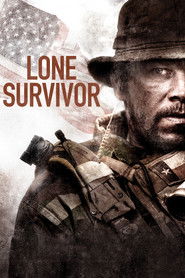
Lone Survivor (2013)
Berg keeps the camera at or below the eye line of four men on an exposed ridgeline, so your spatial knowledge shrinks to theirs. The film's signature innovation is how it films falling: bodies going off cliffs and hitting rock, the camera tumbling with them, each impact registering somewhere behind your ribs. Watch how the staging keeps the men silhouetted and pinned, options visibly narrowing — the mountain itself as antagonist. This is war organized not around strategy but around what gravity and gunfire do to bodies over one afternoon.
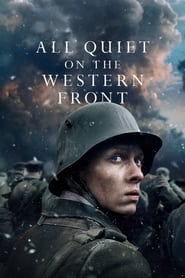
All Quiet on the Western Front (2022)
The first German-language adaptation of Remarque's novel — a historic correction, since the Nazis banned the 1930 film and disrupted its Berlin premiere. Watch the opening sequence closely: a soldier's uniform is stripped, laundered, stitched, folded, and reissued, shot with the cold rhythm of an inventory process, no music, observational cuts. Before a word of disillusionment is spoken, the film has shown you its whole thesis — a machine that consumes bodies and recycles the packaging. Watch too for the cross-cutting between comfortable rooms where decisions are made and the mud where they're paid for.
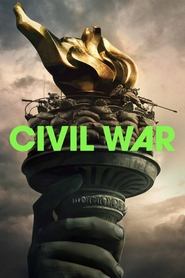
Civil War (2024)
Garland's camera behaves like a fifth member of a press team — handheld, searching, sometimes caught flat-footed by violence erupting at the frame's edge. The film's boldest device: in mid-firefight, motion stops, and a single perfectly composed still fills the screen with a shutter click. Watch your own body when it happens. The film is asking what it costs to pull one frozen, publishable image out of the living flow of events — whether witnessing is moral seriousness or a sublimated thrill — and it maps that question across two photographers, one deadened, one dawning.
Why watch these together? Because in sequence they let you feel film history bending. The old war movie promised that seeing a problem meant you could act on it — take the hill, sink the ship, win the day. Film by film, this set pries that promise apart: the camera stops chasing and starts watching; stillness and sound replace the decisive deed; space becomes a trap; time is allowed to stretch until you feel its weight. By the time you reach Garland's shutter click, you'll recognize it as the endpoint of a question Rossellini opened in the rubble of Rome: what does it mean to make an image of suffering when the image changes nothing? Watch for the watchers. They're the secret protagonists of the whole program.