Sightlines · a mini film course
The Body That Can't Act Yet: Stillness, Drive, and the Long Fuse
Here's an odd secret hiding inside this watchlist, which on paper looks like a pile of action pictures, superhero films, and genre thrillers: almost none of them are in a hurry to let their heroes do anything. Again and again, these films begin with a figure who can only watch, wait, endure, or decay — a man reading in a diner, a boy hiding in a closet, a body dissolving in a loft, a prisoner staring up at a circle of sky. The drama isn't the punch; it's the long fuse before it. Some of these films are about learning to act. Some are about being unable to. Some are about compulsion — bodies driven by appetites that skip the deciding step entirely. And a couple are about not being sure whether what you're seeing is even real. Watch them as a set and you start noticing the same question everywhere: what does the camera do with a person before the action starts?
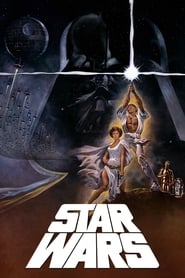
Star Wars (1977)
The origin point — and the counter-argument. Watch for the minute when the film simply stops: a young man at the edge of a homestead, twin suns setting, nothing to do but yearn while the horns swell. That single held breath of pure watching is surrounded by its opposite: a machine built entirely for decisive action, assembled from borrowed parts — Kurosawa's screen-wipes, the geometric crowd-staging of 1930s propaganda spectacle, the intercut cockpit-and-controller editing of a British war film. Notice how the photography splits into two registers, dusty warmth for the frontier and hard sterile contrast for the Empire, so you always know which world you're in before anyone speaks.
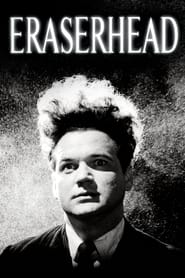
Eraserhead (1977)
The same year, the opposite pole: a film whose protagonist can only watch. Lynch and his cinematographers half-dissolve figures into shadow and give a stage inside a radiator exactly the same weight as the apartment and the factory — no signal that one is dream and one is real, because the film genuinely doesn't distinguish. Watch for how the industrial hum never stops, and how Jack Nance's stunned, enduring face becomes the whole performance. Its ancestors are silent Expressionism and the surrealists' free-associative cut, not anything else made in America in 1977.
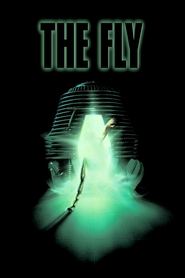
The Fly (1986)
Cronenberg confines nearly everything to one loft — lab, bedroom, eventually cell — and shoots decay with clean, clinical calm. Watch for the moment a man examines a piece of his own body the way you'd examine a slide: no scream, just curiosity. The film grafts the tragic pathos of the old Universal monsters onto 1980s practical-effects horror, and its real subject is watching a mind persist inside a failing body — the slide downward as its own kind of story, with no decisive act available to arrest it.
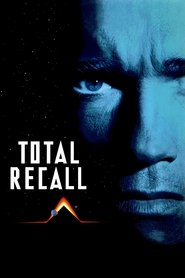
Total Recall (1990)
The film that turns "is this real?" into the engine rather than the puzzle. Verhoeven arranged the whole picture so two mutually exclusive readings stay coherent all the way down, and he never breaks the tie. Watch for the hotel-room scene with the red pill — shot so you have only what the hero has: suspicion, and nothing else. Vacano's restless handheld camera, developed in the submarine corridors of Das Boot, keeps the ground unstable under your feet; the film borrows Blade Runner's trick of using color and geography to map who holds power.
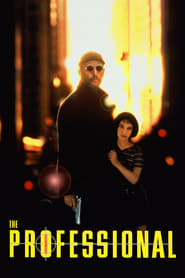
Léon: The Professional (1994)
A hit man drinks milk, does sit-ups in the dark, and waters a plant he calls his only friend. Besson keeps switching the current off: between jobs, the most efficient professional in New York becomes just a face — and Arbogast's warm amber photography lets faces dominate the frame, holding on Jean Reno's unmoving blankness behind round glasses like a single sustained musical note. Watch the film's two temperatures: gold for refuge, cooler steel for institutions and violence. The monastic ritual comes straight from Melville's lone-professional tradition; the tenderness is Besson's own addition.

28 Weeks Later (2007)
Built entirely from one act of appetite — a man running across a field, a door not held shut — played out at the scale of a civilization. Watch how Chediak shoots infection: whip-panned, strobed, fragmented into near-abstraction, so violence arrives as sensory overload rather than legible action. There's no decision to read on an infected face; there's only drive. Notice too how the controlled, almost classical pre-credits sequence — candlelit farmhouse, then panicked daylight flight — sets a standard of composure the film keeps deliberately shattering.
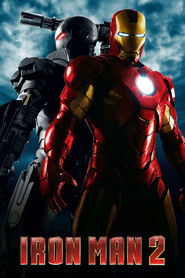
Iron Man 2 (2010)
Skip past the plot mechanics and watch the birthday party: a man performing invincibility while being quietly poisoned by the very device that keeps him alive. The film literally gives you a gauge for his decline — dark veins creeping up the neck like a rising meter. Libatique keeps the hero's world glossy and warm, reserving hard cool light for the rival's grimy workshops, so you can read the film's moral geography by temperature alone. Underneath the improvised banter is a story about a body sliding downhill in style.
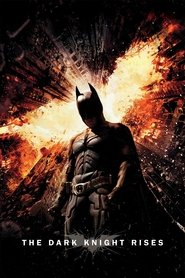
The Dark Knight Rises (2012)
The centerpiece image: a hole in the earth, a circle of sky, a broken man who can do nothing but look up at the light while others chant. For a long stretch, the hero of this enormous film cannot act at all — and the film makes that incapacity its subject. Watch how Pfister photographs the city as a real, weighty, inhabited place — rusted bridges, concrete stadiums, rivers — and how the class uprising is staged with masses of real bodies in real space, in the lineage of Metropolis's below-and-above architecture and Lean's thousands-of-extras spectacle.
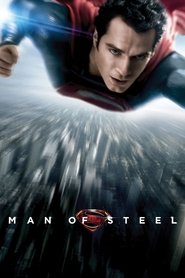
Man of Steel (2013)
The most powerful being on Earth is introduced unable to act — a boy in a closet, drowning in everything he can perceive, coaxed back by a voice through a door. Watch how much of the first half belongs to a drifter with no surname: oil rig, trawler, diner. Mokri's handheld camera breathes and drifts even in dialogue scenes, and the deliberately drained palette — overcast Kansas light, muted steels — replaces the character's traditional primary-color brightness with something heavier. The dual-father structure gives the wandering its shape.
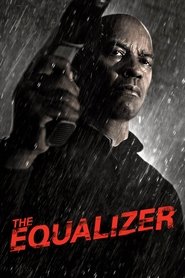
The Equalizer (2014)
The purest study of stillness on this list. For most of an hour: the same diner, the same table, a napkin folded into a clean rectangle, a book squared to the edge. Watch how often the camera finds Denzel Washington behind glass — windows, reflections, panes he won't step through — a man who perceives everything and permits himself nothing. Fiore holds static and slowly drifting compositions in the long first act, going kinetic only when the film finally throws its switch. The ritual domesticity descends from Le Samouraï; the patience is the film's signature.
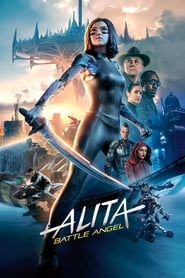
Alita: Battle Angel (2019)
Start with the eyes — built deliberately too large, a flagrant breach of the proportions every other digital-human project honors. They exist so the film can do what most blockbusters flee from: hold on a face registering pure feeling — wonder, feral curiosity — and enlarge it until you can't look anywhere else. Watch for how the tiniest involuntary flickers of Rosa Salazar's captured performance survive the transfer to a non-human face. The vertical city — elites above, laborers below — quotes Metropolis directly; the layered, polyglot streets inherit from Blade Runner.
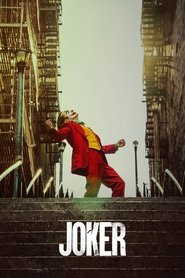
Joker (2019)
Watch the architecture of the frame across the film: it begins compressed — low ceilings, tight apartments, institutional offices — and gradually opens as its subject transforms. For a long stretch, Arthur Fleck can only absorb: the beating, the social worker who isn't listening, the talk show he watches in the dark. Then note the restroom scene after the subway — a slow dance, the body moving first and meaning trailing behind it, led by a cello score recorded before a frame was shot and handed to Phoenix to move against. The whole film sits knowingly inside the 1970s American tradition of lone men failing to fit a decaying city.
Why watch these together? Because they'll teach you to see the most under-noticed thing in genre cinema: the shape of the pause. Once you've watched The Equalizer's hour of folded napkins, you'll recognize the same held breath in Luke's twin-suns moment; once you've felt Eraserhead's protagonist who can only witness, you'll see his echo in a boy in a Kansas closet and a broken man at the bottom of a pit. You'll also start distinguishing two kinds of momentum — the clean arc of a hero who reads a situation and answers it, and the darker slide of a body driven by something it can't name, whether that's a poisoned heart, a virus in the blood, or a scientist calmly curating his own remains. These films argue with each other across four decades about what a hero is before the action starts. Watch them close together, and the argument becomes audible.