Sightlines · a mini film course
The Broken Machine of Getting Even
Every film in this set starts with the same promise — the promise nearly all thrillers make — that seeing leads to knowing, and knowing leads to doing something about it. A wrong is done; someone will act; the act will settle the account. Then, one by one, these films quietly sabotage that machinery. Some make the seeing untrustworthy: memory fails, minds fracture, the image itself stops being evidence. Others make the doing futile: the revenge is taken, the killer is caught, and nothing is restored. What binds them is a shared conviction that cameras can watch rather than chase, that time can be allowed to stretch, and that an image can hold more than the person inside it can bear to know. Watch them as a set and you'll start to see the same gears jamming, beautifully, in a dozen different ways.
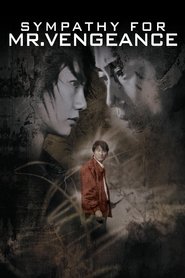
Sympathy for Mr. Vengeance (2002)
The founding document of this program's Korean strand. Notice how Park Chan-wook and cinematographer Kim Byeong-il refuse the close-up when you most want it — the camera holds wide and still, watching people from a distance, declining the usual grammar of emotional access. Pay attention to how the same open riverbank landscape keeps returning, and how its openness starts to feel like anything but freedom. This is a revenge film built from all the standard parts, engineered so that no act ever quite connects to what it's meant to fix.
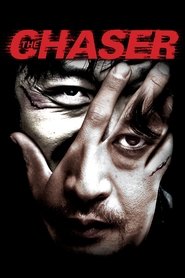
The Chaser (2008)
Na Hong-jin builds his manhunt on the steep, stepped alleys of a real Seoul neighborhood, and the foot chases work because the geography is so concrete — you always know who is above, who is below, who is cornered. The formal daring is structural: the film hands over its central discovery astonishingly early, then asks what knowing is worth when institutions can't or won't act on it. Watch how suspense survives — even intensifies — after the usual mystery is gone.
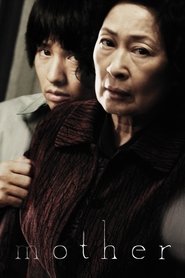
Mother (2009)
It opens with a woman dancing alone in a field of dry grass, looking straight into the lens, and Bong Joon-ho builds the entire film so you'll have to return to that image. Cinematographer Hong Kyung-pyo (who would later shoot Parasite) holds the mother at a slight formal distance even in close physical proximity — intimacy and estrangement in the same frame. Notice how a wrong-man investigation plays first as farce, and how the tone keeps shifting under your feet. The bookend structure is doing quiet, patient work; trust it.
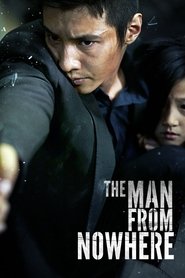
The Man from Nowhere (2010)
For most of the first act, watch a face give almost nothing back. Lee Jeong-beom pushes Won Bin's movie-star features up against the lens without flattering light, inspecting him like evidence, in the tradition of Melville's Le Samouraï — character built entirely from routine, a sparse room, and withheld dialogue. The film's celebrated slowness is not dead weight: it's the portrait of a man who watches but cannot act, and everything that follows draws its charge from that stillness. Note the palette too — nocturnal blues, concrete greys, Seoul's back streets rendered without picturesque poverty.
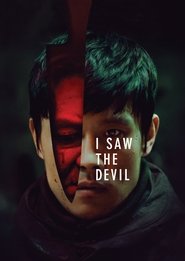
I Saw the Devil (2010)
Kim Jee-woon's most unnerving choice is legibility. Where extreme cinema usually fragments its hardest images with fast cutting, cinematographer Lee Mogae holds wide, stable, steadily tracking shots that force you to inhabit the full geography of violence — no rhythmic escape hatch. Watch how the film keeps offering the genre's single climactic confrontation and keeps deferring it, and ask yourself what all this relentless, competent action is actually accomplishing. The casting of Choi Min-sik carries its own charge if you know his earlier iconic roles.
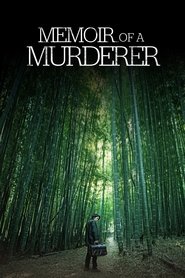
Memoir of a Murderer (2017)
The notebooks are the key object: a paper archive standing in for a failing mind. Won Shin-yun shoots his protagonist's world in dominating close-up, declining the wide establishing shots that would let you fact-check what he perceives — you're pressed inside a consciousness that can't be trusted as a witness. The question the film runs on is elegant and terrible: if a written record is all that stands between you and the dark, what happens when you can't tell whether you recorded a fact or a fear?
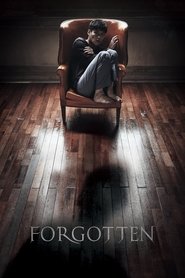
Forgotten (2017)
Watch the doorways. Chang Hang-jun composes through thresholds — window panes, stairwells, corridor bottlenecks, in the lineage of Polanski's The Tenant — until a family home becomes a space the protagonist cannot safely read. The camera stays close to his point of view without ever fully committing to it, and that sliver of distance is the whole game. It begins with a memory retained in perfect clarity that attaches to nothing verifiable, and builds outward from that gap.
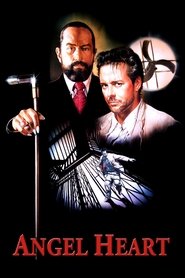
Angel Heart (1987)
Alan Parker and cinematographer Michael Seresin film everything through smoke and dust — a cold, verminous New York against a humid, amber, rotting Louisiana. Watch the ceiling fans: a slow blade chopping light into flicker at the top of almost every room, which the detective keeps not looking at and you keep looking at. This is the private-eye film crossed with occult horror, inheriting Chinatown's trap of an investigation that incriminates its investigator, seeded with near-subliminal flashes in the tradition of The Exorcist. Every door opened tightens something.
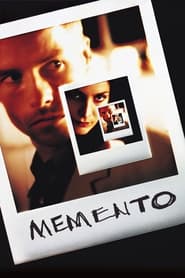
Memento (2000)
It opens on a Polaroid running in reverse — the image draining back into blankness — and that's the whole film in three seconds. Nolan's real invention is formal: the structure puts you inside the memory deficit rather than describing it from outside, so each scene drops you in with no idea how you got there, while a second black-and-white strand runs the other direction toward a hinge. Wally Pfister shoots it with deliberate restraint and clarity — a generous choice, given how much work the structure already asks of you.
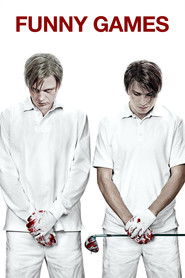
Funny Games (2008)
Haneke's remake of his own Austrian original is a film about you, the person watching. Darius Khondji, capable of lush expressionism, here pursues pure neutrality: wide, stable frames in an environment that refuses to signal danger. Watch the casting as a formal device — a star whose suffering audiences expect to see redeemed, a competent family man, a holiday house, golf clubs in the corner — and notice how the film loads every expectation the genre has taught you. Then notice how it treats those expectations. Its most famous gesture involves a television remote; you'll know it when it arrives.
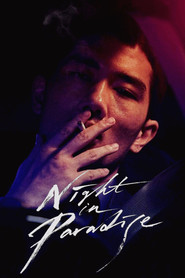
Night in Paradise (2020)
Kim Young-ho's painterly camera keeps returning to Jeju Island's volcanic coast — the sea grey, enormous, and entirely indifferent to human grief — and holds there at a contemplative distance. For a revenge thriller, this is a strange center of gravity, and the film knows it: written by the screenwriter of I Saw the Devil, it stages its violence frankly and without pleasure, refusing to let bloodshed feel like payment. Watch how the film dispatches early what most films of this type would save for last, then lingers in what's left over.
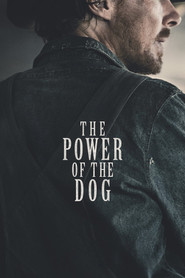
The Power of the Dog (2021)
A man looks at a mountain and sees a running dog hidden in the ridgeline that no one else can find. Hold that shot: Campion builds the entire film out of images that carry meanings legible to some characters and invisible to others — and to you, on first pass. Ari Wegner treats landscape as a psychological surface, and the performances descend from Bresson's grammar of non-expression: no demonstrative emotion, only posture and gaze from which you must infer everything. Objects sit in the frame before you know what they mean. It's a thriller that people say can only be understood backward, and that's not a trick — it's the design.
Watch these together and something cumulative happens. You'll start noticing when a camera chooses to hold still instead of cutting away, and asking what that stillness costs you as a viewer. You'll feel the difference between a film that corrects a false picture with a true one and a film that makes the very ground undecidable. You'll see the same riverbank-openness-as-trap logic pass from Park to his inheritors, the same forensic close-up used to build a man from the outside in, the same investigation that solves everything and saves nothing. These twelve films argue, from a dozen angles, that the deepest suspense isn't whether the hero will act in time — it's whether acting was ever going to be enough, and whether what you're seeing can be believed at all. That's a colder kind of thrill, and a far more durable one.