Sightlines · a mini film course
Watching Without a Safety Net: Twelve Films Where the Camera Refuses to Reassure You
Most thrillers make a quiet promise: what you see is what happened, and someone — a cop, an avenger, a detective — will act on it and set the world right. The films on this list are all, in one way or another, about what happens when that promise breaks. Some break it through memory that can't be trusted. Some break it through investigations that circle without closing. Some keep the promise ruthlessly intact just to show you what its machinery looks like running at full power. What connects them is a shared fascination with the gap between seeing and doing — heroes who watch through glass, who arrive too late, who act and find the act changes nothing. Watch how each film handles that gap: whether the camera chases, or simply waits.
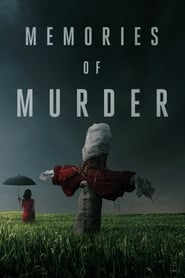
Memories of Murder (2003)
Notice how the camera treats the landscape. Kim Hyung-goo's wide, slowly drifting frames give a rice paddy the same visual weight as a human face — a quiet refusal of the usual procedural grammar, where close-ups deliver truth. Bong is in open dialogue with films like Se7en, but where that film provides a killer and a rationale, this one is structured around absence, kin to Blow-Up and The Conversation, where the evidence itself won't hold still. Watch how patience becomes the film's whole personality: the killing has already happened, and the land has already closed over it.
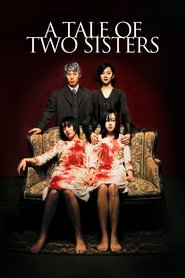
A Tale of Two Sisters (2003)
You'll remember the wallpaper. Lee Mo-gae shoots this house like a painter — warm woods, deep ambers, floral greens, symmetry framed through doorway after doorway — and the prettiness is the trap. Kim Jee-woon hides his dread not in the dark but in the well-lit corner of a lovely room, following the lineage of The Innocents and Repulsion, where a house becomes the shape of a mind. Watch how the film refuses to sort its images for you — what's happening now, what's remembered, what's feared — and trust that the refusal is the point.
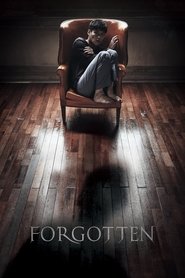
Forgotten (2017)
A domestic thriller built from thresholds: doorways, window panes, stairwells — the enclosed framing tradition of The Tenant, where a home becomes a space you can't safely read. The film opens by handing you a reason to doubt its protagonist's perception, then does something colder than a simple twist: rather than swapping a false story for a true one, it makes true and false genuinely hard to tell apart, and runs on that uncertainty as fuel. Watch how the camera hovers near Jin-seok's point of view without ever fully committing to it. That hesitation is the film's whole method.
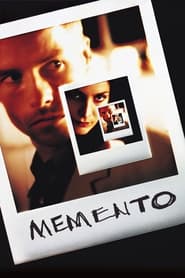
Memento (2000)
The famous structure — color scenes running backward, black-and-white running forward, meeting at a hinge — isn't a gimmick; it's a delivery system. Every scene drops you in with no memory of how you arrived, so you experience the protagonist's condition rather than observe it. Wally Pfister's photography stays deliberately clean and legible, wisely, given how much work the structure asks of you. Watch the objects: Polaroids, notes, tattoos — a mind rebuilt out of things, and a noir voiceover (inherited from Double Indemnity) telling a story it may not own.
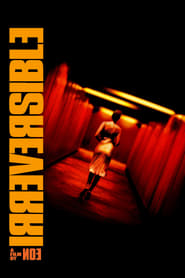
Irreversible (2002)
The story runs from last to first — even the credits scroll the wrong way — and this reversal strips out every consolation forward motion usually offers. Benoît Debie's camera corkscrews and tumbles through space in long unbroken movements, unmoored from any human point of view. The film's maxim, le temps détruit tout — time destroys everything — is printed on its structure. A fair warning: this is the most confrontational film here, part of the New French Extremity. Watch how knowing the future poisons the past, how the gentlest images arrive already wrecked.
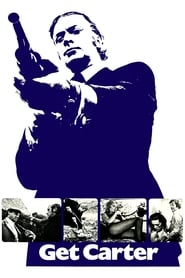
Get Carter (1971)
Michael Caine goes north on a train, and the film photographs him against a real industrial England — slag heaps, quaysides, a brutalist car park — in Wolfgang Suschitzky's flat, photojournalistic light that prettifies nothing. This is British crime cinema with the glamour surgically removed, inheriting Point Blank's affectless avenger and the kitchen-sink tradition's locations while discarding its warmth. Watch how the landscape seems to pull Carter downward, as if the place itself — coal, river, black beach — were the true engine, and his revenge merely the surface it wears.
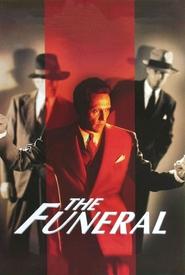
The Funeral (1996)
Ferrara opens where a gangster picture is supposed to end: a coffin in the front room, candles burning, the living arranging themselves around a body. Ken Kelsch's deep chiaroscuro — faces emerging from darkness, rooms lit by a few practical sources — gives the film the gravity of a religious painting. This is a gangster film built to negate the genre: no rise, no empire, no glamour, just a family bound by a Catholic paradox of choice and fate drawn from Force of Evil and Angels with Dirty Faces. Watch how the past keeps interrupting the wake, and how the revenge plot moves without ever promising release.
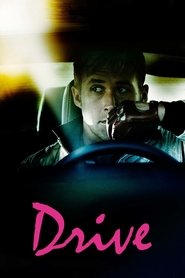
Drive (2011)
Watch the face. Newton Thomas Sigel shoots Gosling at uncomfortable, surveillance-camera nearness and holds — past the point where a normal film would cut. Nothing discharges; the face registers and does not act. The Driver has no name, no past, no stated want — a lineage running from Le Samouraï through The Driver — and the film inhabits the myth of the cool loner so fully its costs become visible. Watch, especially, how violence and tenderness are refused separate registers: two acts, one motion, no transition.
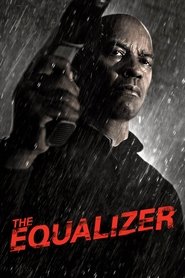
The Equalizer (2014)
The first act is a small miracle of withheld action: the same diner every night, the napkin folded, the tea steeped precisely, a man reading and watching the room. Fuqua and cinematographer Mauro Fiore keep finding McCall behind glass — windows, reflections — a man studying a street he won't step into. It's the ritual domesticity of Le Samouraï transplanted to working-class Boston. Watch how long the film lets stillness carry meaning before the switch is thrown, and how that patience makes everything after feel earned rather than automatic.
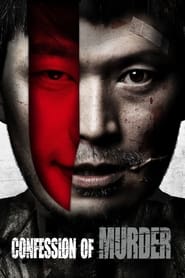
Confession of Murder (2012)
The premise is dramatic irony weaponized: a statute of limitations has expired, so the law and morality point in opposite directions, publicly and permanently. Watch the compositions — the detective jammed low in the frame, rumpled and cramped, while the man he never caught holds a podium above him, lit and adored. Then watch the action: the director came from stunt coordination, and it shows in a freeway chase held in long shots that register real mass and real jeopardy, the Police Story contract of a genuine body in genuine danger, rather than dicing impact into micro-cuts.
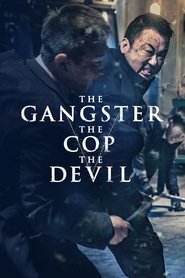
The Gangster, the Cop, the Devil (2019)
Where several films here dismantle the action machine, this one builds it to gleaming perfection — and watching its parts mesh is its own education. A crime boss survives a random knife attack, and the wound to his order matters more than the wound to his body. The film runs a tripartite geometry — gangster's turf, cop's jurisdiction, killer moving between — lit in wet asphalt and sodium-vapor orange, inheriting Memories of Murder's cross-cutting between rival investigators and I Saw the Devil's killer who relishes his own pursuit. Watch how cleanly cause snaps into effect. That's the pleasure, delivered without apology.
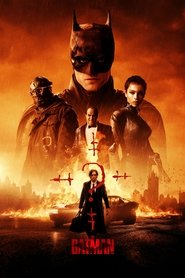
The Batman (2022)
Greig Fraser underlights this film to a degree almost unheard of in blockbusters — faces falling into shadow, the grammar of Gordon Willis's Godfather photography grafted onto a comic-book city. The structure comes from Zodiac and Se7en: a cipher-leaving killer who addresses his crime scenes to the detective, making the film a duet of interpretation. Watch how much of the movie is simply watching — a man at a window in the rain, a city under surveillance — and how the riddles put you at Batman's shoulder, decoding alongside him. You become the third party in the correspondence.
Why watch these together? Because in sequence they teach each other. After Memories of Murder's patient drift, you'll feel exactly what The Gangster, the Cop, the Devil is doing when it lets nothing drift at all. After Memento and Forgotten, you'll notice how A Tale of Two Sisters builds its uncertainty out of beauty rather than confusion. After Le Samouraï's descendants — Drive, The Equalizer, Get Carter — you'll start reading stillness as a genre of its own. Every film here is asking the same question with different tools: when you see something terrible, what can you actually do about it — and what does the camera do while you decide? Watch for the waiting. It's where these films live.