Sightlines · a mini film course
The Cinema of Watching: Twelve Films Where Looking Replaces Doing
Most movies run on a simple engine: a character sees a problem, acts on it, and the action changes the world. The twelve films on your list — spanning sixty years, four countries, and every register from screwball crime to colonial elegy — all tamper with that engine. Sometimes they unplug it entirely. Their protagonists talk instead of acting, watch instead of chasing, endure instead of resolving. Their cameras hold still and let time stretch; their cuts open gaps rather than close them; their colors and rooms carry feeling before any plot arrives. What connects this set is a quiet revolution in what a movie can be about: not what people do, but what happens inside them — and inside us — while they hesitate.
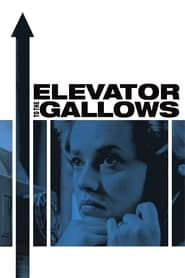
Elevator to the Gallows (1958)
Watch the film shift between two visual languages: hard-shadowed, tightly framed interiors for the meticulous crime, and something looser and more searching for the Paris night outside. A man who has planned everything perfectly gets sealed in a box by a stranger flipping a switch, and the film's real subject becomes the world calmly dismantling his arrangements while he can do nothing at all. Notice how every modern convenience — the car, the elevator, the camera — turns into a trap for its user.
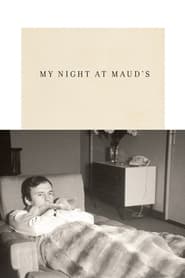
My Night at Maud's (1969)
The centerpiece is one long night of conversation in a single apartment, and the suspense is entirely moral: will a man who has made a private vow — to a woman he's never spoken to — keep it out of virtue or vanity? Watch how Néstor Almendros lights the rooms to feel lived-in rather than dramatic, and how the camera's patience turns talk itself into the drama. The hero is an engineer who calculates probabilities for a living, caught in a plot that runs on pure chance; the film lets you feel that irony without ever underlining it.
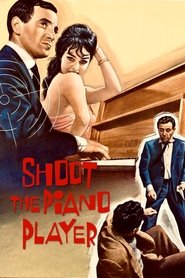
Shoot the Piano Player (1960)
Truffaut takes the crime picture's full scaffolding — gangsters, brothers on the run, a getaway — and hands it to a hero who simply won't act. Watch how Raoul Coutard's camera keeps isolating Charlie in corners, doorways, and reflections, and how Charles Aznavour plays him with almost nothing: a dip of the head, a beat of hesitation. Watch too how the film refuses to let any tone settle — a joke crashes into violence, tenderness into farce — so you're never sure what world you're in. That instability is the point.
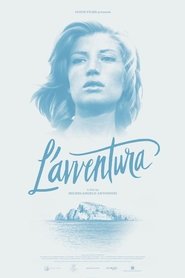
L'Avventura (1960)
A woman vanishes on a volcanic island; a search begins — and then the film quietly stops caring about the mystery, and asks you to care about the searchers instead. Watch where Antonioni puts people in the frame: pushed to the edges, hidden behind walls, dwarfed by rock and sea until they read as marks on stone. Two people can stand close enough to touch and remain unreachable, and the film holds those compositions long enough for you to feel how long holding takes.
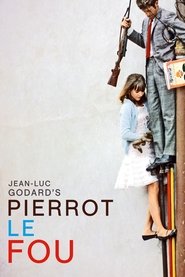
Pierrot le Fou (1965)
The first true image is a man in a bathtub reading art history aloud — a person who'd rather narrate life than live it — and the film is the punishment of that wish. Watch the tension between two ways of being: Ferdinand, who reads, writes, and addresses us directly, and Marianne, who simply acts. Notice the color, borrowed from anti-naturalistic melodrama: saturated reds and blues that carry emotion rather than describe space, painterly tableaux the camera holds like canvases being consulted.
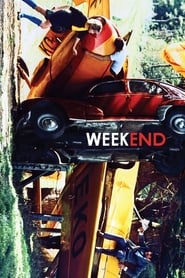
Weekend (1967)
The famous traffic-jam shot glides sideways along a country road for seven or eight minutes — stalled cars, picnics, a sailboat on a trailer, wreckage — all filmed with the same even, indifferent slide, scored by car horns that change nothing. Watch how Godard sets up a perfectly conventional crime plot and lets it visibly rot away, replaced by satire, essay, and something close to horror. This is the New Wave's early playfulness curdled into fury, on the eve of 1968.
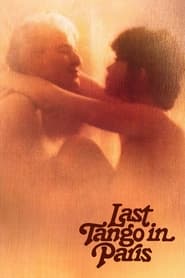
Last Tango in Paris (1972)
Start with the room: an unfurnished Paris flat the color of a bruise — amber, ochre, old varnish — a palette lifted directly from two Francis Bacon paintings that hang over the opening credits like an instruction. Watch how Bertolucci strips the space of furniture, history, and even names, so that two strangers can try to exist outside society entirely. The real provocation isn't the frankness; it's that the room refuses to explain anything — bodies without a situation.
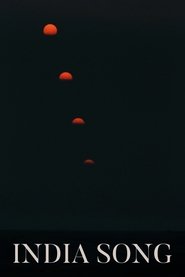
India Song (1975)
The strangest and most radical film here: nobody on screen speaks. The figures drift through amber embassy heat, lips shut, while off-screen voices — remembering, mourning, unsure of their own memories — tell the story from somewhere else entirely. Duras invented this: sound and image as two separate worlds communicating across a gap. Watch the mirror shots, where you can't always tell body from reflection, and let the slow amber-gold takes work on you like recollection itself.
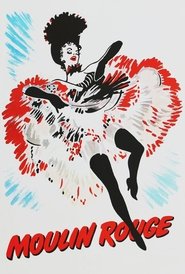
Moulin Rouge (1952)
The odd one out chronologically, and a secret pioneer. Huston and cinematographer Oswald Morris fought Technicolor's own technicians to dirty the format — fog filters, colored smoke, gels — until reds went to brick and ambers to gaslit haze. Watch how the color stops describing things and becomes the mood itself: the dance hall's brassy warmth is the gaiety, the drab cool of the painter's rooms is the loneliness. And keep an eye on the small man at the edge of the frame with a sketchpad — the outsider who belongs precisely because he watches.
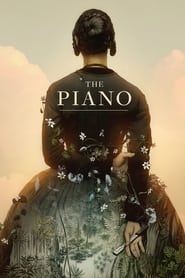
The Piano (1993)
Ada does not speak, and the film never explains why — her silence is a refusal, not a void, with everything rerouted through her hands. Watch how Stuart Dryburgh's camera alternates between vast, wet, dark-green wilderness and extreme close-ups of a face and fingers on keys. Holly Hunter won an Oscar for a performance with almost no lines; watch her face as a surface holding withheld intensity, and notice how rare warmth — candlelight, firelight — lands in this cool, desaturated world like an event.
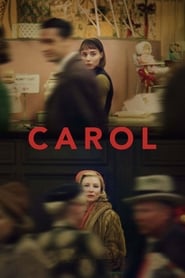
Carol (2015)
Watch the glass. Lachman shot on Super 16mm so grain sits on the image like weather, and he keeps framing the lovers through obstructions — rain-streaked cab windows, storefronts, condensation — so you see them the way the 1950s forced them to see each other: glimpsed, partial, rarely in the clear. The look is borrowed exactly from Saul Leiter's street photographs. And watch the held glances, especially across the toy-store floor early on: nothing happens in plot terms, and everything happens.
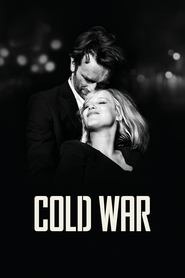
Cold War (2018)
Fifteen years and half of Europe in eighty-eight minutes — and the film's whole grief lives in what it refuses to show. A scene ends, the screen goes black, and when the picture returns a year has passed and everything has changed; the rupture happened in the dark between two shots. Watch, too, Łukasz Żal's compositions: figures placed low in a tall frame, dwarfed beneath skies, walls, and ceilings, small people inside enormous history. And follow one folk melody as it's re-orchestrated across the film — its transformations are the story.
Watched together, these films train a different kind of attention. You'll start noticing when a camera declines to chase, when a cut hides more than it shows, when a room or a color arrives carrying feeling before any character does. You'll see influence flowing both ways: Antonioni's drifting spaces feed Bertolucci's bruised flat; Truffaut's tonal whiplash and Godard's collages define what the New Wave broke open; Rohmer proves talk alone can be riveting; Duras pushes the whole project to its outer limit; and Haynes and Pawlikowski show the tradition alive and rigorous in our own century. The common wager is the same one every time: that watching — patient, obstructed, held a beat too long — can be more gripping than any chase. Give these films your stillness, and they'll repay it.