Sightlines · a mini film course
Watchers, Not Doers: Twelve French Films Where Looking Becomes the Drama
Most movies run on a simple engine: a character sees a problem and does something about it. The films in this set — running from the late-1950s ferment that produced the French New Wave all the way to Haneke's Paris apartment in 2012 — quietly unplug that engine. Their heroes see everything and act almost not at all: they talk, hesitate, wander, wait. And the camera keeps them company — it watches rather than chases, holds shots past the point where another film would cut, lets rooms and roads and faces simply be there. The suspense migrates from "what will happen?" to "what does it feel like to stand inside this moment?" Watch for how each film finds its own way to make stillness electric.
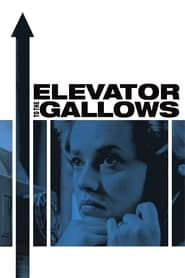
Elevator to the Gallows (1958) — dir. Louis Malle
A thriller about a man who has already finished acting: the careful plan is done, and then a stopped elevator turns him into a spectator of his own unraveling night. Notice the two visual worlds — hard shadow and tight framing in the confined interiors, then Paris after dark, where the film seems to drift free of its plot entirely. Space becomes a trap here, and modern conveniences — the car, the elevator, the camera — keep turning on their users.
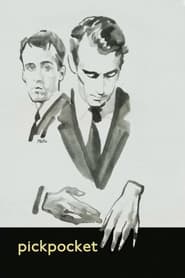
Pickpocket (1959) — dir. Robert Bresson
Bresson strips the crime film of suspense and leaves you looking at the act itself: a wrist, a clasp, a banknote passing between hands, held close and cut loose from the face that would tell you how to feel. The style is deliberately flat and even — no dramatic lighting, no expressive acting — so that every small gesture acquires enormous weight. It's less a heist film than a study of compulsion and grace, and it taught a generation of filmmakers what restraint could do.
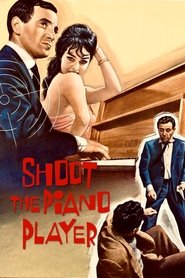
Shoot the Piano Player (1960) — dir. François Truffaut
Truffaut takes the gangster picture's scaffolding and hands it to a hero who keeps not acting — Charles Aznavour plays him with almost unnerving economy, a dip of the head, a beat of hesitation. Watch how the framing isolates him: corners, doorways, reflections, the bar counter like a screen between him and the world. And watch the tone lurch — slapstick to heartbreak within a single scene — a freedom Truffaut borrowed from American B-movies and made his own.
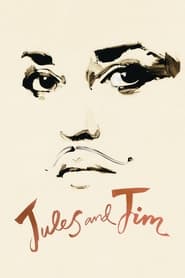
Jules and Jim (1962) — dir. François Truffaut
The famous moment is a freeze frame: Catherine caught mid-laugh, held on screen far longer than any living face would allow — not at an ending, but in the middle of happiness, for no reason except love. Notice how the film keeps toggling between rushing motion and sudden stillness, and how Coutard's warm, river-lit exteriors (a debt to Renoir) make the beauty of passing happiness sting more. A love triangle where nobody is the villain and the camera refuses to take sides.

Band of Outsiders (1964) — dir. Jean-Luc Godard
Three young people have a perfectly good crime plot at their disposal and mostly ignore it — they take English classes, race through the Louvre, and dance the Madison in a café while Godard cuts the world's sound and murmurs their thoughts over the silence. The gap between the movies in their heads and the plain, fluorescent-lit Paris around them is the film. Watch how deliberately unglamorous Coutard makes the city, so the daydreams have nowhere to land.
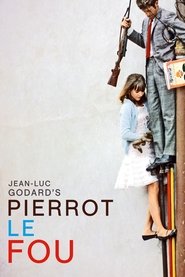
Pierrot le Fou (1965) — dir. Jean-Luc Godard
Our first image of Ferdinand: a man in a bathtub reading art history aloud — a person who would rather narrate experience than have it. Godard borrows the costumes of the gangster picture and the road movie without accepting their rules, painting the screen in flat, saturated primary colors that carry emotion the way a Matisse does. Watch how often the film simply lets its hero watch, and how the camera swings between drifting freely and locking off for tableaux you consult like paintings.

Masculin Féminin (1966) — dir. Jean-Luc Godard
Built out of long, handheld interview scenes — a boy asking a girl questions about love, politics, America, and getting smiles, glances, a cigarette lit to buy time. The camera holds faces longer than politeness allows, and violence flickers at the edges of the frame without ever explaining itself. This is the "Marx and Coca-Cola" generation examined like a sociological specimen, with the grainy intimacy of a documentary and the wit of a lover's quarrel.
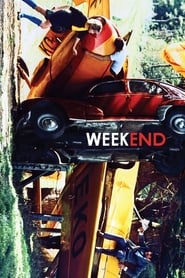
Weekend (1967) — dir. Jean-Luc Godard
Home of one of cinema's most famous shots: a lateral tracking movement gliding for seven-plus minutes along a country traffic jam — picnics, sailboats, a zoo cage, wreckage — all filmed with the same even, indifferent slide, scored by car horns. Nobody in it can do anything; the doing accomplishes nothing; and the shot's very length becomes the point. This is the New Wave's early playfulness curdled into savage dark comedy, a road movie where consumer society itself is the disaster.
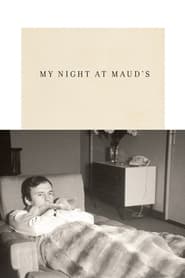
My Night at Maud's (1969) — dir. Éric Rohmer
An entire film balanced on one long night of conversation in a snowbound apartment — proof that talk alone can carry real tension. Rohmer is the New Wave's classicist: patient framing, lived-in light, a register of soft winter grays, and a hero (an engineer fluent in probability) wrestling with chance, faith, and a private vow. Notice how the white expanse of Maud's bed sits at the center of the frame like a question the whole film is politely refusing to answer directly.
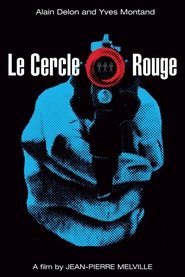
Le Cercle Rouge (1970) — dir. Jean-Pierre Melville
Melville idles the crime film's engine for 140 mesmerizing minutes: men eating, dressing, waiting, performing the rituals of their profession, with the camera observing rather than participating. The centerpiece is a heist of roughly twenty-five minutes with no dialogue and no score — only creaking metal and controlled breathing. Watch how choices seem to be choices and yet feel already made; the film announces its fatalism before the first image and then simply demonstrates it.
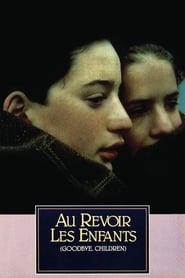
Au Revoir les Enfants (1987) — dir. Louis Malle
Malle returns, decades later, to his own wartime boyhood in a boarding school, and films it with disciplined naturalism — cold winter light, grays and browns, a camera that holds at a watchful distance. His young hero perceives something far too large for a child's body to act on, so the film is played almost entirely through watchfulness: small glances that carry unbearable weight. Notice how the everyday rhythms of dorm and classroom make history's intrusion feel all the more piercing.
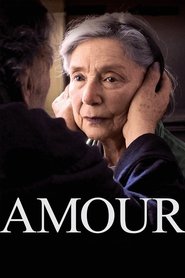
Amour (2012) — dir. Michael Haneke
Early on, at a concert, Haneke points the camera at the audience instead of the stage — and in searching the crowd for our couple, we accept the only job the film gives us: to watch. The camera is almost entirely static, held at a respectful middle distance, and time is allowed to stretch until watching a meal prepared or a body lifted acquires the weight of real duration. A love story at the limit, made with the patience of Ozu and the moral rigor of Bresson, where looking itself becomes an act of devotion.
Watched together, these films train your eye. You start to feel how a held shot builds a different kind of suspense than a cut; how a camera that refuses to chase makes you lean in; how silence, duration, and a face doing almost nothing can be more gripping than any chase. They also converse with each other across the decades — Bresson's hands echo in Melville's rituals, Truffaut's tonal freedom answers Godard's provocations, Rohmer's long night of talk finds its late descendant in Haneke's quiet rooms. By the end you'll have acquired the rarest moviegoing skill of all: the patience to let a film look, and the pleasure of looking with it.