Sightlines · a mini film course
The Cinema of Watching: Eleven Films Where Looking Becomes the Story
Most movies run on a simple engine: a character sees a problem, does something about it, and the doing carries us forward. The eleven films gathered here run on a different fuel. In each of them, someone is faced with a situation that no action can fix — a love that can't be acted on, a decline that can't be halted, a world that won't answer back — and so they watch. They wait. They endure. And the filmmaking follows suit: the camera watches rather than chases, time is allowed to stretch, and images stop explaining themselves on contact and start asking to be read. Watched together, these films teach you a rarer kind of attention — the kind that notices where a person looks when they've stopped expecting the world to respond.
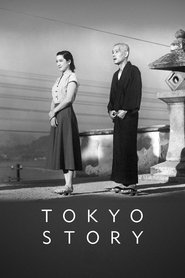
Tokyo Story (1953)
Watch for the empty shots between scenes — smoke drifting from chimneys, laundry hanging in still air, a train sliding past and gone — held a few seconds longer than any practical purpose requires. Ozu's camera sits low, at the eye-level of someone seated on a tatami mat, and it almost never moves. The elderly couple at the film's center face a situation nothing can be done about — their children are simply busy — and Ozu refuses the confrontation or reconciliation another film would supply. The stillness isn't emptiness; it's the film's way of feeling the passage of things.
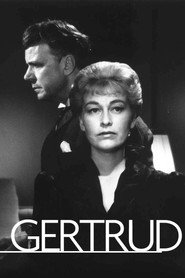
Gertrud (1964)
Notice where people look when they say the word love: almost never at each other. Dreyer builds his final film from some of the longest sustained takes in narrative cinema — a whole scene in a single unbroken shot, two people on a sofa, declarations delivered to the empty air. Once you spot the averted gaze, you can't stop seeing it, and the film reveals itself as a portrait of a woman who demands an absolute love the world cannot supply — and who watches, clear-eyed, as it fails to. Let the slowness work on you; it's the point, not an obstacle.
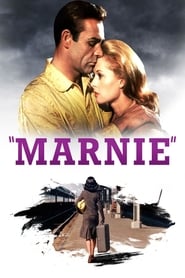
Marnie (1964)
Hitchcock opens on a woman's back — a yellow handbag, a railway platform, no face, no name. Watch how the camera studies its heroine the way a clinician watches a patient: long lenses flattening her against the architecture, two-shots held past comfort, never quite letting you settle behind anyone's eyes. And watch for the red — an inkwell, a jockey's jacket, flooding the frame. This is one of Hitchcock's strangest experiments: a thriller where the mystery isn't a crime but a consciousness, and your own curiosity about her is part of what's being examined.
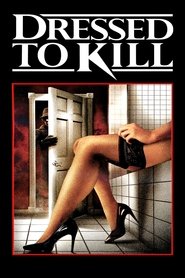
Dressed to Kill (1980)
The centerpiece is a museum sequence of several nearly wordless minutes, built entirely out of looking — who sees whom, who knows they're seen, and what the camera knows that nobody inside the frame does. De Palma, the most openly Hitchcock-obsessed of the New Hollywood directors, glides his camera through mirrored, folding spaces and uses his signature split-focus shots to keep near and far simultaneously sharp. The film makes watching pleasurable and then makes you aware of the pleasure. That discomfort is deliberate — you're inside the machinery of suspense, not just its beneficiary.
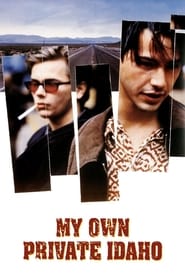
My Own Private Idaho (1991)
Van Sant's hero has narcolepsy: he collapses, and the film goes under with him — hard cuts to time-lapse clouds streaming over Idaho, a barn splintering on empty blacktop. Watch how the photography holds two registers in one frame: grainy, available-light plainness in the streets and flophouses, and wide painterly vistas of road and sky. And watch how a Shakespearean structure (borrowed, via Orson Welles, from Henry IV) collides with contemporary street realism. A cornerstone of the New Queer Cinema, it's a road movie about a man to whom things happen while the world does the moving.
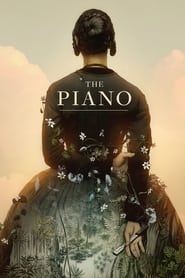
The Piano (1993)
Start with the image of a piano abandoned on black volcanic sand, surf coming in behind it. Ada does not speak — a refusal, not a void — and Campion routes everything through hands, faces, and keys. Watch the rhythm of the photography: wide shots of a cold, wet, unwelcoming wilderness, then a sudden press into an extreme close-up of a face or fingers. The palette is deliberately drained — dark greens, grey skies — so that the rare moments of candlelight and firelight land with almost physical warmth. Hunter won an Oscar for a performance with almost no lines; watch how much a still face can hold.

Mulholland Drive (2001)
Lynch cuts not by cause and effect but by emotional rhyme — dream logic as structure. Watch how the photography splits into two registers: warm, golden, diffuse light for Hollywood's promise, and something colder underneath. The film's key scene takes place in a nightclub where an emcee announces, twice, in two languages, that there is no band — and the music plays anyway. Sound comes loose from its source; feeling arrives with no living origin. Let the film's images be things you decipher rather than simply see, and don't demand the pieces snap together on first pass.
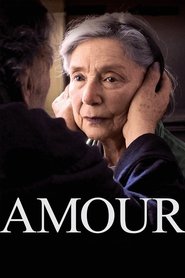
Amour (2012)
Early on, at a piano recital, Haneke points the camera at the audience instead of the stage and makes you hunt for the two main characters in a crowd of strangers. That's the film's contract: you will watch, and no cut will let you off. The camera is almost entirely static, held at a respectful middle distance; meals are prepared and bodies lifted in something close to real time; light comes from windows and lamps. Two of French cinema's great actors face what cannot be fixed, and Haneke's refusal of consolation or melodrama becomes its own form of respect.
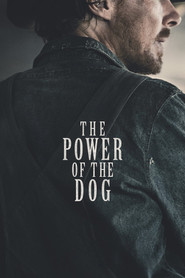
The Power of the Dog (2021)
Phil Burbank looks at a mountain and sees a running dog hidden in the rock — an image legible to him alone. That's the key to how the whole film works: information sits in the frame before you know what it means. Watch the braided rawhide, the hidden books, the way rooms seem to shrink around one character. Ari Wegner shoots the Montana landscape (played by New Zealand) as a psychological surface, and Campion suppresses demonstrative acting so you must infer everything from posture and gaze. It's a Western built to be read, not just watched — and it plays completely differently a second time.
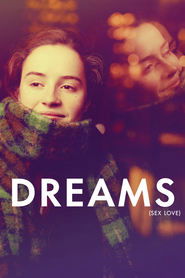
Dreams (2024)
A teenage girl reads aloud what she wrote about being in love — and the reading, not the romance, is the drama. Haugerud films Oslo in muted northern light, in patient, stable frames of kitchens and stairwells, and lets long two-shots of conversation do the work of plot. Watch how the film treats a queer awakening without crisis or melodrama, and how it keeps asking whether feeling is falsified the moment it becomes text. Mother and grandmother bend over the manuscript, and criticism itself becomes suspenseful. The lineage runs back to Rohmer: desire converted into talk, and talk into moral inquiry.
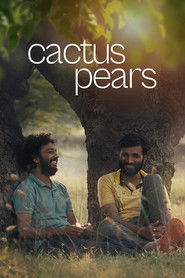
Cactus Pears (2025)
Two men stand in a parched field, and the frame holds them apart — the drought-cracked ground and cactus scrub filling the space between them. You wait for the cut that romance usually promises, the close-up that brings bodies together, and the film withholds it, or grants it late and briefly. Set during a ten-day rural mourning ritual, this Marathi-language film locates queer desire inside family, land, and tradition rather than as spectacle. Listen as much as you watch: wind and insects carry as much feeling as any line of dialogue. Patience here is a form of tenderness.
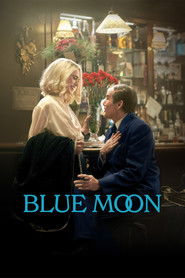
Blue Moon (2025)
One bar, one night — March 31, 1943, as Oklahoma! opens a few blocks away and the future of the American musical prepares to walk in the door without Lorenz Hart. Linklater bets everything on talk: warm lamplight, sustained two-shots, a camera that privileges the listening face over any display. Watch the gap the film builds between Hart's dazzling verbal command and his actual powerlessness — he can do nothing about any of it, so he does the one thing left to him, brilliantly. A music film with almost no music, about what it feels like to outlive your moment in real time.
Watched together, these films retrain the eye. Each one asks you to stop waiting for the next event and start noticing what the frame is already telling you: where a gaze lands, how long a shot holds, what the light withholds, what the sound refuses to confirm. You'll begin to see the rhymes — Ozu's low camera answering Haneke's fixed distance, Campion's landscapes speaking twice across three decades, Hitchcock's cold clinical watching passed down to De Palma and inverted by Lynch. And you'll discover that the films that give you the least to do as a viewer often give you the most to feel — because when nobody on screen can act, everybody, including you, has to truly look.