Sightlines · a mini film course
When Watching Becomes the Story
There's a certain kind of film in which the camera stops chasing and starts witnessing. The hero's toolkit — see the problem, spring into action, fix the world — is quietly taken away, and what's left is a person who can only look: at a dying planet, a rotting village, a burning castle, a day that simply keeps going. The twelve films on your list all belong to this tradition, in wildly different registers — horror, samurai epic, dark comedy, science fiction. What unites them is a shared wager: that when a film slows down, holds still, and refuses to resolve, the act of watching itself becomes charged. These are films that teach you how to see them in their opening minutes. Trust that lesson.
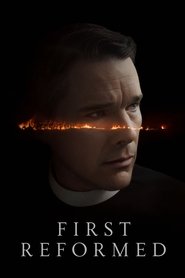
First Reformed (2018)
Notice how rarely the camera moves. Alexander Dynan locks it off in head-on, symmetrical frames — a man at a bare desk, writing in a journal he's promised to burn — so that when movement finally comes, it lands like an event. Watch the long counseling scene between the reverend and a despairing young activist: two figures held in a fixed frame, no cutting away to soften it. The film asks you to sit still, look, and endure — and rewards you for it.
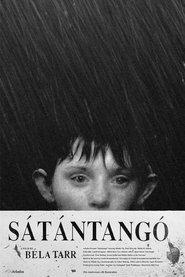
Satantango (1994)
It opens with cows. For several minutes the camera simply walks alongside a herd shuffling out of a ruined farmyard, and by the time the shot releases you, Tarr has taught you how to watch the next seven hours: not for what happens, but for time itself moving through a place. Shots routinely run five, eight, ten minutes; rain and mud become almost physical presences. Don't fight the duration — inhabit it.
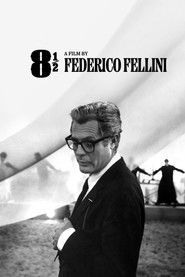
8½ (1963)
Watch for the missing seam. Fellini cuts between waking life, memory, and fantasy with the same hard, matter-of-fact joins he'd use between two rooms of a house — no dissolves, no dreamy music cues, no change in the gorgeous black-and-white to warn you where you are. Gianni Di Venanzo shoots present and daydream on one continuous silver. Getting pleasantly lost is the point.
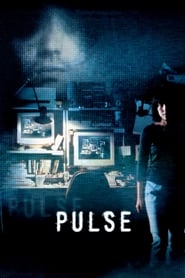
Pulse (2001)
Most horror shows you the thing; Pulse shows you the space where the thing was. Junichiro Hayashi (who also shot Ringu) drains the palette to bruised greys and sickly greens, underexposing interiors until darkness seems to be winning. Watch how Kurosawa builds dread around absence — a stain on a wall, an empty room, a screen — and how his characters respond not by running but by stopping, staring, withdrawing. Loneliness itself is the contagion.
Annihilation (2018)
Early on, two deer step out of the brush moving in perfect mirrored unison, and the expedition can only watch. That stalled, helpless attention is the film's signature. Rob Hardy shoots the Shimmer as a soap-bubble membrane tinting everything inside it, greens pushed toward the toxic — beauty and wrongness fused in a single image. Notice how the film keeps handing its capable, armed protagonist things she cannot act on, only witness.
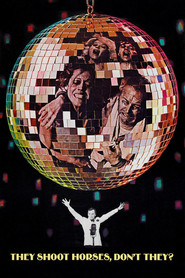
They Shoot Horses, Don't They? (1969)
One ballroom, two hours, almost no exits. Philip Lathrop's camera doesn't observe the Depression-era dance marathon from a safe distance — it gets down on the floor, circling and weaving among the exhausted couples until you share their disorientation. Watch how the widescreen frame crowds with propped-up bodies while a bright band plays on, and how the emcee's relentless cheer sells suffering as entertainment.
Happiness (1998)
The radical choice here is sameness. Maryse Alberti lights every scene — the tenderest and the most terrible — with the identical clean, unsparing evenness, and Solondz holds his frontal frames well past comfort. Nothing in the image tells you how to feel; no shadow marks anyone as a monster. Watch how the multi-strand ensemble structure (descended from Nashville and Short Cuts) lets meaning emerge from juxtaposition rather than plot.
Ran (1985)
Watch the colors: each of the warlord's three sons commands an army in a single hue — yellow, red, blue-green — legible even at telephoto distance across a battlefield, while the old man himself wears white, the Japanese color of mourning. And watch for the moment Kurosawa drops the sound entirely, letting an orchestra mourn over silent carnage. It's the film's hinge: the great director of men-who-act stripping his hero of any action at all.

You Were Never Really Here (2017)
Images flare up without dates or explanations — a child's hand at a grate, a soldier's feet in dust — and refuse to assemble into the backstory a thriller owes you. Thomas Townend's camera works in extremes: enormous close-ups of hands and surfaces, or wide shots that isolate. Ramsay knows Taxi Driver down to its grain (she even shoots on 35mm), but watch how she keeps the vigilante picture's shape while quietly pulling its spark plugs — violence rendered through aftermath, echoing Bresson.
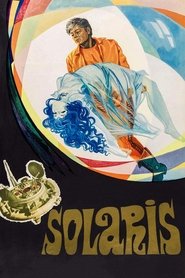
Solaris (1972)
Start with the grass. Before the space station is even mentioned, the camera sits with weeds shivering in a stream, a horse in the rain — shots that outlast their reason for existing, on purpose. Tarkovsky is asking you to inhabit time rather than spend it. Notice how the alien ocean is never shown clearly enough to analyze — glimpsed through portholes, all amber swirl — because the mystery isn't being saved for a reveal. It's being honored.
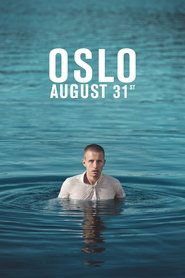
Oslo, August 31st (2011)
One day, one city, one man moving through visits, an interview, a party. Jakob Ihre's handheld camera stays intimately close — tracking small movements of eyes and hands — then withdraws to place its subject in Oslo's wider geography, using empty hallways and dead space the way Antonioni did. Watch how the film refuses the hinges other movies would build a plot around; a moment that should change everything is simply followed by the rest of the day.
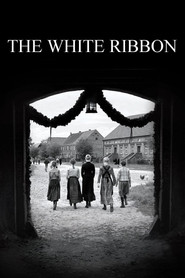
The White Ribbon (2009)
Watch for what's withheld. A wire is strung across a path; we see the fall, never the hands that tied it. Christian Berger's camera barely moves, held at a middle distance in crystalline black and white, and the editing ends scenes before their release — punishments approach and the door closes on them. Haneke inherits Bresson's technique of skipping the cruelty to land in the aftermath, and the not-seeing gradually becomes the subject.
Watched together, these films train a muscle most cinema lets atrophy. Each one, in its opening minutes, teaches you a posture — sit with the cows, sit with the grass, sit with the man at the desk — and then rewards that patience with images that ordinary, faster films can't produce: dread built from empty rooms, grief built from held shots, moral weight built from what the frame refuses to show. Move between them and you'll start noticing the family resemblances — Bresson's fingerprints on Schrader, Ramsay, Trier, and Haneke; Tarkovsky's on Tarr and Garland — and, more valuably, you'll start noticing your own attention: how it sharpens when a film trusts you to look without being told what to see. That's the real course here. The films just happen to be masterpieces.