Sightlines · a mini film course
When Looking Is the Whole Story
Most movies run on a simple engine: a character sees something, then does something about it, and the world changes. The twelve films on this list all, in their different ways, jam that engine. Their people watch more than they act — they endure, they drift, they stare at things that refuse to resolve into answers — and the films ask you to do the same. Present and memory, dream and waking, the real and its reflection get folded into single images that can't be sorted on first glance. So the pleasure here isn't "what happens next?" It's learning to read the surface of the image itself: the wallpaper, the color of a coat, the sound on a roof, the small wrong detail in an ordinary room. Watch slowly. These films reward the viewer who notices.
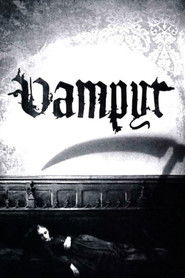
Vampyr (1932)
Start here — it's the oldest film on the list and the purest statement of the method. Dreyer's hero mostly looks and listens as shadows move without bodies, and Rudolph Maté shot the whole thing through a layer of gauze so the world seems seen through mist, or a partial blindness. There's a famous shot taken from inside a coffin, looking up through a little glass window as the sky drifts past: Dreyer wanted you to feel a door had opened onto another world, and he achieves it by simply putting you in the box. Notice, too, how this early sound film uses near-silence — stray noises treated like shadows.
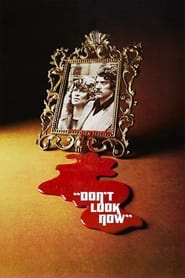
Don't Look Now (1973)
Roeg was a great cinematographer before he directed, and this film's argument lives in its cutting: shots collide and rhyme across the whole picture, so that water, glass, and the rationed color red seem to echo forward and backward in time. His off-season Venice — scaffolded, dripping, emptied of crowds — becomes a maze where every image feels like the reflection of another one somewhere else in the film. Watch how grief bends perception here: how the film makes you, like its hero, see signs everywhere and doubt which ones to trust.
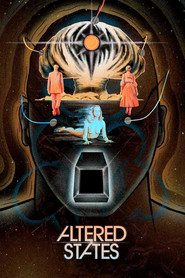
Altered States (1980)
A scientist floats in a sensory-deprivation tank, hunting for the floor of his own mind — and Ken Russell takes the premise literally, staging inner regression as overwhelming visionary spectacle in the tradition of 2001's Star Gate. Jordan Cronenweth (just before Blade Runner) sculpts pools of light out of engulfing black in the lab and tank scenes. Notice how the film is built as a slope: each descent goes deeper, each return is harder, and the drive underneath the scientific vocabulary is pure compulsion.
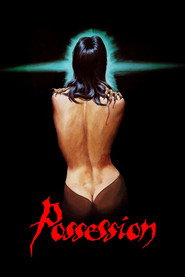
Possession (1981)
Bruno Nuytten's handheld camera doesn't observe — it circles, chases, and presses close like an anxious participant, distorting Berlin apartments into pressurized boxes. Żuławski directed his actors to the edge of collapse as a deliberate system, not an excess, and the result is a marriage breakdown filmed at the pitch of opera. Watch for the astonishing corridor scene: a body simply undergoing something, past anything a plot would need — one of the most famous sustained performances in horror.
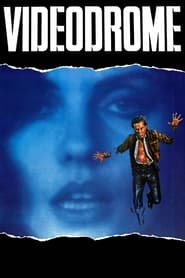
Videodrome (1983)
Cronenberg's masterstroke is tonal: Mark Irwin shoots the impossible in exactly the same cool, clinical light as the ordinary, so the film never tells you when you've left the real. Screens breathe, flesh and media merge — and the camera's flat documentary calm withholds every cue you'd use to sort hallucination from fact. Watch the protagonist himself curdle from fast-talking investigator into bewildered watcher: the film is partly about what screens do to the people staring at them, which includes you.
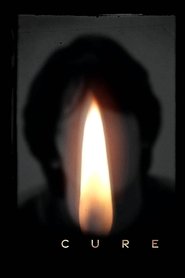
Cure (1997)
Kurosawa answers the flashy serial-killer cycle of the 90s by subtraction: no grand design, no spectacle, just wide, distanced framings that hold figures inside drained, gray environments and let dread accumulate in the empty space around them. The hypnosis at its center is built from the oldest screen technology there is — a point of light in the dark, a patient voice, a watcher emptied of resistance — and the film knows it's describing cinema itself. Lean toward the flame the way the characters do; that's the trap working.
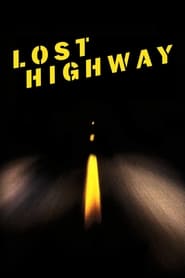
Lost Highway (1997)
Peter Deming photographs a house as near-abstract darkness — characters walk into blackness and simply dematerialize — set against bleached, sun-struck exteriors. Lynch takes the furniture of noir (femme fatale, gangster, surveillance) and strips out motive, explanation, and detection, leaving pure atmosphere and doubling. Don't try to sort what's present, memory, or dream; the film deliberately refuses the cut that would tell you, and that refusal is the point.

The Sixth Sense (1999)
Beneath the famous reputation is a marvel of disciplined craft: Tak Fujimoto shoots Philadelphia in chilled blues and grays, then rations the color red like a drug — a doorknob, a balloon, a sweater — marking where the hidden shows through. This is horror in the Val Lewton tradition of suggestion: the scare withheld, implied by sound, temperature, and negative space. Watch for the small wrong detail in an ordinary room — a breath fogging in a warm kitchen — doing the work a lesser film would give to a monster.
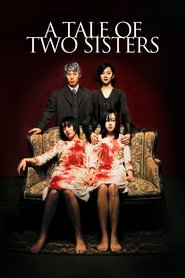
A Tale of Two Sisters (2003)
The most gorgeously photographed horror film of its era: Lee Mo-gae renders the house in warm woods, patterned wallpaper, and deep ambers, and the prettiness is the trap — Kim Jee-woon hides his horror not in the dark but in the well-lit corner of a lovely room. It descends from The Innocents and Repulsion: the haunted house filtered through one person's perception, rooms as an externalized mind. Notice the surfaces — how composed, how finished everything looks — and ask what a surface that polished might be covering.
Inland Empire (2006)
Lynch shot much of this himself on a consumer camcorder, and the cheap digital image — grainy, smeared, faces bending at the edge of the wide-angle lens, carved from darkness by a single lamp — is the whole aesthetic, not a limitation. It pushes his Los Angeles nightmares past Lost Highway and Mulholland Drive into full free-fall: an actress whose role and self grow porous. Keep an eye on the woman in the hotel room watching a television; the film keeps returning to her helpless gaze, as if watching were the engine of everything.

Antichrist (2009)
Anthony Dod Mantle opens with a lustrous black-and-white slow-motion prologue — consciously beautiful, dedicated in spirit to Tarkovsky — that the rest of the film then corrodes with restless handheld camerawork in the forest. Listen as much as you look: the sound of acorns falling all night on a cabin roof tells you something the characters' careful therapeutic language can't reach. The landscape here isn't scenery; it's pressure — a place that seems to want only to produce and to rot.

Shutter Island (2010)
Scorsese builds a loving anthology of older forms — noir paranoia, gothic asylum dread, the studio-era B-picture — with Robert Richardson's signature hard top-light haloing faces, and Thelma Schoonmaker's editing gradually admitting small ruptures and mismatched details into a procedural's measured tread. Watch the background of scenes, the props, the continuity: what looks like atmosphere may be text, asking to be read. This one, above all, rewards the second viewing — but earn it honestly with the first.
Watched together, these films teach a single skill: distrusting the sorted image. Each one, from Dreyer's gauze to Lynch's camcorder, finds its own way to fuse a moment with its double — its memory, its dream, its reflection — and each turns its protagonist (and you) into a watcher who can't simply act their way out. So the through-line pays compound interest: the coffin-window in Vampyr prepares you for the television in Inland Empire; Roeg's rhyming cuts train you for Schoonmaker's planted ruptures; the rationed red in Philadelphia talks to the red in Venice. By the end, you'll have stopped asking the images what happens next, and started asking them what they are — which is exactly the question every film here was built to keep open.