Sightlines · a mini film course
Most movies point the camera at the world. These ten point it inward — and then show you that "inward" is the most treacherous location in cinema. Each of these films finds a different way to make a mental state into a physical space: a ballet studio of mirrors, a painted town whose shadows were brushed on by hand, a house whose wallpaper is too pretty to trust, a city that rebuilds itself while everyone sleeps. Together they trace a hundred-year conversation — Wiene to Bergman to Fellini, Cronenberg to Kurosawa to Aronofsky — about what happens when a film stops asking what will the character do? and starts asking can this person even tell what's real? Watch how each director answers with craft: with lenses, lighting, cutting, and camera placement rather than exposition. The technique is the psychology.
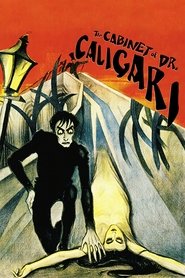
The Cabinet of Dr. Caligari (1920) — dir. Robert Wiene
Look at the floor. There are shadows painted directly onto the sets — long black wedges on the cobblestones that no lamp or moon could cast. Nothing here is photographed neutrally; the darkness was decided, brushed onto canvas, so that walls lean off plumb and windows open as crooked rhomboids. This is the founding gesture of everything else on this list: a world built to look the way a disturbed mind feels. Notice too the nested frame story — who is telling us this tale, and from where, matters enormously.

8½ (1963) — dir. Federico Fellini
The film opens with a man trapped in a car filling with gas, then floating free over a beach — and you will not be told when the dream ended. That's the rule Fellini keeps for two hours: no dissolves, no misty transitions, no musical cue announcing "now we are remembering." Editor Leo Catozzo cuts from present to childhood memory to daydream with the same hard, matter-of-fact join he'd use between two rooms, and Gianni Di Venanzo shoots all three registers on one continuous silver. Your job as a viewer is to notice the seams that aren't there — and to feel how a whole life can circulate through a single afternoon.
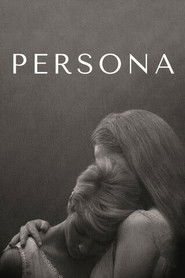
Persona (1966) — dir. Ingmar Bergman
Watch what Bergman does with a face held too long. Sven Nykvist lights Liv Ullmann and Bibi Andersson from a window so the skin goes luminous and the background falls to black, and then the camera simply stays — past expression, past information, until you stop reading the face for story and start reading it like weather. One woman talks; the other watches in silence; the film asks whether a self can survive that much sustained attention. Notice also how the film keeps reminding you that you're watching a film — a strange, bold honesty that makes the intimacy more unnerving, not less.
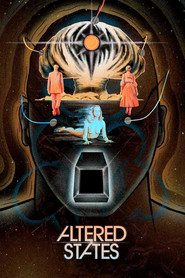
Altered States (1980) — dir. Ken Russell
A scientist floats in a sealed tank of black water, hunting for the original floor of consciousness — and the film takes his belief literally. Jordan Cronenweth (shooting just before Blade Runner) sculpts the laboratory scenes with pools of light against engulfing darkness, then Russell detonates that restraint in hallucination sequences descended from 2001's Star Gate: expanded consciousness as pure light, form, and religious frenzy rather than dialogue. Watch how the film is built as a slope — each descent into the tank a little deeper, a little harder to return from — and how nobody on that slope can stop walking down.
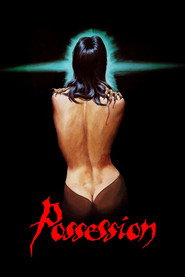
Possession (1981) — dir. Andrzej Żuławski
Bruno Nuytten's camera doesn't observe this marriage — it participates in it, anxiously: wide-angle lenses press domestic rooms into pressurized boxes, and the frame circles and lunges after the actors instead of settling into calm shot-and-reply rhythms. Żuławski directed Isabelle Adjani to the edge of collapse, treating full-body operatic intensity as a deliberate system rather than excess. Watch the famous subway corridor scene not for what it means but for what it is: a body enduring something no plot could contain. Divorce staged as cosmic catastrophe, in exile-era West Berlin, in the shadow of the Wall.
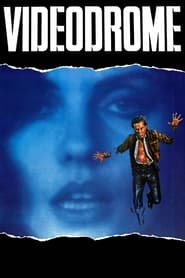
Videodrome (1983) — dir. David Cronenberg
The trick here is what's withheld. Mark Irwin shoots the impossible — a television screen swelling like breathing flesh — in exactly the same cool, flat, institutional light he uses for cramped office meetings. No cue tells you when you've left the real, and that refusal is the entire method. Watch Max Renn begin as a fast-talking investigator chasing a pirate broadcast signal, and notice how the film slowly strips away his ability to act on what he sees. Wintry, unglamorous Toronto gives it a texture no American horror film of the era has.
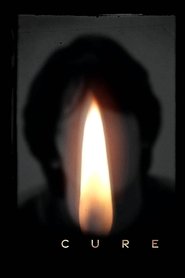
Cure (1997) — dir. Kiyoshi Kurosawa
Where most serial-killer films of the '90s lean in — close-ups, charisma, grand design — Kurosawa answers by subtraction. The camera stays wide and far back, holding figures inside drained, gray environments in long, patient takes, so dread accumulates in the spaces around people rather than on their faces. Watch the hypnosis scenes: a flickering lighter, dripping water, a slow patient voice — and notice that these are also a description of cinema itself, a point of light in the dark working on a watcher. The film's central question ("Who are you?") sounds like nothing at all. Let it work on you.
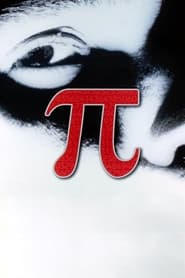
Pi (1998) — dir. Darren Aronofsky
Grainy, harsh black-and-white and a camera that never once steps outside its protagonist's skull. Watch the SnorriCam shots — the rig bolts the camera to Max's body, so his face stays locked dead center while the street pitches and slides behind him like a ship's deck. Nothing is wrong with the street; something is wrong with the man. Extreme close-ups of pills, pupils, and switches keep tightening the lock, and by the time the migraines bloom the screen to white, the film has taught you to read overexposure as pain. A landmark of what a first feature made for almost nothing can do.
Dark City (1998) — dir. Alex Proyas
At midnight the whole city falls asleep standing up, and the buildings begin to move — towers screwing up out of the pavement, streets folding into new streets, while no one is awake to witness. Dariusz Wolski shoots in near-total night, hard low light carving figures out of darkness in the grand 1940s noir manner, with canted angles inherited straight from Caligari and a vertical miniature metropolis descended from Metropolis. Watch for "Shell Beach" — a sunlit place everyone can name and no one can quite reach — and notice how a city with no sun, no edge, and no trustworthy history becomes a question about whether the self is anything more than its memories.

A Tale of Two Sisters (2003) — dir. Kim Jee-woon
You will remember the wallpaper. Lee Mo-gae shoots this house with a painter's care — warm woods, deep ambers, floral patterns, symmetry framed through doorway after doorway — and the prettiness is the trap. Where most horror hides in the dark, Kim hides it in the well-lit corner of a beautiful room. The film descends from The Innocents and The Haunting: houses experienced through a troubled perception, where you can never be certain what's apparition and what's projection. Pay attention to surfaces here; the composure of the image is itself a kind of screen.

Black Swan (2010) — dir. Darren Aronofsky
Watch the back of her head. Matthew Libatique's camera rides inches behind Nina's shoulder through corridors and dressing rooms, never letting you see quite what she sees, never letting you stand safely apart — intimacy curdling into surveillance. Then watch the mirrors: a ballet studio is wall-to-wall glass, and Aronofsky treats reflection as a resource that never runs out, doubling and fragmenting his dancer until you can't be sure which figure is the original. The film openly inherits from The Red Shoes, Polanski's Repulsion, and Satoshi Kon's Perfect Blue — three traditions of women's interiors becoming exteriors — fused into a backstage story about the physical cost of perfection.
Why Watch These Together
Because they teach each other. Caligari's painted shadows echo in Dark City's bending skyline; Bergman's held faces resurface in the two-hander intensity that Aronofsky's over-the-shoulder camera inverts; Kurosawa's patient wide shots and Żuławski's lunging handheld are opposite answers to the same question — where should the camera stand when a mind comes apart? Watched as a set, you'll start noticing the choices: who cuts without warning and who holds without mercy, who lights the impossible flatly and who paints the darkness by hand. None of these films will tell you when you've crossed from the world into the head. That's the invitation. The pleasure — and it is a real, deep pleasure — is learning to feel the crossing anyway.