Sightlines · a mini film course
Watchers, Doubles, and the Stories We Tell Ourselves
Here is a set of films about people who see more than they can act on — and about films that make you into that kind of watcher. Some of them ride a few inches behind a character's shoulder; some strap you inside another person's eyes; some hand you a story told by someone with every reason to lie. What connects them is a fascination with the gap between watching and knowing: mirrors that don't quite match the body, narrators you can't fully trust, cities that seem to move while the people in them stand still. These are movies built on craft you can feel — camera rigs, cutting rhythms, sound tricks — all aimed at one question: what happens when a character (or an audience) can only look?
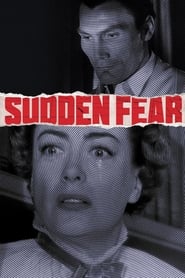
Sudden Fear (1952)
Start here, with the oldest film and the purest version of the idea. Charles Lang's Oscar-nominated black-and-white photography splits the film in two — a warm, open San Francisco courtship that gradually darkens into deep shadow and oppressive rooms. Watch what the film does with Joan Crawford's face in one extraordinary sequence: isolated in fields of black, asked to travel an entire arc of feeling almost without a word, muscles working while she stays silent. A slick suspense picture quietly becomes a study of a person who can only listen — and what gathers in a face when action isn't yet possible.
The Shining (1980)
Garrett Brown's Steadicam was brand new in 1980, invented to smooth out shaky shots. Kubrick turned it into a way of thinking: the camera floats inches off the floor behind a boy on a trike, gliding through corridors as if the building were arranging itself ahead of him. Listen to the sound — carpet, hardwood, carpet, the wheels going loud and soft — and notice how it makes you brace before every corner. Try, too, to map the hotel in your head as you watch. You won't be able to, and that failure is part of the design: the Overlook isn't a setting the characters move through so much as a mind they're moving inside.
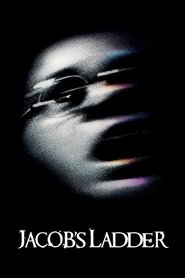
Jacob's Ladder (1990)
The signature effect here is done in-camera: an actor whipping his head while the film runs slow, so that at normal speed the wrongness is printed into the image rather than layered on top. You're looking at something you cannot read, and the failure to read it is the horror. Notice, too, the palette shift — humid greenish swamp light for Vietnam, sickly fluorescent whites for hospitals and subways — and notice how often Jacob simply looks rather than acts. The film hands you thriller machinery, then watches it stall, and the stalling is the point.
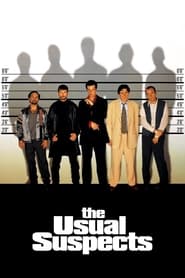
The Usual Suspects (1995)
A man narrates in a deliberately drab white interrogation room, and the film does what films always do with narration: it shows you the events, fully lit, fully scored, fully convincing. That's the trick to watch for — how completely the flashback grammar of cinema earns your trust, and what Singer does with that trust. Pay attention to how identity is performed through body and voice, and to the desaturated, unglamorous look Newton Thomas Sigel gives the "real" world, stripped of atmosphere so the told story can glow. This one rewards watching your own belief at work.
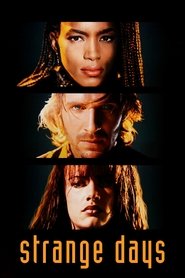
Strange Days (1995)
Bigelow opens by putting you inside a body before she tells you whose: a robbery seen through borrowed eyes, custom first-person camera rigs years before GoPro or VR made that vision ordinary. The film runs on two distinct ways of looking — the grimy, neon-soaked "real" Los Angeles and the immersive playback clips — and asks what it costs to relive someone else's sensations like a drug. Watch how the film makes you complicit in the watching, and how it processes a wounded, pre-millennial L.A. through wet streets and sodium light.

Mulholland Drive (2001)
There's a nightclub scene here — a singer, a song, an announcement made twice in two languages — that shows you the engine of the whole film in ninety seconds: emotion that is real and manufactured at once. Watch how Peter Deming's photography splits into two registers, one bathed in the warm golden glow of Hollywood mythology, and how Lynch cuts by emotional association rather than cause and effect. Don't try to solve it on first viewing. Let the seams show; the seams are the subject.
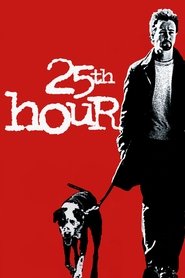
25th Hour (2002)
Watch the way the main character moves through New York in his last free hours. Lee mounts actor and camera on the same rig — his famous double dolly — so Edward Norton seems to glide while the city slides past behind him like a current he's no longer part of. The world moves; the man holds still. Rodrigo Prieto drains the image to a cold, bruised blue, and the film — arguably the first major fiction feature to absorb 9/11 as atmosphere rather than plot — becomes an elegy for a city and a man at once. Watch for a bathroom-mirror monologue delivered straight at you.
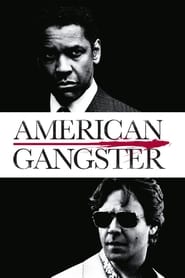
American Gangster (2007)
Read this one through the wardrobe. A man dresses to be forgotten — grey suit, mid-priced, the uniform of an accountant — because invisibility is the first principle of his business. Then comes a chinchilla coat, and the camera finds the men watching him before he registers he's been seen. Watch how Savides builds the film on a chromatic opposition — amber penthouse warmth against institutional grey — and how Scott stages meaning through posture and arrangement rather than speeches: a Thanksgiving table can carry an entire argument.

Black Swan (2010)
Watch the back of her head. For most of the film the camera rides a few inches behind Natalie Portman's shoulder — a technique Aronofsky and cinematographer Matthew Libatique built on The Wrestler — never letting you see quite what she sees, never letting you stand safely apart. Intimacy curdles into surveillance. Then watch the mirrors: a ballet studio is wall-to-wall glass, and Aronofsky treats reflections as things with wills of their own, lagging a half-beat behind the bodies that cast them. The lineage runs through The Red Shoes, Polanski, and the anime Perfect Blue, and you can feel every ancestor.

The Wolf of Wall Street (2013)
Prieto again, doing the opposite of noir: hot whites, garish saturated color, a deliberately anti-beautiful brightness that refuses crime cinema's moody shadows. Watch how Scorsese and editor Thelma Schoonmaker use their GoodFellas toolkit — freeze-frames, accelerating montage, a picaresque narrating voice — and then push it toward farce. There's an extended physical-comedy sequence involving expired Quaaludes that Scorsese holds long past the joke, until you're watching through your fingers. Notice the crowd scenes: the trading floor staged like a revival tent, appetite as congregation.
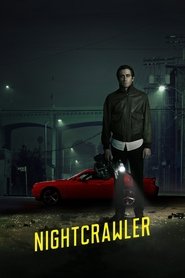
Nightcrawler (2014)
Robert Elswit shoots nocturnal Los Angeles as a glittering, depopulated grid — empty freeways, fluorescent convenience stores — and dares you to find it beautiful. Watch the moment when the protagonist stops merely filming a crime scene and starts arranging it: the observer becoming the author of what he observes. The film descends from Ace in the Hole and Sweet Smell of Success, the great American pictures about media operators, and like them it declines to comfort you.

You Were Never Really Here (2017)
Ramsay keeps the shape of the vigilante thriller and quietly removes its payoffs. Fragmentary images — a hand at a grate, shoes, feet in dust — flare up without dates or explanations, arriving the way a smell arrives, and they never assemble into the backstory the genre owes you. Watch how the camera works in extremes: close-ups of hands and surfaces that give you only partial information. The influences are Taxi Driver (shot on 35mm for that same bruised grain) and Bresson, who taught cinema to render violence through aftermath — a door, an object — rather than the act itself.
Watched together, these films teach you a way of seeing. You'll start noticing where the camera stands — behind a shoulder, inside a skull, floating an inch off a carpet — and realize that position is never neutral: it decides whether you're a companion, a voyeur, or a mark. You'll notice how often the most powerful moments belong not to action but to watching: a woman listening in the dark, a man gliding through a city he's already lost, a face crossing a threshold in silence. And you'll notice how much these films trust you — to read a coat, a limp, a lagging reflection, a song without a source. That trust is the pleasure. Bring your attention; they'll reward every ounce of it.