Sightlines · a mini film course
Between Seeing and Doing: Eleven Films on the Same Question
Every film on this list is secretly asking the same thing: what happens between the moment a character sees something and the moment they can — or can't — do anything about it? Some of these movies are gleaming machines of action, where seeing flows straight into doing and the editing carries you like a current. Others deliberately jam that machine: the camera watches rather than chases, characters are reduced to witnesses, and time is allowed to stretch until watching itself becomes the drama. I've ordered them along that spectrum, from doing to seeing. Watch for where each film sits — and where it cheats.
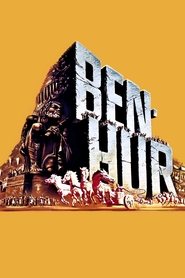
Ben-Hur (1959)
Start here, with the classical engine at full power: a vast situation presses on one man until a single decisive act transforms everything. The famous chariot race is studied not because it's chaotic but because it refuses to be — nine and a half minutes of dust and axle-blades in which you never once lose the geometry of the arena. Notice how cinematographer Robert Surtees solves widescreen's oldest problem, alternating enormous deep-staged crowds with disciplined close work on faces. Clarity at speed is the achievement.
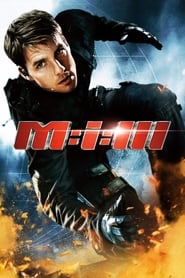
Mission: Impossible III (2006)
Made forty-seven years later, this is an almost defiant restoration of that same engine — see the situation, act, resolve it — at a moment when prestige cinema had largely walked away from it. Watch the cold open: the film begins on its own worst moment, ripped out of sequence, then flashes back so you spend two hours dreading what you've already glimpsed. Dan Mindel's handheld camera stays close to faces with long lenses that compress and isolate — spectacle built out of intimacy.
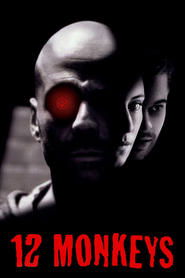
Twelve Monkeys (1995)
Now watch the engine break. Gilliam casts Bruce Willis with all his action-hero authority and then spends the film disabling it: his James Cole can perceive everything and change almost nothing. Roger Pratt's distorting lenses, low institutional angles, and cold desaturated palette (carried over from Brazil) render a world pressed inward — and the whole looping structure keeps circling one scrap of memory it won't let you read until it's ready. Descended directly from Chris Marker's La Jetée; see that short after, not before.
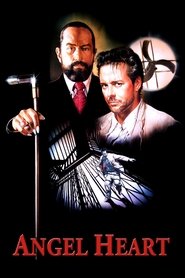
Angel Heart (1987)
A private-eye film in which the detective does everything a gumshoe is supposed to do — and his actions don't resolve the situation so much as tighten it. Watch the gap between what the image notices and what Harry Angel lets himself notice: the ceiling fans, the smoke, the recurring shapes the camera keeps returning to and he keeps not looking at. Michael Seresin films two Americas — cold grey New York, humid amber Louisiana — as if both were rotting from within.
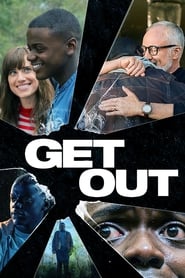
Get Out (2017)
Peele's horror runs on social choreography: smiling hospitality as menace, in the lineage of Rosemary's Baby. Watch the camera's strategy of slight withdrawal — it stays in close sympathy with Chris, then pulls back just enough to strand him, the only dark figure in a white expanse of lawn or sunlit garden. And listen: the film's most terrifying instrument is the most domestic sound in the world, a teaspoon circling a china cup. Seeing without being able to act is this movie's deepest subject, long before it becomes literal.
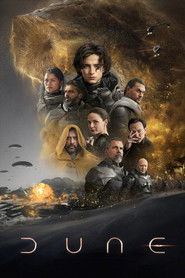
Dune (2021)
Villeneuve's wager is the held shot. Greig Fraser's large-format frames place tiny figures against a sun-bleached horizon with no landmark, and the camera refuses to cut until a man stops reading as a man and becomes a unit of measurement. This desert is not terrain to be crossed and conquered — the sand is sovereign, down to the irregular walk characters must adopt to move across it. The lineage is Lawrence of Arabia and 2001: science fiction as grave, monumental contemplation.
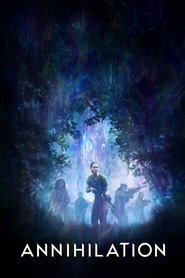
Annihilation (2018)
Here watching fully replaces acting. Garland arms his protagonist with every competence a thriller needs — soldier, scientist — and sends her into a zone where there's nothing adequate to do, only things to see: greens pushed toward the toxic, light refracting through a soap-bubble membrane, two deer moving in impossible mirrored unison while the characters simply stare. Watch how the film gradually surrenders words to pure image and sound, in open homage to 2001 and Tarkovsky's Stalker.
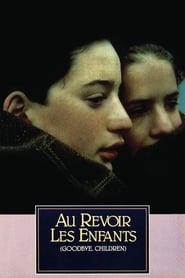
Au Revoir les Enfants (1987)
The quietest film here, and maybe the most devastating use of watchfulness in cinema. Malle, drawing on his own boyhood in an Occupation-era boarding school, films in Renato Berta's cold, disciplined winter light and directs his young lead almost entirely through looking rather than doing. Pay attention to eyes and faces: the film is training you, scene by scene, to read a glance — because a glance is all a child has against history.
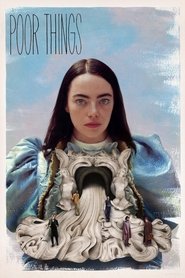
Poor Things (2023)
Lanthimos makes perception itself the plot. Robbie Ryan's fisheye lenses and circular irises don't just show you Bella Baxter's world — they register the rawness of a consciousness meeting it for the first time, the frame bulging at its edges. Then watch what happens as she learns: the distortion relaxes, the compositions normalize. You are literally watching a mind calibrate its own lens.
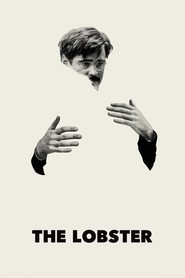
The Lobster (2015)
Watch how people stand in this film. In a world where the unpartnered face an absurd deadline, Lanthimos blocks his actors in stiff frontal rows, centers them in symmetrical frames, and directs them toward flat, oddly literal line readings — bodies held in postures that expose the rules they live under, rather than performing feelings. The deadpan is the point: unbearable facts delivered in the register of a hotel check-in, which is why it's funny and sinister in the same breath.
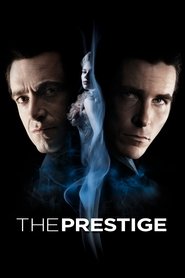
The Prestige (2006)
Two rival magicians, two diaries, each man reading the other's — and each time a reader's knowledge shifts, the meaning of a scene you already watched shifts with it. Nolan doesn't give you a lie corrected by a truth; he gives you versions that stay in play, with no master account to settle them. Watch Wally Pfister's anamorphic widescreen frames, which contain information you're trained not to notice. The film is honest with you the whole time — that's the trick.
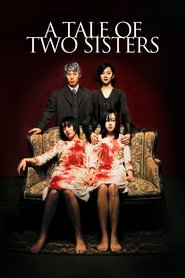
A Tale of Two Sisters (2003)
End here, with a horror film that hides its terrors not in the dark but in the well-lit corner of a lovely room. Lee Mo-gae shoots the house with a painter's care — warm woods, patterned wallpaper, symmetry framed through doorway after doorway — and the prettiness is the trap. Don