Sightlines · a mini film course
The Watchers and the Doers: Eleven Films About Seeing, Waiting, and Striking
Here is the secret thread running through this watchlist: every one of these films is asking the same quiet question — what happens in the space between seeing something and doing something about it? Some of these heroes act instantly, body fused to purpose. Some can only watch, framed behind glass, stranded in doorways, staring up at the light. And some films are about the watching itself — the camera that refuses to cut, the photograph that freezes a battle, the stillness that becomes its own kind of suspense. Watch these together and you'll start to feel the difference in your own body: the films that chase, and the films that wait.
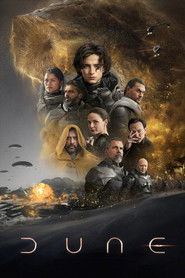
Dune (2021)
Watch how long Villeneuve holds his shots. A lone figure on the crest of a dune, sand running to a horizon with no landmark, and the camera simply refuses to cut — until the person stops reading as a person and becomes a unit of measurement against the desert. Greig Fraser's sun-bleached, large-format photography puts tiny figures in vast frames so you feel individual insignificance in your bones. Notice too the famous irregular "sand-walk": even the way a body is permitted to move belongs to the place, not the person. This is a blockbuster built on the grammar of Lawrence of Arabia and 2001, wagering that spectacle can be slow, grave, and image-led.
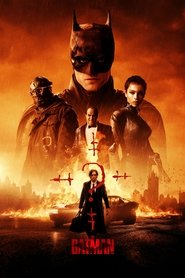
The Batman (2022)
The watching is the plot here. Reeves opens on surveillance — a figure at a rain-streaked window, a city that never quite sees morning — and then hands you a cipher addressed "To the Batman." From that moment you're decoding over the detective's shoulder, made a knowing third party to the case. Notice Fraser's photography again, now turned nocturnal: radically underlit faces, eyes lost in shadow, light coming from visible lamps and sodium streetlights — a grammar borrowed straight from The Godfather's "Prince of Darkness" look, fused with the rain-soaked procedural dread of Se7en and Zodiac.
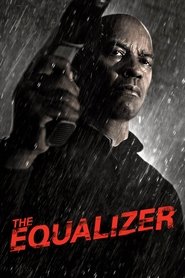
The Equalizer (2014)
For most of an hour, this action film refuses to act — and that refusal is the whole argument. Watch the nightly ritual: the same diner, the napkin folded into a clean rectangle, the book squared to the table's edge, the tea steeped to the minute. Fuqua keeps finding McCall behind glass, framed in windows, caught in reflections — a man who studies the street through a pane he will not step through. It's the ritual stillness of Le Samouraï transplanted into a Boston diner, and it makes the eventual eruption mean something.
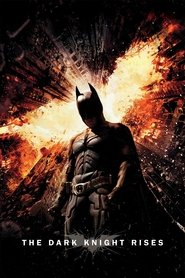
The Dark Knight Rises (2012)
Hold onto the image of a hole in the earth with a circle of sky at the top — a broken man at the bottom who can do nothing, for a long stretch of this enormous film, but look up at the light and listen. Nolan builds his spectacle the old way: real industrial locations, thousands of actual extras choreographed in space rather than assembled in the edit, the visual language of Metropolis's underground-and-surface class divide. This is a film about a man learning how to act again, and it makes you wait with him.
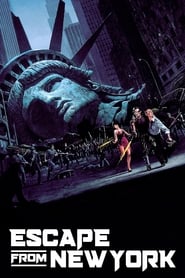
Escape from New York (1981)
The future here is handmade, and that's the pleasure. The famous wireframe view of Manhattan? No computer drew it — the crew wrapped scale models in reflective tape and lit only the edges. Watch how Carpenter and cinematographer Dean Cundey build a world from darkness: fires, headlights, pools of sodium light in the anamorphic frame. And watch Kurt Russell's Snake, a man who is mostly silhouette, performing the withholding man-with-no-name routine Carpenter learned from Sergio Leone — with Leone veteran Lee Van Cleef cast opposite him as a knowing wink.
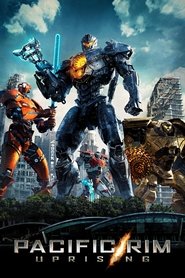
Pacific Rim: Uprising (2018)
Here's the purest doer in the set — and it's instructive to watch it that way. Everything runs through the Drift: two pilots neurally fused into one giant body, perception wired directly to action, no hesitation permitted. Dan Mindel's bright, clean, widescreen photography keeps the spatial logic legible at all times — see the threat, strike the threat. Notice the film's lineage: the kaiju roar of Toho's Godzilla, the pilot-machine mind-meld of Evangelion. This is deliberate, unapologetic circuit-completion cinema — useful contrast for everything else on this list.
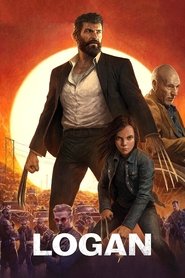
Logan (2017)
A Wolverine who needs reading glasses. Hold on that image: a body that used to be a weapon, now keeping its wounds. Mangold shoots it as a Western — sun-bleached anamorphic frames, dust, hard unromantic light in the motels and hideouts — because it is a Western, the aging-gunfighter kind descended from Shane and Unforgiven. Watch how the film makes injury and cost the actual subject: every act of violence has a price the frame refuses to erase, in the spirit of The Wrestler's battered-body elegy.
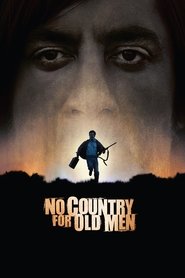
No Country for Old Men (2007)
Watch the gas-station scene — a coin on a counter, fluorescent light, and a man who doesn't know what he's playing for. Nothing moves except the talk, and you watch the way the owner watches: unable to act. The Coens and Roger Deakins build the whole film on that kind of restraint — long lenses compressing figures against featureless desert, landscape as participant rather than backdrop, and a soundtrack built almost entirely from ambient sound, room tone, and silence in the tradition of The Conversation. This is a thriller that honors every mechanic of the chase and quietly refuses to let it comfort you.
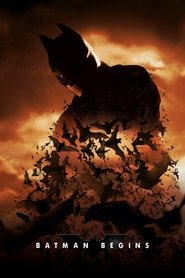
Batman Begins (2005)
Watch how memory keeps interrupting the present. A boy falls into a well, the dark comes alive with bats — and that image refuses to stay in the past, surfacing uninvited across the film's first hour, intercut with training in the Himalayas and grief in a Gotham alley. It's a bold formal choice borrowed from Nolan's own Memento: fear, guilt, and resolve arrive as flashes of recollection before they ever harden into a plan. Notice too Wally Pfister's desaturated, tactile Gotham — sodium orange and steel gray, a real decaying metropolis conceived as a deliberate correction to the stylized comic-book cities that came before.
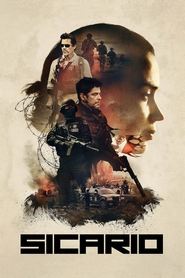
Sicario (2015)
Watch where Villeneuve keeps putting Emily Blunt: in a doorway as shooting starts, in the back seat of a convoy that won't say where it's going, at the edge of a briefing where the real plan is decided somewhere she is not. She's the person things happen near — a competent agent who perceives everything clearly and can change nothing, and the blocking encodes the film's entire argument about complicity. Deakins shoots the border as geology, not myth: wide frames that dwarf the people in them, refusing the Western's romance while borrowing its scale.
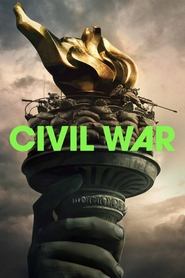
Civil War (2024)
Watch your own body the first time it happens: mid-firefight, motion breaking at the frame's edge — and then everything stops. One still photograph, high-contrast, perfectly composed, a shutter click. Then motion resumes as if nothing had been taken out of it. Something had. Garland builds the whole film on that device — cinema interrupting itself with photography — and on Rob Hardy's handheld camera behaving like a fifth member of the press team, searching, sometimes caught flat-footed. The oldest questions of the combat-correspondent film (Under Fire, The Killing Fields, Salvador) transplanted onto American soil: what does it cost to turn suffering into an image?
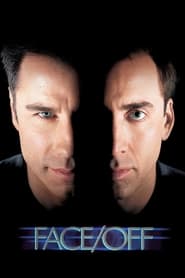
Face/Off (1997)
Keep the two-way mirror: two men on either side of a single pane, pistols raised, each aiming at his own face — because his face is now worn by the man across from him. Woo composes nearly the whole film around mirrored frames, doubled identities, a surface that won't resolve into original and copy. Watch for the Hong Kong signatures he carried across the Pacific from A Better Tomorrow, The Killer, and Hard Boiled: the slow-motion doves, the church-and-candle imagery, gunfights staged as emotional crescendos rather than breaks from character. Sentiment and spectacle fused, operatically.
Watched together, these eleven films become a conversation about tempo and attention. You'll feel the pendulum swing: from the pure, exhilarating see-it-strike-it clarity of Pacific Rim: Uprising and Face/Off, to the patient watchers of The Equalizer and Sicario, to the films where the camera itself becomes the watcher — Dune's unbroken horizons, No Country's ambient dread, Civil War's freezing shutter. Notice which films let their heroes act, which ones make them wait, and which ones ask what watching costs. By the end, you'll have trained an eye for one of cinema's most fundamental choices: whether the camera chases the world, or holds still and lets the world press in.