Sightlines · a mini film course
Watching Without Flinching: Twelve Films About People the World Won't Let Act
There's a certain kind of movie where the hero sees a problem and solves it — the punch lands, the door opens, the plan works. The twelve films in this set belong to a different, braver tradition. Here the camera watches rather than chases. Characters perceive everything and can change almost nothing, and the filmmakers refuse to look away from that gap. Instead of plot mechanics, you get bodies, streets, weather, waiting — time allowed to stretch until you feel what it's like to live inside a situation with no exit marked. The lineage runs from bombed-out Rome in 1946 through Bombay, Salford, Auckland, Naples, and a chalk-outlined town that doesn't exist at all. Watched together, these films teach you a whole other way of seeing.
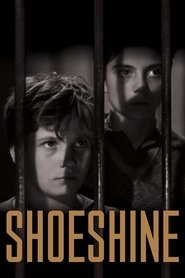
Shoeshine (1946)
The founding document. De Sica shoots postwar Rome with documentary attentiveness — crowds, military vehicles, the black-market bustle — always keeping two shoeshine boys legible inside the swirl. Hold onto the opening image of the white horse, gleaming and impossibly clean against a grey city: everything after gets measured against it. Watch how the film sets up simple cause-and-effect (earn money, buy the horse) and then quietly refuses to let the boys' actions ever land the way actions do in ordinary movies.
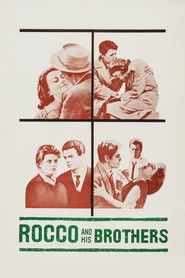
Rocco and His Brothers (1960)
Visconti starts on documentary ground — a widow and five sons stepping off a train into foggy, half-built Milan — then grafts opera onto it. Giuseppe Rotunno's photography moves between grainy realist surfaces and charged, high-contrast shadow. Watch Alain Delon play absolute goodness as a kind of paralysis: a man whose stillness, whose watching, becomes the most active thing in the frame.
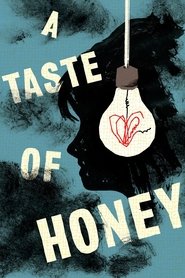
A Taste of Honey (1961)
Start with the walks — Jo moving through Salford past canal water, latticed ironwork, fairground neon against grey sky, heading nowhere in particular. Walter Lassally finds genuine beauty in industrial desolation without ever prettifying poverty. The film runs on what one description calls "an intelligence making continuous small adjustments to conditions she did not choose" — watch Rita Tushingham do exactly that, scene by scene.

I Am Cuba (1964)
The wild card: here it's the camera that's been cut loose. At a rooftop party the lens drifts past bathers, descends — and slides under the surface of the swimming pool without a cut, peering up at the legs it just left. Nobody could be holding it. Urusevsky built custom pulleys and waterproof housings to achieve this weightlessness a decade before the Steadicam. Watch for vision that belongs to no one — the world seeming to film itself.

Salaam Bombay! (1988)
Sandi Sissel's documentary-bred camera stays low, near a boy's shoulder, so the adult world registers as legs, hips, hands taking tea glasses. Nair keeps Krishna small inside the frame on purpose — never the figure the composition is built around, but a thing the composition almost loses. His goal is clean enough for any action movie: five hundred rupees, then home. Watch how the city keeps refusing to let effort accumulate.
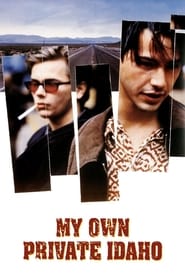
My Own Private Idaho (1991)
Van Sant's photography holds documentary plainness and lyric beauty in the same frame: grainy flophouses, then wide painterly Idaho vistas. Mike's narcolepsy is the film's boldest device — when sleep takes him, the film goes under too, cutting to time-lapse clouds, a barn splintering on empty blacktop. He doesn't act; he drops, and the world does the moving. Watch the campfire scene for how much a halting confession can carry.
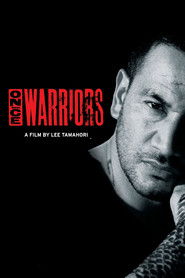
Once Were Warriors (1994)
The film opens on a postcard — blue mountains, still water — then pulls back to reveal it's a billboard bolted above a roaring motorway. Everything the film knows lives in that gap between painted paradise and the concrete beneath it. Stuart Dryburgh (fresh off The Piano, working in a totally different register) gives the pubs and parties an amber-and-red glow against flatter, cooler domestic spaces. Watch how a recognizable setting — a kitchen, a local bar — becomes a thin crust over something older and more volatile pressing up from below.
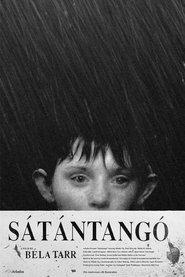
Satantango (1994)
The film opens with several unbroken minutes of cows shuffling out of a collapsing farmyard into grey rain — and by the time the shot lets you go, Tarr has taught you how to watch the next seven hours. Shots run five, eight, ten minutes; there are astonishingly few cuts for the running time. Don't fight the pace. You're not watching for what happens next; you're watching time itself move through a ruined place. Watch the doctor at his window, cataloguing his neighbours in a notebook — observation as the last verb available.

Dancer in the Dark (2000)
A factory press comes down, and down, and around the fourth blow the noise becomes a beat — the machines fall into rhythm, and the grey floor becomes a stage. Then the song ends and the press is just a press. Robby Müller shoots the dramatic scenes deliberately ugly — jittery handheld, washed-out color — so the musical numbers arrive like weather from another world. Watch the switch between registers: the whole film lives there.
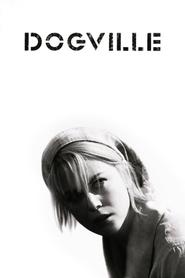
Dogville (2003)
A woman raps her knuckles on empty air; there is no door, only a chalk rectangle and, from somewhere, the click of a latch. Von Trier strips away the visible world — the word "dog" written on the floor where a dog should be, a street labeled "Elm St." — and Anthony Dod Mantle's restless handheld camera hunts among the actors on the bare black stage. Watch what happens when nothing is self-evident: every gesture must be read, and the reading makes you complicit.
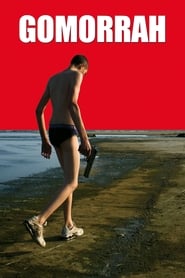
Gomorrah (2008)
A man is shot in a stairwell and the camera is already drifting elsewhere — no strings, no slow motion, no reverse angle granting the death its meaning. Garrone braids five strands through a concrete-grey Naples and refuses every payoff the gangster genre promises. Watch the two teenagers imitating Scarface on the beach: the film stages the Hollywood fantasy precisely to puncture it.
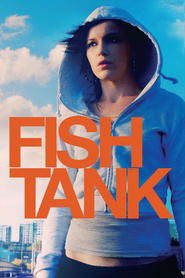
Fish Tank (2009)
Before much story arrives, you see Mia alone in a gutted flat, headphones on, drilling the same eight counts of a hip-hop routine — no audience, no mirror. Robbie Ryan shoots in a boxy, near-square frame that crops the lateral world away, trapping her in tall narrow compositions that mirror the film's title. Watch how the film trusts the body over dialogue: dance is Mia's one channel, and everything she can't say gets routed through posture, stance, movement.
Watch these together and something clicks. You start noticing how a frame can trap a person, how a long take makes you inhabit time instead of consuming it, how a camera that refuses to cut away becomes a moral position. These films demand a different kind of attention than the perceive-act-resolve machine of ordinary cinema — and they repay it. The boy shining shoes in 1946 Rome, the girl dancing in a gutted Essex flat in 2009: sixty years apart, they're held in the same patient, unflinching gaze. Once you learn to watch this way, you can't quite unlearn it — and a lot of other movies will suddenly look like they're in a hurry to avoid something these twelve stand still long enough to see.