Sightlines · a mini film course
When Acting Isn't Enough: Eleven Films About Watching, Enduring, and the Body Under Pressure
There's an old promise at the heart of most movies: a character sees a problem, does something about it, and the world changes. The films on this list — spanning postwar Rome, a Sicilian fishing village, a Naples housing project, an Essex council estate, a Colombian flower town, revolutionary Havana — quietly break that promise, each in its own way. Their people see everything and can change almost nothing. So the filmmakers redirect our attention: to faces, hands, postures, and throats; to real streets and real weather; to cameras that watch rather than chase. What emerges isn't defeat but a different kind of drama — one where a girl's dance routine, a boy's sideways glance, or a row of women silhouetted against the dawn carries more weight than any showdown. Watch these together and you'll start to see a hidden tradition: cinema that trusts the body and the world to speak when the plot cannot.
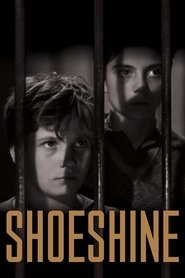
Shoeshine (1946)
Hold onto the opening image: a white horse, gleaming and impossibly clean against a war-greyed Rome, bought by two shoeshine boys with every coin they've earned. De Sica shoots the streets with documentary attentiveness — crowds, military vehicles, black-market bustle — always keeping the boys legible inside the chaos. Watch how the film sets up the simple loop of wanting something and getting it, then very quietly refuses to let that loop close: the drama isn't that the boys lose a fight, but that no fight is ever available to them. A founding work of Italian neorealism, and the prototype of the postwar film that indicts the adult world through a child's uncomprehending face.

La Terra Trema (1949)
Begin with the women standing on black volcanic rocks before dawn, watching the sea for late boats — held in silhouette far longer than the plot requires. G. R. Aldo's photography is among the most admired in Italian cinema: long, deliberate takes, deep focus, figures framed by dark doorways and the geometry of nets and masts. This is neorealism at its most extreme — real village, real dialect, non-professional fishermen — yet also its most painterly. Watch the tension between the man who sees his situation clearly and acts to change it, and a rigged economy and indifferent sea that press back like weather.
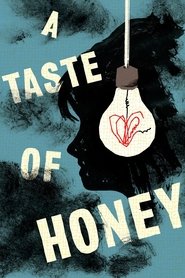
A Taste of Honey (1961)
Start with the walks: Jo moving through Salford past canal water, latticed ironwork, fairground neon smearing against grey sky — heading nowhere in particular, just heading. Walter Lassally finds genuine beauty in industrial desolation without ever prettifying poverty, and those aimless stretches are the film in miniature. Rita Tushingham plays Jo as, in one lovely phrase, "an intelligence making continuous small adjustments to conditions she did not choose." Watch how much this Kitchen Sink landmark builds from behavior and atmosphere rather than plot mechanics.
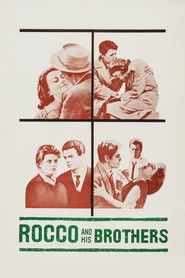
Rocco and His Brothers (1960)
The image to hold: Rocco watching — Alain Delon playing absolute goodness as a kind of paralysis, a saint who can only behold. Visconti starts on documentary ground (a southern family stepping off the train into foggy, half-built Milan; the basement room, the laundry, the boxing gym) and then grafts opera onto it: Giuseppe Rotunno's photography swings between grainy social-realist surfaces and charged, high-contrast shadow. Watch that graft — the moment realism tips into melodrama and back — because the split is the film's whole argument about family, migration, and what loyalty costs.

I Am Cuba (1964)
Watch the camera at the rooftop party: it drifts over a poolside crowd, follows bathers down, and then — without a cut — slides under the surface of the swimming pool and keeps going, peering up at legs through the water. Nobody could be holding it, and that's the point: this is seeing cut loose from any human body, engineered by Sergei Urusevsky with custom pulleys, platforms, and waterproof housings a full decade before the Steadicam. A Soviet-Cuban hybrid descended from Eisenstein and Vertov, it's one of the most physically astonishing films ever made. Let the impossible, currentlike motion carry you; the weightlessness is real, rigged by hand.
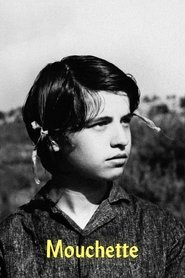
Mouchette (1967)
Start with her hands at the edge of a bumper-car rail, and a moped's whine on the soundtrack that belongs to no image we're shown — that gap between what the frame holds and what the ear is handed is the whole film in miniature. Bresson directed "models," not actors, draining faces of performed feeling, and Nadine Nortier's famous blankness is method, not amateurism. Ghislain Cloquet's sober black-and-white photography isolates gestures and fragments of bodies under even, overcast light. Watch how often the film simply holds the girl watching — and how sound carries what the image withholds.
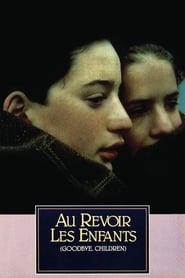
Au Revoir les Enfants (1987)
Everything here is built around watchfulness: Malle's young lead plays almost entirely through looking, rarely through deed, and the film trains you from the start to read faces the way its boy protagonist must. Renato Berta's photography is disciplined naturalism — a cold, narrow palette of greys, browns, and bluish winter light that makes an unheated wartime boarding school something you feel on your skin. Drawn from Malle's own childhood under the Occupation, it inherits the tradition of catastrophe registered through a child's uncomprehending eyes rather than combat spectacle. Watch what a single glance can carry, and what it can never take back.
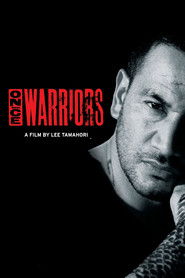
Once Were Warriors (1994)
The film opens on a postcard — blue mountains, still water — then pulls back to reveal it's a billboard bolted above a roaring motorway. Everything the film knows lives in that gap between painted paradise and the concrete underneath. Stuart Dryburgh (fresh off The Piano, in a completely different register) gives the pub and party interiors an amber-and-red neon glow against flatter, cooler domestic spaces, and Temuera Morrison delivers a magnetic, terrifying performance in the raw Method lineage of Stanley Kowalski. Watch for the idea in the title: an ancestral warrior spirit with no proper battlefield left, pressing up beneath ordinary rooms.
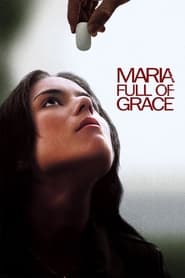
Maria Full of Grace (2004)
A girl at a kitchen table, a glass of water, a row of latex pellets she must swallow one by one without gagging — watch her throat, because the whole film is organized around that small muscular act. Marston takes the most action-hungry genre there is, the drug-trafficking film, and drains the spectacle out until only a body carrying its cargo remains: smuggling treated as labor, the lowest rung of the supply chain treated with dignity. Jim Denault's handheld camera stays close to faces in tight rooms — greenhouse rows, a sealed airplane cabin, a fluorescent customs hold. Suspense wrung not from plot but from stillness, breath, and endurance.
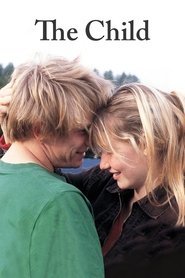
The Child (2005)
The camera stays a few feet behind Bruno's neck as he half-jogs through the Belgian steel town of Seraing — close enough to see grey sky reflect off a stairwell wall, never far enough ahead to read his face. The Dardennes have decided, on principle, not to tell us what he's thinking: no backstory, no psychology, just gait, shoulders, hands. Working in Bresson's lineage, they build the drama backwards — we get deeds first and must infer the world that produced them, tracing money as it passes from palm to palm. Watch how much moral weight a pair of hands can carry when the face is withheld.
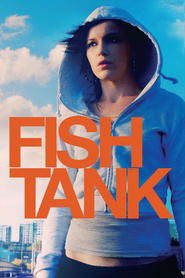
Fish Tank (2009)
The first real image of Mia: alone in a gutted flat, headphones on, drilling the same eight counts of a hip-hop routine into a concrete room — no audience, no mirror. Arnold gives you this before she gives you story, and it teaches you how to watch: Mia has no words for what's happening to her, so her body keeps trying to say it. Robbie Ryan shoots in a boxy, nearly square frame that crops the wide world away, trapping her in tall narrow compositions — the fish tank of the title — while the handheld camera trails her like a second skin. Watch the dancing: it's the one channel she has, and the film routes her entire predicament through it.
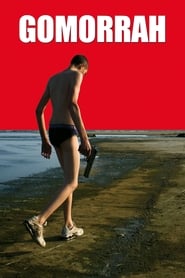
Gomorrah (2008)
A man is shot in a stairwell and the camera is already drifting elsewhere — no strings, no slow motion, no reverse angle to grant the death its meaning. Marco Onorato's roving, long-lens camera treats violence the way the housing projects treat it: as weather. Garrone braids five strands that never converge into a mosaic with no single hero, updating the neorealist method — real locations, non-professional faces, concrete-grey light — for the modern crime film. Watch the two teenagers acting out Scarface in the surf: the film stages the Hollywood gangster fantasy precisely in order to puncture it.
Seen together, these films form a conversation across sixty years and half a dozen countries. The neorealists hand their method — real streets, borrowed faces, an ethics of patient observation — to the Dardennes, who hand it to Arnold and Marston; Visconti's watching women on the rocks find their descendants in a girl dancing alone in an empty flat and a boy's glance across a cold classroom. What rewards your attention is learning to read a different vocabulary: not what characters do, but how they stand, wait, brace, carry, and look. Once you start watching throats and hands and silhouettes instead of waiting for the plot to rescue anyone, every one of these films opens up — and so, quietly, does a whole way of seeing movies.