Sightlines · a mini film course
The Deep Frame: Twelve Films Where Space Does the Talking
Every film in this set — from a Welsh mining valley built in the Santa Monica hills to a haunted French hotel, from a Nottingham factory floor to a samurai courtyard of raked gravel — shares one stubborn conviction: that the frame itself can carry meaning. All twelve are photographed in black and white, and nearly all use deep focus, that technique where foreground and far background stay equally sharp, so a whole world remains legible in a single image. What connects them isn't a genre or a country. It's a way of watching. In some of these films, the camera watches people act on their world and change it. In others, the camera watches people who can't act — who can only look, wait, and endure — and the film lets time stretch until watching becomes the drama. See them in any order, but see them close together, and you'll start to feel cinema shifting under your feet: from a world where a person answers pressure with action, to a world where the image simply holds its breath.
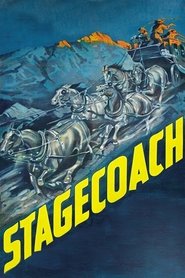
Stagecoach (1939)
Start here, with the healthiest specimen of classical action cinema America ever produced. Watch the shot that mints John Wayne as a star — a low, rushing camera move toward a man twirling a rifle in the desert, the focus even slipping for a second before snapping tight. It announces a world where a person perceives danger and answers it with the body. Ford revives the prestige journey-Western after a decade of Saturday-matinee serials, and borrows Griffith's cross-cutting grammar for the climactic pursuit — the direct ancestor of every chase you've ever thrilled to.
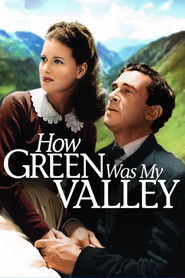
How Green Was My Valley (1941)
Ford built an entire Welsh village from scratch in California so that home, chapel, and pithead could all sit legibly in one deep frame. Watch how Arthur C. Miller lights the family kitchen so the hearth becomes the moral center of the image, and watch the scenes where the camera waits rather than chases — miners climbing a street toward a fixed lens, their song arriving before they do. This is a film about a place and its people stamping each other, and about a green valley remembered by someone who knows it's already gone. The elegy is in the light.
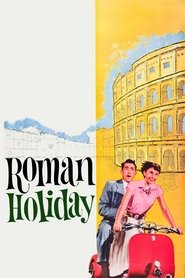
Roman Holiday (1953)
A glossy Hollywood romance, but shot on real Roman streets in the wake of Italian neorealism, with the city treated as a co-star rather than a backdrop. Watch how the film runs on small deceptions — each little act by the reporter peeling back a situation the audience understands and the characters don't. And watch for the Mouth of Truth scene: two people lying to each other, staged at the one monument in Rome supposed to make lying impossible. Wyler lets the irony play in long takes, trusting you to hold both truths at once.
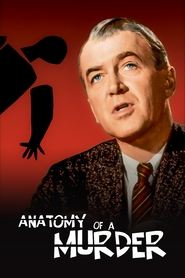
Anatomy of a Murder (1959)
A film called Anatomy of a Murder that never shows you the crime — no flashback, no privileged glimpse, nothing but sworn, contradicted, coached talk. Watch how Preminger's camera observes rather than editorializes: deep-focus compositions keep lawyers, witnesses, and jury simultaneously visible, and long takes let legal argument unfold in real time. Pay special attention to the early office scene where a lawyer explains the law before letting his client speak — a quiet lesson in how a usable story gets built. You're left in the jury's position, and the film means you to feel it.
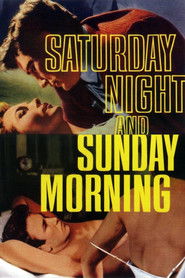
Saturday Night and Sunday Morning (1960)
The defining film of British Kitchen Sink cinema opens not on a face but on a lathe — a man's hands feeding metal to a machine, factory noise raw and unexplained. Watch how Freddie Francis's deep-focus location photography embeds Arthur in his environment: terrace houses, the factory floor, real Nottingham streets shot with documentary immediacy. And watch how the film shows a man in constant motion — drinking, brawling, pursuing — whose furious activity somehow changes nothing. The weekday rhythm and the weekend rhythm turn out to be the same machine.
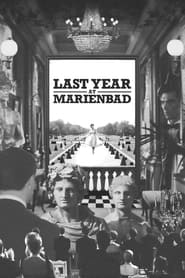
Last Year at Marienbad (1961)
Stand in the garden and look at the shadows: the hedges and statues throw them; the people don't. This film abandons any promise that its images record something that happened. A man insists on a shared past; a woman doesn't remember; the camera supplies the memory and then contradicts it — a gown changes color mid-conversation, a room is described and then described differently. Watch Sacha Vierny's gliding tracking shots through ornate corridors that never establish where anything actually is. Time here isn't measured by anyone's actions. It's the whole substance of the film.

L'Eclisse (1962)
Antonioni's masterpiece of emotional aftermath — the breakup that would power an ordinary melodrama is already over before the titles. Watch how the frame does the talking: characters seen through car windows, isolated against vast modern plazas, subdivided by walls and reflective surfaces until a person becomes a figure in an abstract composition. And notice how often the film simply stays with a street corner, an object, a passing stranger, letting ordinary time run at full length. What the characters can't say, the spaces say for them.
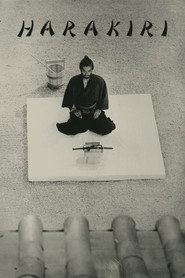
Harakiri (1962)
A samurai film that keeps the sword in its scabbard for two-thirds of its length. Watch how Kobayashi uses the wide anamorphic frame to arrange the Iyi clan's compound — raked gravel, rigid rows of retainers, receding screens — into a geometry of institutional power that one kneeling man did not build and cannot leave. The lead performance happens almost entirely in adjustments of breath and voice; the drama accumulates like a legal case rather than exploding like a duel. The film's real subject is the gap between the performance of honor and the substance of it.
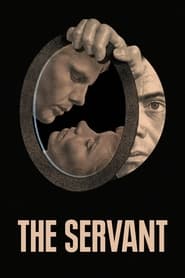
The Servant (1963)
Keep your eye on the convex mirror in the hall of the London townhouse — it warps the room and gathers its people into one distorted pool of glass, and Losey keeps returning to it. Watch how Douglas Slocombe's deep-focus, wide-angle photography (a grammar inherited directly from Citizen Kane) turns a single house into a battlefield: staircases, doorframes, and reflective surfaces slicing the frame into compartments of master and servant, until you can no longer say cleanly who occupies which. An American émigré's X-ray of English class, made with an outsider's cold clarity.

I Am Cuba (1964)
The camera here belongs to no one. Watch the legendary rooftop party shot: the lens drifts across a poolside crowd, follows bathers down, then slides under the surface of the swimming pool without a cut — peering up through the water at the legs of the people it just left. Nobody could be holding it; Sergei Urusevsky engineered the weightlessness with custom pulleys and waterproof housings, a decade before the Steadicam. A Soviet-Cuban revolutionary poem descended from Eisenstein and Dovzhenko, where the crowd is the protagonist and the camera moves like a current of history.
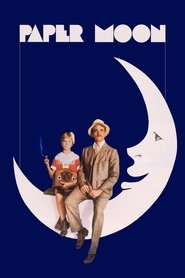
Paper Moon (1973)
Bogdanovich's Depression-era road picture, shot by László Kovács in deep-focus monochrome that deliberately reconstructs the look of The Grapes of Wrath and Citizen Kane — long, often static compositions against enormous Plains skies. Watch the kitchen-table scene where a ten-year-old does arithmetic out loud until a grown con man sweats: the small-time swindler out-swindled by the one mark he can't shake. Each town is a little loop of bait and payday, and the film's rapid-fire sparring revives 1930s screwball rhythm inside a melancholy 1970s frame.
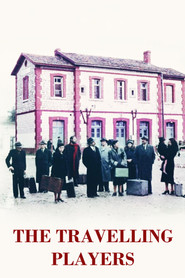
The Travelling Players (1975)
Watch the shot everyone remembers: the camera follows marchers down a provincial street, loses them at a corner, waits on the wet grey stone — and when people return, their banners belong to a different year. No cut. The street itself did the time-traveling. Angelopoulos built this four-hour history of Greece out of roughly eighty such shots, making time a property of space rather than of editing. The troupe at its center keeps trying to stage a pretty 19th-century pastoral and keeps being interrupted by history — they never get to finish the play.
Why watch these together? Because the set is secretly a single long argument about what a camera is for. The earliest films here — Stagecoach, How Green Was My Valley — trust that a person who sees a problem can act on it, and their deep frames exist to make the pressure and the response visible in one image. The later films inherit the same visual tools — the same black-and-white depth, the same long takes — and quietly reverse the current: characters in L'Eclisse, Marienbad, Harakiri, and The Travelling Players watch, wait, testify, and endure inside frames that have become traps, mirrors, or time machines. In between sit the con artists and truth-benders — Anatomy of a Murder, Roman Holiday, Paper Moon, The Servant — films about people building persuasive fictions inside worlds photographed with total clarity. Watch for how each film uses depth: as a home, as a stage, as a cage, as a lie. By the twelfth film, you'll be reading frames the way these directors composed them — as whole worlds, held sharp from front to back, waiting for you to notice everything.