Sightlines · a mini film course
The Watchers: Eleven Films Where Looking Becomes the Drama
Most movies run on a simple engine: a character sees a problem, decides, and acts — and the action changes things. The films on your list are all, in one way or another, films where that engine stalls, idles, or gets taken apart on camera. Their protagonists watch from windows, endure inside walls, climb hills that lead nowhere, read chalk lines where a town should be. The camera watches rather than chases; space becomes a trap; time is allowed to stretch. What replaces the usual momentum isn't emptiness — it's a different kind of intensity, one that asks you to do the seeing. Here's what to look for.
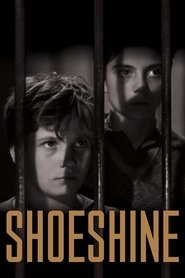
Shoeshine (1946)
Start here, at the birth of the whole sensibility: postwar Italian neorealism, shot in the actual war-scarred streets of Rome with documentary attentiveness. Watch the opening image of the white horse — impossibly clean against a grey city — and hold it in your mind as the film's measuring stick. Then notice how the film quietly refuses to let its two boys act on anything: they're swept into an adult swindle they can't see the shape of, and the drama becomes not a fight lost but the discovery that no fight is available. It looks like ordinary social tragedy at first. It isn't.
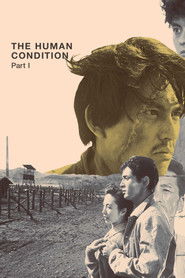
The Human Condition I: No Greater Love (1959)
The first panel of Kobayashi's enormous cycle, and a masterclass in how a frame can carry an argument. Yoshio Miyajima's ultra-wide GrandScope compositions turn the Manchurian labor camp into grids of confinement — fence lines, watchtowers, rows of workers — and repeatedly place one man in an image far too wide for him to fill. Watch how the geometry of the picture keeps telling you what a single conscience is up against, before anyone says a word.
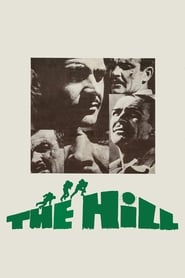
The Hill (1965)
A war film without a battle, a prison film without an escape. Oswald Morris's high-contrast black-and-white renders the sky as hard glare and the sand as blank nothing; wide lenses loom faces in the foreground while the camp recedes steeply behind them. The genius here is the central image itself: men in full kit climbing a man-made hill, over and over, to no purpose — maximum exertion, zero consequence. Most films drain action of meaning by going slack; Lumet does it at full physical intensity. Feel the difference.
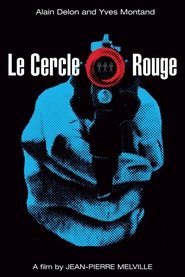
Le Cercle Rouge (1970)
Melville announces his fatalism before a single image appears, then spends 140 patient minutes demonstrating it. Henri Decaë's camera holds shots long past where anyone else would cut — classical, cool, observing rather than participating. The centerpiece is a heist of roughly twenty-five minutes with no dialogue and no score: only the creak of metal and controlled breathing, extending the great silent-robbery template of Rififi. Watch how much of this film is men dressing, waiting, moving through their world — ritual as character.

Salò, or the 120 Days of Sodom (1976)
Approach with care — this is the most demanding film here — but notice its most unsettling formal choice: restraint. Tonino Delli Colli lights a rationalist villa cool and even, like an official document, and Pasolini favors measured medium and wide shots over lurid close-ups. The horror is architectural, built on Dante's circles rather than a plot. Watch how the film keeps staging watching itself — observers arranging their distance from what's below — and how that implicates the act of viewing.
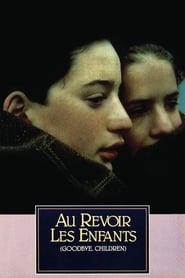
Au Revoir les Enfants (1987)
Malle's autobiographical memory of a wartime boarding school, shot by Renato Berta in cold winter grays and browns — an unheated school you can feel. The key performance is almost entirely watchfulness: young Julien registers the Occupation reaching into his world through glances, not deeds. Watch the eyes. The film's entire moral weight rests on what a look can do — and what it can't undo.
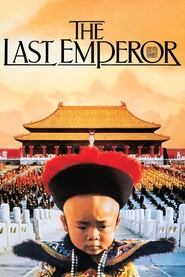
The Last Emperor (1987)
Here the theme of the gilded cage gets its most sumptuous treatment. Vittorio Storaro paints historical epochs as color temperatures — amber and ochre for the Forbidden City's warm unreality, cooling as history advances — while editor Gabriella Cristiani (an Oscar for this) dissolves between decades rather than cutting, so past and present bleed together until you can't say which is the "real" time. Watch the objects that travel between eras; one small wicker cage holds the whole film's idea of memory.

Dancer in the Dark (2000)
Von Trier and the great Robby Müller build two visual worlds and slam them together: jittery handheld, washed-out, available-light footage for daily life, and something else entirely when the factory noise falls into rhythm and the grey floor becomes a stage. This is a musical made as critique — Busby Berkeley's mechanized industrial geometry haunts the numbers. Watch the switch between the two registers each time it happens: the whole film lives in that seam.

The Pianist (2002)
Polanski transposes his lifelong subject — a mind besieged inside four walls, from Repulsion through The Tenant — onto the literal architecture of hiding in occupied Warsaw. Paweł Edelman's photography is cool, desaturated, emotionally disciplined: no nostalgia, no expressionist flourish, just a steady observing camera. Watch the windows. Again and again the film places its protagonist at one, looking down at a street he cannot enter — a body at a window is the film's organizing image, and survival here is presented without heroism, as luck and mercy rather than cunning.
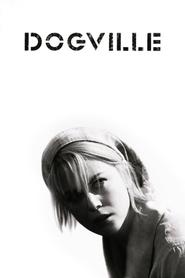
Dogville (2003)
The boldest formal experiment of the set: a town rendered as chalk lines on a black floor, doors that exist only as sound, a dog that is a word written on the ground. Yet Anthony Dod Mantle shoots it all handheld, hunting restlessly among the actors — documentary immediacy inside pure abstraction. With the visible world subtracted, every frame becomes something you have to read, and the bareness intensifies rather than starves the film. Notice how quickly you stop missing the walls — and what that says about you.
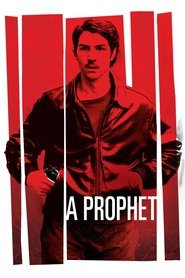
A Prophet (2009)
Audiard's prison film puts the camera at eye level, inside the social space, so you're subject to the same compressed geometries as Malik — a young man who begins without language of any kind and must acquire everything from nothing. It looks like the hardest, most causal genre machine imaginable, a crime education in which every compromise is a rung on a ladder. But watch for the moments when the film springs leaks in its own realism — presences and visions that arrive unannounced. The seam between the procedural and the uncanny is where the film breathes.
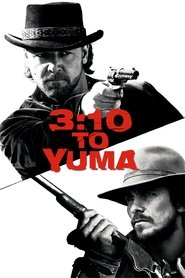
3:10 to Yuma (2007)
End with the counterexample — the film that keeps the classical engine running at full power precisely so you can hear it. Phedon Papamichael's widescreen frames use geometry, not spectacle: a small figure under an enormous, indifferent sky, and men who keep acting anyway. After ten films of stalled action, watch how a Western makes situation-press-response feel earned again — and how Mangold tightens the screws so you notice the machinery you've watched all the others dismantle.
Why watch these together? Because each film teaches you to see the next one. Neorealism's stranded children, Kobayashi's man dwarfed by his own frame, Lumet's purposeless hill, Melville's silent heist, Polanski's windows, von Trier's chalk lines — they're all variations on one question: what does cinema become when its people can't simply act their way out? The answer, across these eleven films, is that it becomes something richer and stranger — a cinema of witness, endurance, and reading, where the frame itself does the arguing and your attention becomes part of the film's design. Watch them in roughly this order and you'll feel a sixty-year conversation unfolding: each director inheriting the problem, and solving it in an entirely new way.