Sightlines · a mini film course
Watching Is the Hardest Thing: Cinema at the Margins of Action
There's a kind of movie hero who sees a problem, makes a plan, and changes the world. The twelve films on your list are all haunted by that hero — some borrow his engine, some sabotage it, and some quietly abandon it altogether. What connects them is a shared fascination with people whom the world presses on harder than they can press back: children in slums and reformatories, teenagers stranded in housing estates, workers whose whole livelihood balances on a bicycle or a body. Again and again, these filmmakers make a radical choice — the camera watches rather than chases. It sits at a child's eye level, follows the back of a man's neck, holds on a face that refuses to perform grief. Space becomes a trap; time is allowed to stretch; a gesture or a posture carries more information than a page of dialogue. Watched together, these films trace a hidden conversation across sixty years and five continents about what a camera owes the people it observes.
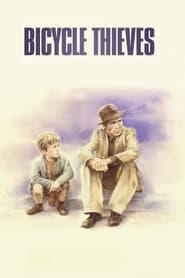
Bicycle Thieves (1948)
The fountainhead. De Sica casts non-professionals, shoots real Roman streets in available light, and keeps his framing plain — no tilted angles, no glamorous shadows — so that bodies stay locked inside their social space. Watch how a single material loss (a bicycle is a job; a job is survival) is enough to power a whole film, and notice the gap the movie keeps opening between seeing a catastrophe and being able to do anything adequate about it. Nearly every other film on this list learned its grammar here.

The Young and the Damned (1950)
Buñuel takes the neorealist slum film and detonates a dream inside it. Watch for the collision between his cinematographer Gabriel Figueroa's instinct for pictorial beauty and Buñuel's deliberate flattening of it — and then for the moments when the surreal breaks through the documentary surface, like raw appetite showing through skin. This is a film about hunger in every sense, driven by urges rather than plans, and it refuses the humanist consolations its genre usually offers.

Pather Panchali (1955)
Ray's first film, shot by a still photographer who had never worked in movies — and it shows, gloriously. Watch the patience: rain on a pond, wind in the grass, faces in soft natural light. The boy at the film's center is played largely as a pair of watching eyes, and the famous sequence of two children running through white kaash grass toward an approaching train shows you the whole method — nothing "happens," and everything does. Time here isn't the distance between a problem and a solution; it's the substance of life itself.
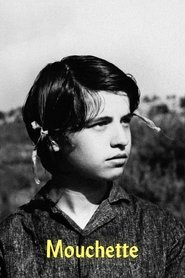
Mouchette (1967)
Bresson strips filmmaking to the bone: non-professional performers he called "models," drained of theatrical expression; a steady camera that isolates hands, gestures, fragments of bodies. Watch — and listen — for how much the soundtrack carries. Off-screen noises, a moped's whine, the clatter of bumper cars: Bresson makes sound an equal partner to the image. And watch the girl's stillness. What might look like blankness is a precise instrument for showing a person who perceives everything and can act on none of it.
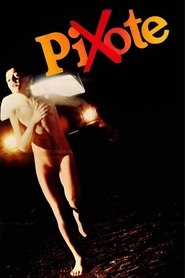
Pixote (1980)
Babenco casts real street children and puts the camera down at their height, so that adults and institutions physically loom. Watch the handheld mobility through corridors and crowds, and above all watch the young lead's face — its uncanny composure is not a failure of acting but the film's whole argument, a portrait of survival read in a child's watchfulness. The lineage runs straight from Bicycle Thieves and Buñuel's slum kids into Brazil's late-authoritarian present.
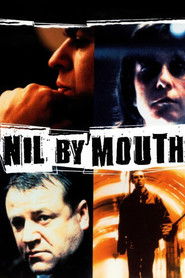
Nil by Mouth (1997)
Gary Oldman's directing debut, made in the British realist tradition of Alan Clarke: handheld, close-quarters, long takes that let confrontations build and detonate in real time. Watch the crucial refusal — no flashbacks. Family history arrives through behavior and monologue instead; the past lives in a man's posture, in how he occupies a chair. It's a film about inarticulacy, where bodies say what mouths can't, and the camera's patience is a form of moral seriousness.
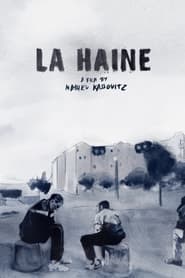
La Haine (1995)
A single day, clocked off in on-screen inter-titles like a countdown. Watch Pierre Aïm's black-and-white photography turn concrete towers monumental, then plunge into sodium-lamp murk at night. Three friends drift through twenty-four hours in which they see everything and can change nothing — and the film's suspended, falling-through-a-day structure makes that powerlessness something you feel in your stomach. Note the borrowed movie-star posturing, too: identity built from cinematic citation, a trick learned from Godard.
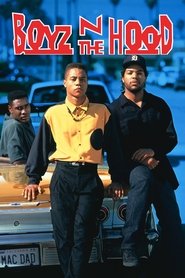
Boyz n the Hood (1991)
Singleton and cinematographer Charles Mills work in a warm, restrained, legible style that gives weight to ordinary domestic life and refuses to turn violence into spectacle. Watch — again, listen — for the police helicopter, a drone that never quite stops, threading under barbecues and porch talk. The neighborhood itself is framed as a character pressing on the people inside it: yards, fences, corners, sky. A classical American story engine set down in a place where the engine's usual circuit has been quietly cut.
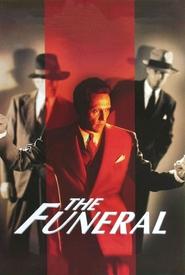
The Funeral (1996)
Ferrara opens his gangster picture where the genre usually ends — with a body laid out in the front room — and everything after happens in its presence. Watch Ken Kelsch's deep chiaroscuro, faces emerging from darkness as if lit by candles, and watch how the film keeps interrupting its present with the past. This is a mob film built to negate mob films: no rise, no empire, no glamour — a revenge plot drained of forward motion, replaced by a Catholic argument about whether these men choose their fate or merely repeat it.
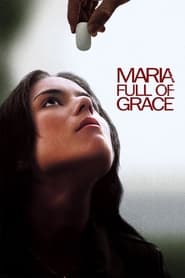
Maria Full of Grace (2004)
Marston takes the most action-hungry genre there is — the drug-trafficking film — and drains the action out until only a body carrying its cargo remains. Watch Jim Denault's handheld camera stay close to faces in tight, unglamorous spaces: a flower greenhouse, a sealed airplane cabin, a fluorescent customs hold. The suspense lives in the throat, the held breath, the effort of sitting very still. Smuggling here is treated as labor — the lowest rung of a supply chain — and the film's radicalism is in that reframing.
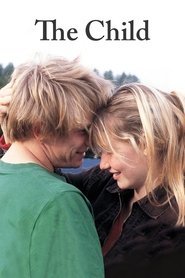
The Child (2005)
The Dardennes keep the camera a few feet behind their protagonist's neck for much of the film — you get his gait, his shoulders, his hands, but rarely his face. Watch how much moral drama they build from gestures and objects, money passing from palm to palm, in the tradition of Bresson. There's no backstory, no explanation; you infer the whole world from acts. It's a film about what it costs to become answerable for another life, told entirely through the body of someone who hasn't yet learned how.
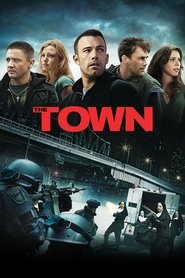
The Town (2010)
The counterweight — and the reason to end here. Affleck's heist film runs the classical engine at full power: watch how Robert Elswit (who also shot Heat) keeps the geography of the robbery sequences ruthlessly legible, so every cut tracks a decision. But notice that the film shares this list's deepest preoccupation: Charlestown is a closed ecology where crime is inherited, everyone knows everyone's business, and leaving reads as betrayal. Place presses on people here just as hard as anywhere in Seraing or South Central — the difference is that this hero still gets to act.
Why watch these together? Because they teach each other. After Bicycle Thieves, you'll see its bones in Pixote, Maria Full of Grace, and The Child. After Mouchette, you'll notice how much these films trust hands, sounds, and stillness over speeches. After La Haine and Boyz n the Hood, you'll hear how a helicopter or a clock can be the loudest thing in a movie. And after all of them, The Town becomes fascinating precisely for what it restores — the clean line from seeing to doing that every other film here questions. The through-line is a question each film answers differently: when the world presses on someone harder than they can press back, where does the camera stand? Watch for that, and twelve films become one long, generous argument about attention itself.