Sightlines · a mini film course
There's a common assumption that big genre films — superheroes, space horror, sci-fi spectacle — are all forward motion: see the threat, hit the threat, roll credits. This set of twelve quietly disproves it. Again and again, these films slow the trigger finger. Their heroes watch before they act — through rain-streaked windows, over the rims of teacups, down into egg chambers, up at a circle of distant sky. Their cities and stations become traps rather than backdrops. Their darkness isn't a mood; it's a method, a way of making you lean in and read the frame like a detective reads a crime scene. Watched together, these films become a course in how popular cinema handles the gap between seeing and doing — and what happens when that gap stretches, breaks, or gets weaponized against you.
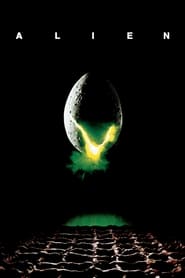
Alien (1979)
The founding text of "productive obscurity." Derek Vanlint lights the Nostromo like a real industrial workplace — partial, motivated, unhelpful — so backlit corridors dissolve into darkness and the creature is almost never shown in full light. Notice how the camera drifts and probes rather than chases, and how the film borrows the haunted-house blueprint: a confined space, a dwindling crew, a predator whose rules are learned too late. The monster is deliberately denied a motive or an inner life — you can't out-argue it, only outlast it — and that refusal is the source of the dread.
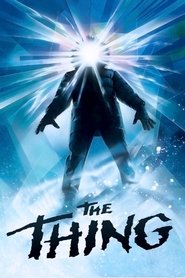
The Thing (1982)
Carpenter's masterstroke is in the width of the frame. Dean Cundey's deep-focus anamorphic compositions keep multiple men in sharp focus at once, denying you a single trustworthy point of view — you're stranded in the same uncertainty as the characters. Watch what happens when seeing stops being believing: this is a film about a creature that forges identity so perfectly that every glance becomes a guess, and every action a gamble. It looks like an action film, but the first link in the chain — reliable perception — has been quietly cut.
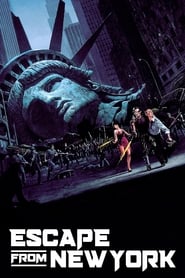
Escape from New York (1981)
Come for the wireframe Manhattan — famously not computer graphics at all, but scale models edged in reflective tape, a handmade fake of a digital image. Stay for the architecture of pressure: a walled island, a ticking deadline, charges in the hero's neck. Carpenter builds the whole film as a Hawksian siege picture inherited from Rio Bravo, shot in nocturnal anamorphic widescreen where the prison-city is lit only by fires, headlights, and sodium pools. Snake Plissken is mostly silhouette, and that's the point.
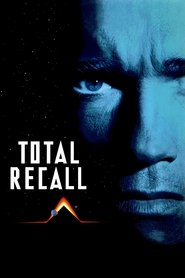
Total Recall (1990)
Verhoeven's great trick is to break the oldest contract in movies — that the camera doesn't lie — and turn the breakage into the engine. He constructed the film so that two mutually exclusive versions of events are both internally consistent all the way down, and he shoots the pivotal moments so you genuinely cannot tell which is real. Watch Jost Vacano's restless handheld camera (developed in the submarine corridors of Das Boot) keep everything just slightly off-balance. Notice also the European eye: an émigré director observing American genre conventions with amused, detached precision.
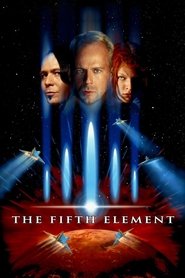
The Fifth Element (1997)
Most films that pause for spectacle hurry back to the plot. Besson's film lives in the pause. Watch the famous diva sequence: a real Donizetti aria, sung and then bent by machine past what any human throat can do, intercut with action — and the film openly dares you to mind that it has stopped to show you something gorgeous. Thierry Arbogast's saturated photography and Jean-Paul Gaultier's costumes turn the frame into wearable spectacle, extending a French comics tradition and a lineage running from Metropolis's vertical city to Barbarella's couture space opera.
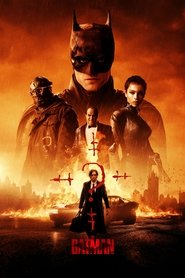
The Batman (2022)
Greig Fraser lights this film against every blockbuster instinct: radically underexposed, faces top-lit with eyes lost in shadow — a grammar borrowed directly from Gordon Willis's work on The Godfather. Watch how the plot itself is built out of watching: a killer who addresses clue-laden crime scenes to the detective, a detective who decodes while we decode over his shoulder. The film inherits the document-driven procedural of Zodiac and the rain-soaked staged crime scenes of Se7en, and it makes you a participant, not a spectator.
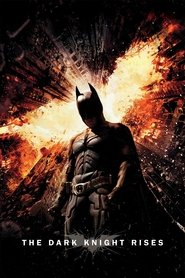
The Dark Knight Rises (2012)
Hold on the image the film holds on: a broken man at the bottom of a pit, a circle of sky above, unable to act for most of an hour. That's the film's real subject — a hero learning how to act again. Notice how Wally Pfister photographs Gotham as a real, weighty, inhabited city (rusted Pittsburgh steel, concrete stadiums, rivers) and how Nolan builds spectacle from thousands of actual extras in real space, in the tradition of Lawrence of Arabia, rather than assembling it in the edit. The underground/surface class geography comes straight from Metropolis.
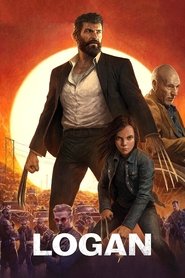
Logan (2017)
The first image is a prop: reading glasses on the nose of a man who once healed from anything. This is the aging-gunfighter Western wearing a superhero's skin — descended from Shane (which the film quotes directly) and Unforgiven — and its subject is a body that used to be a weapon and now keeps its wounds. Watch John Mathieson's sun-bleached anamorphic exteriors and hard, unromantic interior light. Every previous Wolverine film ran on action-without-consequence; this one is about what happens when that engine seizes.
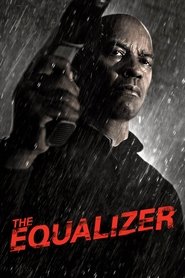
The Equalizer (2014)
For nearly an hour, this thriller refuses to be one. Watch the ritual: the same diner, the folded napkin, the squared book, the tea steeped to the minute. Fuqua and cinematographer Mauro Fiore hold Denzel Washington in static, slowly drifting compositions and keep finding him behind glass — window frames, reflections — a man who perceives everything and does nothing, yet. The restraint descends from Le Samouraï's solitary professional and his precise domestic rituals. When the film finally throws the switch, the stillness is what gives the eruption its weight.
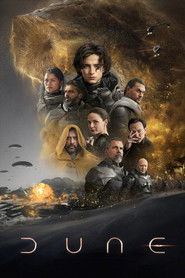
Dune (2021)
Villeneuve's wager is duration and scale. Greig Fraser (again — compare his work here to The Batman) strands tiny human figures inside vast, bone-white frames and holds the shot until a man stops reading as a man and becomes a unit of measurement. The desert isn't terrain to be crossed; it's sovereign — even the irregular "sand-walk" the characters must perform belongs to the place, not the person. The lineage is Lawrence of Arabia and 2001: science fiction as grave, near-wordless contemplation, with warnings seeded everywhere about the prophesied savior at its center.
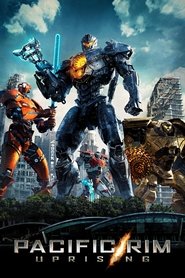
Pacific Rim: Uprising (2018)
Instructive as the deliberate opposite of much on this list: a film that chooses pure forward motion. Dan Mindel's bright, clean, spatially legible widescreen photography keeps giant-scale action readable at all times, and the Drift — two pilots neurally fused so one giant body can perceive and move as a single will — literalizes the see-it/act-on-it circuit that other films here break. Watch it as a genuinely transnational artifact: Japanese kaiju and mecha DNA (Toho's Godzilla, the Evangelion pilot-sync conceit), Hollywood machinery, Chinese financing.
Alien: Romulus (2024)
A fascinating experiment in frightening you with your own memory. Álvarez and cinematographer Galo Olivares reconstruct the franchise's low-key, source-motivated lighting and practical-creature methods, then build dread out of inherited signals: the motion tracker's beep, score cues quoting Jerry Goldsmith's 1979 music, alarms you recognize from corridors you've never walked. Notice the sharpened class premise — the protagonists are indentured laborers, their lives literally owned by the company. The film grafts Cameron's tactical siege-dread onto Scott's haunted house and asks what you bring to it.
Why watch these together? Because they teach each other. Fraser's darkness in The Batman deepens when you've seen its ancestor in The Godfather's shadow-grammar and its sibling in Dune's bleached vastness. Romulus only fully works once Alien and The Thing have taught you what a motion tracker and an untrustworthy frame feel like. Logan, The Equalizer, and The Dark Knight Rises form an accidental trilogy about heroes who must wait — broken, watchful, still — before they're permitted to move, while Uprising and The Fifth Element show what cinema looks like when it commits wholly to motion or wholly to spectacle instead. And Total Recall and The Thing whisper the set's most unsettling lesson: that the camera you've trusted all along might be the most skilled liar in the room. Watch the gap between seeing and acting. Everything in these films lives there.