Sightlines · a mini film course
The Detective Who Cannot Look Away: Ten Films About Watching
There's a moment in nearly every detective story where the investigator looks at a crime scene and reads it — turns blood and objects into meaning. These ten films are all obsessed with that moment, and with what it costs. Some of them hand the detective's job to us, teaching us to decode clues over a character's shoulder. Some show what happens when the watcher becomes the author of what he watches — staging the scene, dragging the body into better light. And some do the cruelest thing of all: they let their detectives see everything and discover that seeing changes nothing. Watch these together and you'll notice a single question passing between them like a cipher in a white envelope: what happens when looking stops leading to doing?
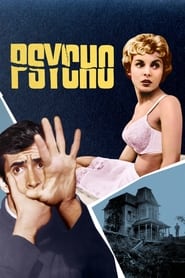
Psycho (1960)
The foundation stone. Notice how the first act moves with total confidence — a woman steals money, drives, lies, decides — every shot serving her flight. Then watch what Hitchcock does with looking: a highway patrolman staring through a car window, a peephole, and the audience given a view it maybe shouldn't have. The famous violence is built from rapid fragments — feet, hands, a drain, an eye — a technique inherited from silent Soviet montage, and it changes not just the story but the kind of film you're inside. Pay attention to when characters stop being able to act, and how the movie feels different afterward.
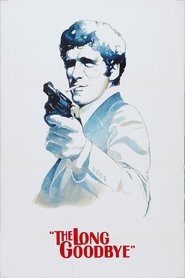
The Long Goodbye (1973)
Altman opens a murder mystery with ten minutes about cat food, and that's the joke and the thesis at once. Zsigmond's camera never stops drifting — zooming, panning, repositioning like a bystander with its own curiosity — and it refuses to confirm that anything the detective does matters. Elliott Gould's Marlowe is a 1940s code of loyalty dropped into a 1970s Los Angeles that has stopped keeping score. Watch how much this detective investigates and how little his investigating converts into anything.
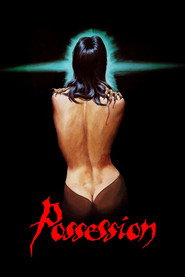
Possession (1981)
Made in exile in a divided Berlin, this is what happens when the camera stops observing and starts participating — Bruno Nuytten's wide-angle lens circles the actors, chases them, squeezes domestic rooms into pressure chambers. Żuławski directed Isabelle Adjani to the edge of physical collapse as a deliberate system, not an excess: the body convulsing is the content. There's a scene in a tiled underpass that advances no plot whatsoever and is unforgettable precisely because of it. Watch for moments where characters stop doing and simply undergo.
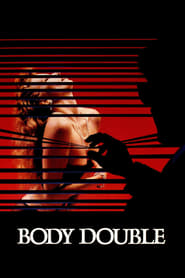
Body Double (1984)
De Palma's telescope never lets you forget you're looking through it — the round black vignette, the wobble of magnification stay in the frame, so you feel the watching as hardware. This is Rear Window and Vertigo rebuilt in glossy, saturated L.A. light, with a split-diopter lens holding a foreground face and a deep-background doorway both knife-sharp at once. The film seduces you into a voyeur's pleasure and then makes you account for it. Watch how often you're shown a man looking before you're shown what he sees.
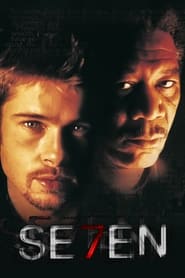
Se7en (1995)
The killer leaves captions — GLUTTONY scrawled in grease — and the detective goes to the library. Fincher's masterstroke is making homework suspenseful: we're deputized alongside Somerset, learning to read the murders as a single text. Darius Khondji's photography, hugely influential ever since, motivates every light source inside the frame — a bare bulb, a flashlight, rain-streaked neon — and positions the camera for maximum shadow. Notice how the perpetually rain-soaked, unnamed city works as an argument, not just a backdrop.
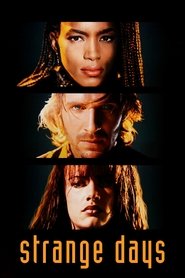
Strange Days (1995)
You don't watch the opening — you wear it: an unbroken first-person sprint through someone else's eyes, adrenaline and all, years before GoPro and bodycam footage made this vision ordinary. Bigelow maintains two distinct ways of looking — the grimy neon noir of the "real" Los Angeles, and the immersive playback clips that put you inside another person's skull. The film treats reliving recorded sensation as an addiction, and it asks whether watching a recorded atrocity makes you complicit. Notice how it implicates you before it explains anything.
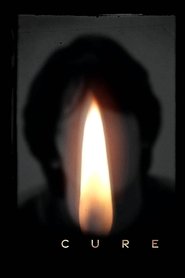
Cure (1997)
Kurosawa answers the flashy serial-killer cycle by subtraction: no grand design, no spectacle, a desaturated palette of concrete gray and sick fluorescence. The defining choice is distance — the camera holds wide, keeping figures small inside their environments, and dread accumulates in the space around them. Watch the hypnosis scenes closely: a flame, a drip of water, a patient circling voice — and notice that the film is doing the same thing to you that the mesmerist does to his subjects. It's a movie half-confessing what cinema itself is.
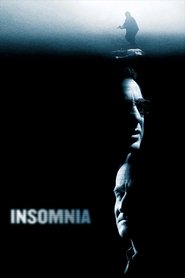
Insomnia (2002)
A noir with no night: Nolan sets a guilt story in perpetual Arctic daylight, so overexposure does the work shadow usually does. Watch the towel jammed under the hotel curtain, and the blade of light that finds the gap anyway — a man trying to manufacture darkness and failing. Pacino plays exhaustion as a slow leak: hesitations piling up, movement going syrupy, the great detective's instincts gradually unwired. Notice how the landscape that should offer clarity instead blinds.
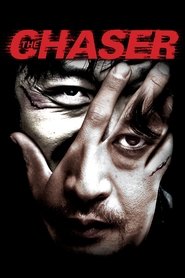
The Chaser (2008)
Na Hong-jin builds his manhunt on the actual geography of a hilly Seoul neighborhood — narrow stepped alleys, blind corners, steep grades — so the celebrated foot chases are always spatially legible: you know who is above, who is below, who is close. The film's radical move is structural: it hands you knowledge early and then shows institutions — corrupt, distracted, procedure-bound — unable to act on it. Watch how finding out and doing something about it become two entirely different problems.
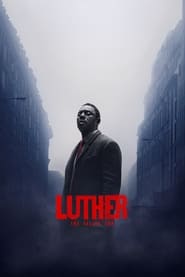
Luther: The Fallen Sun (2023)
Start with the coat: a rumpled tweed overcoat carried like weather, telling you everything about a man outside the institutions around him before he speaks. The film pushes the series' nocturnal, sodium-lit London toward feature scale, contrasting the city's murk with blinding white elsewhere. Where most films here jam the detective's machinery, this one runs it at full throttle — a man who sees a city terrorized and goes to fix it with his hands, whatever the law says. Watching it after the others, notice what that old-fashioned confidence feels like.
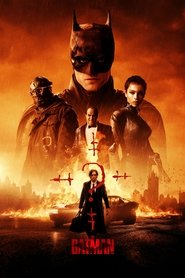
The Batman (2022)
A killer who writes to the detective — white cards, ciphers — so Batman decodes and we decode over his shoulder. Greig Fraser's cinematography is famously underlit by blockbuster standards: near-monochrome darkness punctured by amber and blood red, faces top-lit with eyes lost in shadow, a grammar inherited straight from Gordon Willis's Godfather photography. The film openly synthesizes Se7en's rain-soaked staged crime scenes and Zodiac's obsessive document-driven procedure. Watch how patiently it lets its hero simply watch — and notice what the film thinks of vengeance as a job description.
Why watch these together? Because they form a conversation across sixty years about the same anxious question. Psycho breaks the machine — the confident world where seeing leads to doing — and everything after is a response. Altman lets a detective drift through the wreckage; Żuławski films bodies that can only endure; De Palma and Bigelow turn the camera's gaze back on you and ask what your watching is worth; Fincher and Reeves make you the decoder; Kurosawa hypnotizes you with the very tools of cinema; Na shows knowledge without power; Nolan strips a detective of the darkness he needs to function; and Luther runs the old heroic engine one more time so you can hear how it sounds. Watch in any order — but watch the watching. Once you see how each film handles the gap between perceiving and acting, between the eye and the hand, you'll never look at a crime scene onscreen the same way. And you'll notice something else: in every one of these films, you were never just the audience. You were the third person in the room.