Sightlines · a mini film course
The Long Fuse: Eleven Films About What Revenge Actually Costs
Every film in this set begins with a wound and a promise — someone has been wronged, and someone is going to do something about it. That's the oldest engine in cinema. But watch closely and you'll see these films don't trust the engine. Some of them run it flawlessly, some slow it down until it nearly stalls, some quietly disconnect it while pretending it still works. Together they form a conversation across seventy years about a single question: when a person finally acts on their grief, does it fix anything? The pleasure here isn't in the answer — it's in watching eleven very different filmmakers build, stretch, worship, and sabotage the machinery of vengeance, each with a distinct visual signature. Watch for the gap between seeing and doing. That gap is where all of these films live.
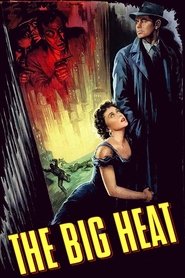
The Big Heat (1953)
Start here — this is the classical machine in near-perfect working order, built by Fritz Lang, one of the émigré directors who carried German shadow-craft into American crime films. Watch how Charles Lang's camera uses doorways, windows, and corridors to place people at the edge between safety and exposure, and how the warm, brightly lit family home gets answered by ever narrower, darker spaces. Notice too Lang's patience: he trusts you to work out the worst before the camera confirms it — a coat collar turned up can tell you everything. The villain isn't a man so much as a whole civic environment, and one honest cop against it is the template every later film here will complicate.
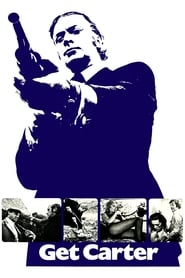
Get Carter (1971)
A man rides a train north to bury his brother, and the film photographs him like a specimen returning to its habitat. Wolfgang Suschitzky, a documentary-trained photographer, shoots Newcastle flat and true in weak daylight, refusing to prettify anyone — watch how often Michael Caine is framed as a small figure against real industrial architecture, as if the landscape itself were the older, deeper force. This is British realism stripped of its warmth: what looks like an investigation is really a compulsion, a man being drawn down a slope. Listen for Roy Budd's harpsichord ticking underneath like a meter running down.
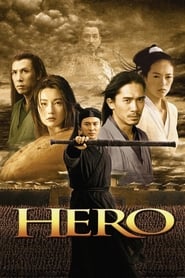
Hero (2002)
The boldest formal gamble in the set: the same events retold in contradictory versions, and each version drenched in a single color so you feel the switch before you can reason it out. Watch for the moment an entire screen floods to red — not because the plot changed, but because a feeling did. Christopher Doyle, usually a restless improviser, submits here to rigorous, architectural composition, and the film asks whether truth is something a story reveals or something it builds. Revenge, in this film, becomes a question of what a person is willing to renounce.
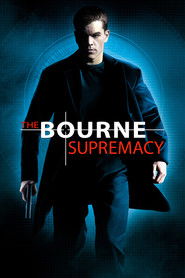
The Bourne Supremacy (2004)
Here the camera stops composing and starts chasing. Paul Greengrass came from British documentary, and he imports that you-are-there jitter wholesale: long lenses smear crowds into colored static, focus drifts and resettles, and you're never handed a clean, settled, God's-eye view — because Bourne never gets one either. Watch the market scenes: the film is built out of one man's attention, scanning exits and sightlines, and it forces you to attend the way he does. Grief and guilt drive the plot, but the style is the paranoia.
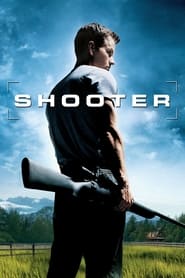
Shooter (2007)
The counter-argument to Bourne, from the same disillusioned decade. Watch the very first kill: the bullet lands before you hear the shot — impact, then the crack rolling across the valley. That gap between cause and report is the whole film's philosophy: a competent body closing the distance between perceiving and acting. Peter Menzies Jr. contrasts an open, clean-aired Montana with the fluorescent enclosure of institutional spaces, and Mark Wahlberg's near-blank stillness isn't thin acting — it's a man built entirely out of the conversion of sight into deed, betrayed by the institution that built him.
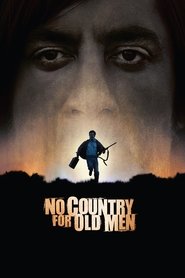
No Country for Old Men (2007)
The set's great act of sabotage. The Coens honor every mechanic of the chase thriller — the found money, the relentless hunter, the closing lawman — and quietly unplug the machine. Watch the gas-station coin toss: nothing moves except the talk and the fluorescent hum, and the tension has nowhere to go. Notice the near-total absence of music; the Coens let ambient sound — wind, footsteps, room tone — carry the dread. Roger Deakins compresses tiny figures against featureless desert with long lenses, making the landscape a participant, indifferent and enormous.
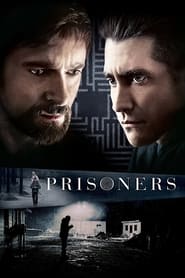
Prisoners (2013)
A father raised to be ready — survivalist, prayerful, self-reliant — gets exactly the catastrophe his worldview prepared him for, and the film patiently shows what that readiness becomes when it has nowhere righteous to go. Watch how Roger Deakins keeps the image oppressive without showing off: constant rain, tonal consistency, a camera that rarely announces itself while the cumulative pressure becomes enormous. Notice the visual grammar of confinement — tight framing of captive figures against an investigator moving through open corridors. The moral question isn't whodunit; it's what love permits.
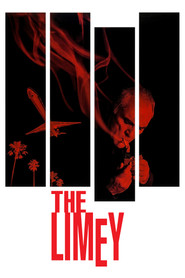
The Limey (1999)
The most formally daring revenge film in the set. Soderbergh takes a straightforward story — an English ex-con arrives in Los Angeles seeking answers about his dead daughter — and fractures it the way grief fractures a mind. Watch for grainy golden footage of a much younger Terence Stamp that seems to surface out of nowhere: it's real 1967 footage from Ken Loach's Poor Cow, dropped in as the character's own remembered past, so one film's images become another film's memories. The past here has no date and no border; it simply floats alongside the present, unannounced, the way memory actually behaves.
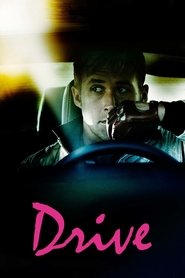
Drive (2011)
Watch the face. Newton Thomas Sigel shoots Ryan Gosling at surveillance-camera nearness and holds — past comfort, past where a normal film would cut. Nothing discharges; the face registers and registers and does not act. Then, when action comes, tenderness and brutality arrive in the same unbroken motion, with no transition between them — and that missing transition is the film's whole argument about the taciturn loner: inhabit the myth fully enough and its costs become visible. European art-film pacing wrapped around an American crime story, neon on wet asphalt, a synthesizer heartbeat underneath.
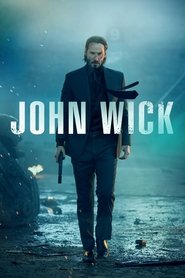
John Wick (2014)
The joyful counter-reformation. Against a decade of shaky-cam fragmentation, Jonathan Sela frames combat in wide, full-body shots with fluid camera moves that keep every spatial relationship legible — a deliberate revival of Hong Kong's balletic gunfight tradition, where seeing and doing are welded back together with total conviction. Watch the sledgehammer scene: a man digging up his buried former self through his own basement floor, no dialogue, no explanation. In 2014, this film felt new precisely by being old — the classical action machine, rebuilt and running clean, powered entirely by grief.
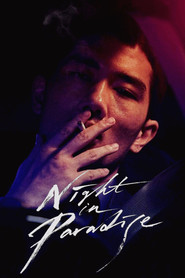
Night in Paradise (2020)
The quietest and saddest of the group. Kim Young-ho holds the camera at a contemplative distance and lets Jeju Island's grey sea and volcanic stone be beautiful and indifferent at once — an emotional field, not a backdrop. For a revenge thriller, the film has a strange center of gravity: a man standing at the water's edge, not doing anything, just looking. Park Hoon-jung stages violence frankly and without pleasure, refusing to let bloodshed deliver catharsis. The "paradise" of the title is a bitter irony worth sitting with: refuge, in this world, is only ever a postponement.
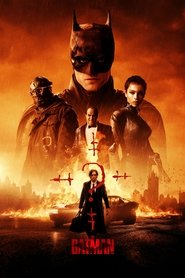
The Batman (2022)
End here and you'll see the whole tradition folded into one blockbuster. Greig Fraser's photography is radically underlit by studio standards — near-monochrome darkness broken by sodium orange and blood red, faces top-lit with eyes lost in shadow, a direct inheritance from The Godfather's "Prince of Darkness" grammar. Watch how much of the film is people watching other people: through windows, through rain, through ciphers left at crime scenes addressed directly to the detective — which means addressed to you, decoding over his shoulder. A hero who calls himself "Vengeance" is placed in a story built to test whether that name can hold.
Why watch these together? Because sequenced this way, they teach each other. The Big Heat shows you the machine intact; Get Carter strips its glamour; Hero asks whether the story it tells is even true; No Country and Night in Paradise let the machine run and show it delivering nothing; John Wick and Shooter rebuild it out of sheer conviction; The Limey and Drive slow it down until you can see grief moving through its gears; Prisoners and The Batman ask what the machine does to the person operating it. You'll start noticing the choices — where the camera watches rather than chases, where time is allowed to stretch, where a landscape swallows a figure, where a cut is withheld — and once you see those choices, every revenge story you watch afterward will look different. That's the real reward: not eleven plots, but one long argument, conducted in light, distance, and duration.