Sightlines · a mini film course
Reading in the Dark: A Century of Noir That Makes You the Detective
Here is the secret these twelve films share: they don't just show you a mystery — they hand you the case file. Each one, in its own way, turns the viewer into an investigator. A tune hummed in a Berlin street, a bandage on a detective's nose, a city where light itself seems compromised: these films are built out of clues, shadows, and stories you're invited (or dared) to trust. Watched in sequence, they trace a hundred-year conversation about how darkness on a screen can mean, how a face can tell you more than a page of dialogue, and how a film can lie to your eyes as fluently as any con artist. Keep the lights low.
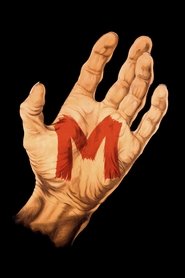
M (1931)
Fritz Lang never shows you the worst thing in this film — he shows you a ball rolling to a stop, a balloon caught in telephone wires, and lets your imagination do the terrible work. Watch how the film teaches you a rule (a certain whistled tune means danger is near) and then trusts you to hear it before the characters do. This is the founding text of the serial-killer film, and shot by the same cinematographer as Nosferatu; notice how architectural shadow becomes a kind of cage. Everything else on this list descends from it.
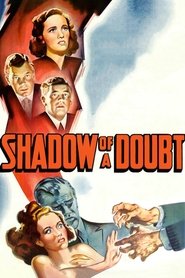
Shadow of a Doubt (1943)
Hitchcock photographs a sunny small town with almost documentary plainness — and then lets shadow creep sideways into the bright family kitchen whenever a certain visitor enters the room. The suspense here lives not in action but in knowledge: who knows what, and who knows what the other person knows. Notice how the film pins your understanding to one young woman's, so that her isolation becomes yours. It's a thriller wearing the clothes of a warm domestic drama, and the mismatch is the point.
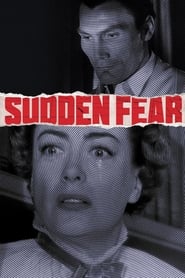
Sudden Fear (1952)
Charles Lang's Oscar-nominated photography splits the film in two: a warm, open San Francisco courtship that gradually darkens into deep shadow and oppressive rooms. But the real instrument is Joan Crawford's face, which the film isolates in fields of black and asks to travel enormous emotional distances almost without a word. Watch the small muscles work while she stays silent. A film about actors and playwrights becomes, fittingly, a film about whether love itself can be a performance.

Chinatown (1974)
Noir traditionally hides its crimes in the night; Polanski and cinematographer John Alonzo put them in blazing California midday, where daylight offers no clarity and shadow no refuge. Watch Jack Nicholson spend half the film with a bandage across his nose — a detective who literally can't follow his own nose — and notice how each clue he uncovers seems to make things worse rather than better. It's the detective film performed at maximum craft while the ground quietly gives way beneath it.
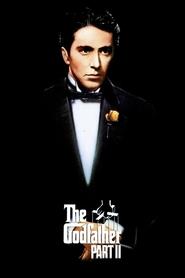
The Godfather Part II (1974)
Coppola braids two timelines — a father's rise, a son's reign — and asks you to hold them against each other, so that every scene comments on its distant twin. Gordon Willis lights the film in registers: harsh Mediterranean sun for the past, deepening amber shadow as the built world closes in. Watch how power is expressed spatially — men framed small against grand rooms — and how the camera is willing simply to wait with a face rather than cut away. Patience, here, is a form of judgment.
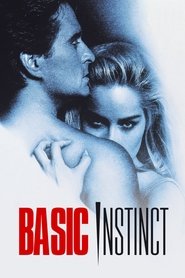
Basic Instinct (1992)
Watch the famous interrogation scene and notice who is actually in control: five men circle one woman in white, and Jan de Bont's gliding camera makes her the still center while the entire apparatus of the law spins around her. Verhoeven's coup is a femme fatale who may be authoring the plot from inside it — a novelist whose fictions and the film's facts refuse to peel apart. A glossy studio thriller, yes, but one that quietly voids the promise that the ending will sort truth from performance.
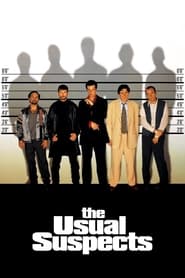
The Usual Suspects (1995)
A man tells a story in a deliberately drab white interrogation room, and the film does what films always do with narration: it shows you the events, fully lit, fully scored, fully convincing. Notice that contrast — the bureaucratic blankness of the telling against the baroque richness of the told — and ask yourself, as you watch, why you believe images at all. This is a heist picture about narration itself, and the less said, the better.
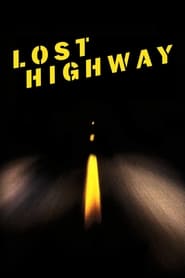
Lost Highway (1997)
Peter Deming photographs interior darkness so total that characters walk into it and seem to dissolve; the house itself becomes a space defined by what you can't see. Lynch strips the noir engine — femme fatale, gangster, jealousy, surveillance — of motive and explanation, and lets the film run on dread alone. Don't try to solve it on first viewing; watch instead how it refuses the clarifying cut, the one that would tell you which images are real and which are dreamed. That refusal is the film.

Dark City (1998)
Proyas builds his metropolis from the DNA of silent German cinema — painted shadows, looming silhouettes, tilted geometry — a place with no sun, no edge, and no history you can fully trust. Watch the early sequence where the whole city changes while its inhabitants sleep standing up: it's one of the great premise-images in science fiction, a world rebuilding itself with no witnesses. Notice, too, how everyone can name a sunlit elsewhere but no one can say how to get there. Hold that thought.
Memento (2000)
Nolan's structural gamble is to put you inside his hero's condition rather than describe it: the color scenes run in reverse order, each one dropping you in with no memory of how you got there, while a black-and-white strand runs forward to meet them. Watch the opening Polaroid un-develop — an image draining back to blankness — and you have the whole film in three seconds. Wally Pfister's photography stays deliberately clean and legible, which is mercy: the structure supplies all the disorientation you can handle.
Nightmare Alley (2021)
Del Toro and cinematographer Dan Laustsen split the film chromatically: warm ambers and firelight for the carnival, cold aquatic tones for the city's elite hotels — and notice that the carnival, for all its corruption, is the honest place, because it hides nothing. Watch the mechanics of the "cold reading," the con of telling people what they want to hear, played by Bradley Cooper as pure attention and reflex. A film about self-deception, built by a director who loves his monsters, in a genre that has always known where appetite leads.
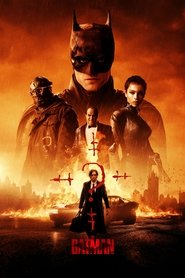
The Batman (2022)
Greig Fraser lights this like almost no modern blockbuster: radically underexposed, faces falling into shadow, the darkness broken by sodium orange and blood red — a grammar borrowed straight from The Godfather's "Prince of Darkness" photography. Notice how much of the film is watching: characters observing each other through windows, in rain, across distances, with the plot itself built from ciphers a killer addresses directly to the detective. You decode over the hero's shoulder. It's Zodiac and Se7en smuggled inside a superhero film, and the smuggling is what makes it sing.
Watch these together and you'll start to see the relay. Lang's offscreen horrors become Hitchcock's creeping domestic shadows; the femme fatale of the forties is dismantled by Chinatown and re-armed by Basic Instinct; the confessing narrator of classic noir mutates into the unreliable storytellers of the nineties; and the underlit faces of Gordon Willis resurface, seventy years on, in Gotham City. More than a genre, this is a sensibility — the conviction that the most interesting thing a film can do is make you work: read the shadows, weigh the testimony, notice who's watching whom. By the twelfth film you won't just be watching noir. You'll be thinking in it.