Sightlines · a mini film course
Cities That Watch Back: A Course in Bodies, Machines, and the Places That Hold Them
Here is a set of films that, at first glance, span everything — superheroes, cyborgs, deserts, haunted spaceships. But look closer and a single preoccupation emerges: each of these films asks what happens when the world stops cooperating with its hero. The city becomes a maze, the body fails, the face lies, memory can't be trusted, the landscape refuses to be crossed. And each film answers with craft — with light, framing, editing rhythm, and sound design that make you feel the problem before anyone says it aloud. Watch how often the camera chooses to observe rather than chase. Watch how darkness is used not to hide things but to make you lean in. These are genre films — thrillers, sci-fi, action spectacles — made by filmmakers who trusted the image to do the heaviest lifting.
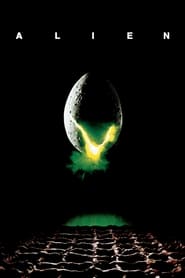
Alien (1979)
The oldest film here and the one that sets the terms. Notice how the lighting is deliberately partial — backlit corridors dissolving into darkness, the creature almost never shown in full — so that your imagination does half the work. The camera drifts and probes at the pace of dread, not action, inheriting from 2001 the idea that space travel is mundane labor performed by tired employees. Watch how the ship itself becomes a character: industrial, indifferent, built by a corporation that regards its crew as disposable.
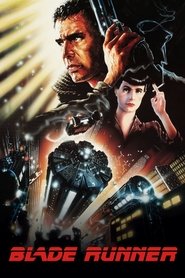
Blade Runner (1982)
Ridley Scott again, three years on, fusing the detective story with science fiction. Watch Jordan Cronenweth's light: deep shadow cut by shafts of sodium color, venetian-blind striping quoted straight from 1940s crime films. And watch the photographs — characters keep clutching, hoarding, and studying them as proof of who they are. The film quietly asks whether a memory you can hold in your hand is worth anything at all, and it asks with images rather than speeches.
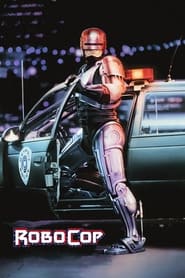
RoboCop (1987)
An American studio film with a European outsider's eye — Dutch director, German cinematographer — and it shows in the satire's bite. Watch how the film keeps switching registers: warmth for the human material, hard metallic clarity and low angles for the machine. And notice the interruptions — the fake newscasts and ads that snap the story shut and make you read the world rather than just watch it. The targeting-grid point-of-view shots are doing real thematic work: every time you see through that visor, a human way of looking is being overwritten by data.
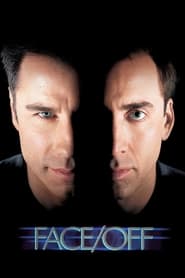
Face/Off (1997)
John Woo brought the Hong Kong action tradition — slow-motion gun ballet, doves, operatic sincerity about loyalty and grief — into a Hollywood blockbuster, wholesale. Watch how the mirrors work: the film keeps arranging its two stars in doubled, reflected compositions, because the premise (each man wearing the other's face) is really a question about where the self lives. Notice, too, that the action sequences build emotion rather than pause it — the gunfights are staged as escalating crescendos of feeling, not breaks from character.

Dark City (1998)
A film of near-total night, shot in hard, sourced light — lamps, neon, blinds — with a restless, often tilted camera. Its visual ancestry runs straight back to silent German cinema: painted shadows, looming figures in hats and coats, a city built like a stage set that might not obey geometry. Watch the architecture itself: this is a metropolis with no visible sun and no visible edge, and the film makes the place the mystery. Pay attention to the one sunlit word everyone keeps repeating and no one can find on a map.
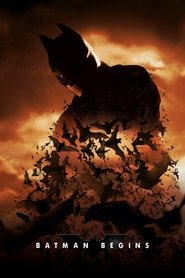
Batman Begins (2005)
Nolan's origin story spends its whole first hour refusing to move in a straight line. Watch how the editing lets the past keep erupting into the present — a childhood fall into a well, a night at the opera — surfacing uninvited, the way fear and guilt actually surface. Notice too the deliberate look: desaturated, tactile, sodium-orange and steel-gray, a Gotham built as a plausible decaying city rather than a comic-book set — a conscious corrective to the stylized Gothams that came before.
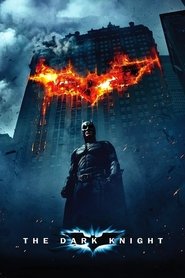
The Dark Knight (2008)
Watch what Nolan and editor Lee Smith refuse to do. Violence here often arrives in a single master shot, a sharp cut, sound before image — no accelerating close-ups, no musical sting telling you how to feel. The restraint is the argument. Notice also the film's debt to Michael Mann's crime procedurals, especially in how confrontations are staged as geometry: two opposed men, a table, a room. And feel the shift between the vast, architectural IMAX images — which make people look small inside systems of power — and the tighter widescreen material.
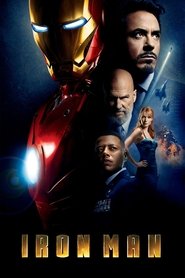
Iron Man (2008)
The Dark Knight's opposite number, released the same pivotal year, and worth watching as the other road the superhero film could take. Notice the tonal split in the photography: gritty, handheld immediacy for the cave sequences, gleaming polish for the Malibu tech-wealth world. Watch how much the film loves making — the lab as character, the iterative suit builds — and how the whole story grows from one image: a glowing device in a man's chest that is wound and power source at once. Its in-helmet interface descends directly from The Terminator's machine-vision, and its corporate-weapons satire owes a visible debt to RoboCop.
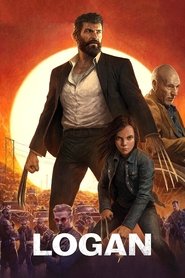
Logan (2017)
A superhero film built like an end-of-the-trail Western — sun-bleached anamorphic widescreen, dust, hard unromantic light in the motels and hideouts. The first image to hold onto is a pair of reading glasses on a man who once healed from anything. Watch how the film makes the failing body its true subject: every act of violence has weight and cost, nothing resets by the next scene. Its ancestry is Shane and Unforgiven more than any comic book, and it wears that lineage openly.
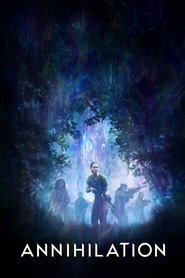
Annihilation (2018)
A film where watching replaces acting. Notice the moments when the expedition simply looks — at mutated flora, at impossible animals — and can do nothing with what they see; the stalled attention is the point. Rob Hardy's photography renders the Shimmer as a soap-bubble membrane tinting everything inside it, greens pushed toward the toxic. The structure descends from Tarkovsky's Stalker — a small team entering a zone whose rules warp as you go deeper — and the near-wordless climax hands the film over entirely to image and sound.
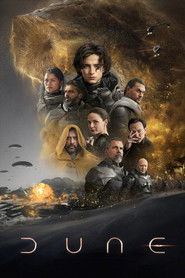
Dune (2021)
Watch the holds. Villeneuve keeps the camera on a lone figure against an empty horizon well past the point a studio note would trim it, until the human being becomes a unit of measurement — the grammar of Lawrence of Arabia imported into science fiction. Greig Fraser's large-format, sun-bleached palette makes the desert sovereign: this is a landscape you can't simply cross or conquer, and even the way bodies are permitted to move belongs to the place. Notice how the film seeds doubt into its own hero's prophecy — warnings folded into the spectacle.
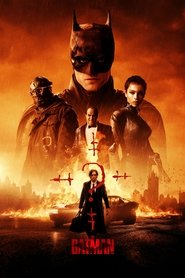
The Batman (2022)
Fraser again, and here his near-monochrome darkness — faces falling into shadow, amber and blood-red accents — is the film's whole identity, drawing directly on the radically underexposed look of The Godfather. But the deeper structure comes from Zodiac and Se7en: a serial-killer procedural of ciphers and documents rather than action set-pieces. Watch how much of the film is about watching — a detective decoding messages addressed directly to him, while you decode over his shoulder. And notice how the film interrogates its hero's own founding idea: what vengeance actually produces when someone else takes it to its logical end.
Why watch them together? Because they teach each other. Fraser's darkness in The Batman means more once you've seen Cronenweth's in Blade Runner; Nolan's fractured, memory-haunted first hour deepens after Dark City's manufactured pasts; Logan's wounded body echoes Murphy's in RoboCop; Iron Man and The Dark Knight — twins of a single year — reveal two entire futures for the same genre. Across all eleven, the through-line holds: filmmakers who took popular forms and slowed them down, darkened them, made space and light and the human body carry the meaning. Watch for the moments when the camera simply stays — on a face, a horizon, a shadowed doorway — and trust that the staying is where these films live.