Sightlines · a mini film course
The Watchers: Vengeance, Patience, and the Camera That Refuses to Blink
Every film on this list is, on its surface, about someone taking justice into their own hands — detectives, hit men, bodyguards, vigilantes, crooked cops. But watch closely and you'll notice something stranger connecting them: these are movies about watching. Again and again, the protagonist is a person who looks before they act — sometimes for a very long time — and the filmmaking slows down to look with them. Faces are held in close-up until feeling pools up with nowhere to go. Characters are framed behind glass, in doorways, at the edges of rooms where decisions are made without them. Killers leave messages meant to be read, turning detectives (and us) into decoders. This is a course in the thriller as an act of attention: what happens when a genre built on action learns to be still, and what that stillness costs.
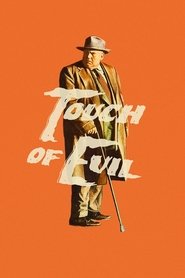
Touch of Evil (1958)
Start here, at the end of classic film noir, where Orson Welles pushes every convention to its breaking point. The famous opening is a single unbroken crane shot lasting three minutes — a car, a couple, a whole border town threaded together without a cut, as if the camera is insisting that everything is connected. Then notice how Welles shoots faces: wide lenses from floor level, ceilings pressing down, actors moving toward and away from the camera instead of being sliced up by editing. The camera here doesn't just record a corrupt world; it argues with it.
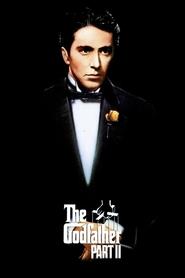
The Godfather Part II (1974)
Coppola braids two timelines — a father's rise, a son's reign — and lets each one quietly comment on the other. Watch Gordon Willis's light do the moral work: harsh Mediterranean sun for the past, rooms that get darker and more enclosed as power accumulates. And watch what the film does with Al Pacino's face, especially in stillness. This is a gangster picture that keeps trading action for endurance — a man winning everything and the camera simply waiting with him to see what winning leaves behind.

Chinatown (1974)
Polanski inverts noir's rulebook: the crimes here happen in blinding California daylight, in amber and dust, and shadow offers no refuge. Watch Jack Nicholson's detective work the case beat by procedural beat — the tailing, the photographs, the salt water where fresh should run — and notice the visual joke the film taps on his face for half its running time: a detective with a bandaged nose. Each thing he uncovers should bring order closer. Pay attention to whether it does.
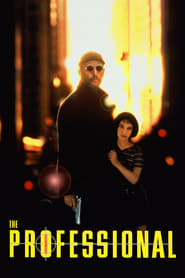
Léon: The Professional (1994)
Before Besson shows you his hit man working, he shows you the man tending things: a glass of milk, sit-ups in the dark, a houseplant with no roots. The film alternates between two registers — ruthlessly efficient professional procedure (inherited from the great French crime films like Le Samouraï) and long, warm stretches where Jean Reno's face, nearly motionless behind round black glasses, is asked to carry everything. Watch the gap between the killer's precision and the man's arrested, almost childlike stillness. That gap is the movie.
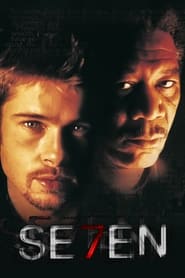
Se7en (1995)
Fincher's masterstroke is turning a manhunt into a reading assignment. The killer leaves captions — words scrawled at crime scenes, messages authored for the detective — and Morgan Freeman's Somerset responds not with a chase but with a library card: Dante and Chaucer pulled from shelves at night, index cards filled under Bach. Watch Darius Khondji's lighting, where every glow comes from something visible in the frame — a bare bulb, a flashlight — and darkness is allowed to swallow the rest. You'll be doing the homework right alongside the detectives, and that's the point.
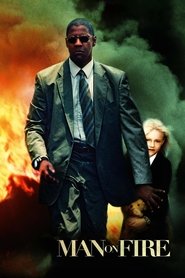
Man on Fire (2004)
Tony Scott splits his film in two. The first half is warm, legible, and built almost entirely on Denzel Washington's face in close-up — a face that barely moves, holding grief and self-disgust like pressure behind a dam. The second half tears the image apart: handheld cameras, smeared long lenses, fractured cutting. Watch how the style itself registers what the character feels. The contrast between that still, ruined face and the shredded film around it is where the movie becomes something stranger than its revenge plot.
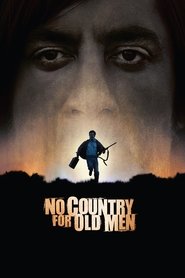
No Country for Old Men (2007)
The Coens and cinematographer Roger Deakins strip the thriller down to essentials: long lenses flattening figures against empty desert, almost no music, sound design so precise that a rustle or a room's hum carries the tension a score usually would. Watch the gas-station scene early on — nothing moves but talk, a coin, and fluorescent light, and it may be the most frightening thing here. This is a chase film that keeps asking what happens when competence, effort, and courage meet something that doesn't negotiate.
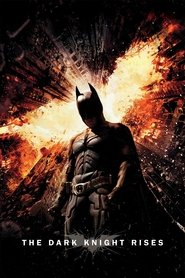
The Dark Knight Rises (2012)
Nolan builds his spectacle the old way — real locations, industrial-scale architecture, thousands of actual extras choreographed in space, in the lineage of Metropolis and Lawrence of Arabia. But the image to hold onto is the smallest one: a broken man at the bottom of a pit, looking up at a circle of sky. For a long stretch, the hero of this enormous film can do nothing but watch and listen. Notice how the film makes rising — the recovery of the ability to act at all — its true subject.
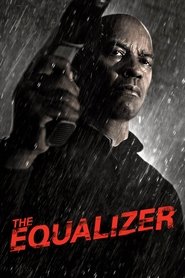
The Equalizer (2014)
The boldest choice here is patience. For most of its first act, Antoine Fuqua simply watches Denzel Washington watch: the same diner every night, the napkin folded, the tea steeped, the book squared to the table's edge, the room studied over the rim of a cup. The camera keeps finding him behind glass and in reflections — a man observing a world he won't yet step into. Notice how much meaning stillness carries before anything erupts, and how the eruption feels different because you waited.
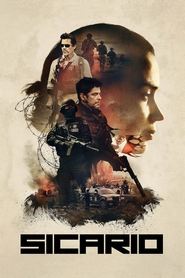
Sicario (2015)
Watch where Villeneuve puts Emily Blunt: in doorways, in back seats, at the edge of briefings where the real decisions happen elsewhere. She's a capable agent who sees clearly — and the film's whole argument lives in the blocking that keeps her at the threshold. Deakins shoots the borderland as geology, vast frames dwarfing the humans in them, refusing the Western's mythic grandeur. This is a thriller that keeps converting action into something you can only witness, and it makes witnessing feel dangerous.
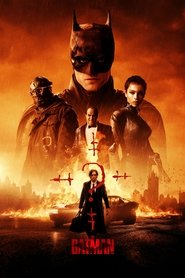
The Batman (2022)
Greig Fraser shoots Gotham in near-darkness — faces falling into shadow, light coming from sodium lamps and blood-red practicals, directly inheriting Gordon Willis's radically underexposed Godfather look. But the deeper design is this: a killer who leaves ciphers addressed to the detective, making the hero — and you — decode the crime scenes over his shoulder. Watch how the film establishes that everyone in this city is watching someone, and that the hero is simply the most patient watcher of all. It's a superhero film built like Zodiac: an investigation, not a brawl.
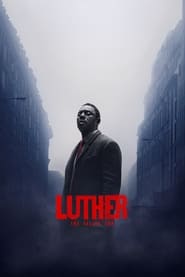
Luther: The Fallen Sun (2023)
Watch the coat. A rumpled tweed overcoat moving through sodium-lit London rain — not a costume but a posture, telling you everything about a man expelled from the institutions he still serves in spirit. The film pushes the series' nocturnal, architectural style to feature scale, contrasting the city's murk with blinding white elsewhere, and it inherits the classic manhunt structure — the theatrical killer known early, the damaged pursuer — that runs back through Manhunter all the way to M. Enjoy this one as the tradition at full, unapologetic throttle.
Why watch these together? Because in sequence, they teach you to see the thriller's secret machinery. The genre promises a simple contract: someone sees a problem and acts to fix it. Every film here bends, delays, complicates, or honors that contract in a different way — the held close-up that won't release into action, the character framed at the edge of events they can't control, the crime scene turned into a text you must read, the long stillness before the storm. By the time you reach the newest films, you'll recognize the older ones living inside them: Willis's darkness in Fraser's Gotham, Melville's ritual stillness in McCall's diner, Chinatown's daylight fatalism in the desert of Sicario. Watching them together turns you into what these films are secretly about: a patient, attentive watcher — which, it turns out, is the most rewarding way to sit in the dark.