Sightlines · a mini film course
The Cinema of Watching: Eleven Italian Films Where Looking Becomes the Drama
There's a moment in each of these films — and once you learn to spot it, you'll see it everywhere — when a character stops being able to do anything and can only see. A woman on a factory floor. A prince before a mirror. A boy in the rubble of Berlin. A man leaning out of a helicopter, shouting words no one can hear. These films, spanning Italian cinema from the ashes of World War II to the concrete sprawl of the 2000s, share a radical wager: that a person watching the world — really watching, without being able to fix it — can be the most gripping thing a camera ever records. The camera watches rather than chases. Time is allowed to stretch. Space becomes a character, sometimes a trap. Watch these in roughly chronological order and you'll see a national cinema invent this idea, refine it, argue with it, and pass it on.
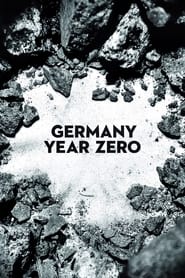
Germany, Year Zero (1948)
Rossellini shoots the actual ruins of Berlin, and notice what he refuses: the rubble is never lit dramatically, never framed to be beautiful. Watch for a long, quiet passage late in the film where a boy simply wanders — kicks a stone, balances on a curb — and the score withdraws, leaving only distant machinery and birdsong. Nothing "advances." That refusal is the whole point: the film trusts you to feel the weight of what you're seeing without being told how.
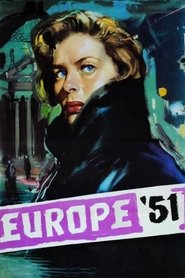
Europa '51 (1952)
Watch the faces — cinematographer Aldo Tonti holds on them longer than conventional editing would allow, with no embellishment, letting duration itself do the work. The film's real subject is attention: what happens when a comfortable woman starts truly perceiving other people's suffering, and what that costs her socially. There's a sequence on a factory assembly line where the camera simply stays with a pair of hands repeating one motion. Let it work on you. Rossellini learned from Dreyer's Joan of Arc that a face under pressure, held long enough, is spiritual portraiture.
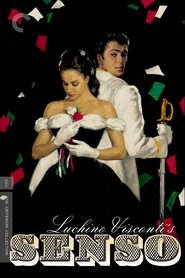
Senso (1954)
The opening is a masterclass: an opera house mid-performance, and Visconti tells you exactly how to watch — history here will be staged and sung before it's ever simply lived. This is neorealism's great pioneer moving into Technicolor, studio resources, and full-throated melodrama, and some contemporaries called it betrayal. Watch how the film's exquisite surfaces — reds and golds tuned to nineteenth-century painting, candlelit shadows carried over from The Third Man by cinematographer Robert Krasker — depict a gorgeous world rotting from inside even as it gleams.
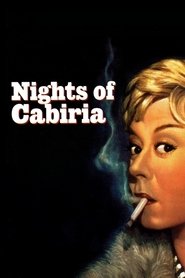
Nights of Cabiria (1957)
Fellini splits the difference between street-level realism and something more theatrical: cinematographer Aldo Tonti (again!) shoots Rome's periphery with harsh headlights and unglamorous sweeps, while Giulietta Masina builds her performance from Chaplin's Tramp — the resilient clown undone and remade. Watch the pattern of the episodes: Cabiria's actions reveal her situation but never quite transform it, and the film treats her stubborn expectation of goodness not as naivety but as a form of grace. Stay alert at the very end for where she looks.
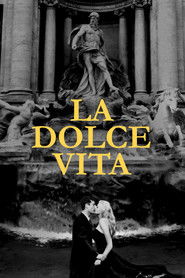
La Dolce Vita (1960)
From the first image — a statue of Christ dangling from a helicopter over Rome, the sacred and the trivial sharing one sky — Fellini announces a film about a man who sees everything and acts on none of it. Marcello is professionally a watcher, a gossip journalist, and Mastroianni builds an entire performance out of intelligent, helpless receptivity. Watch how Otello Martelli's wide anamorphic frame renders the Via Veneto in hard, bleached light that flattens celebrities into photographic surfaces — a paparazzo's world shot like a paparazzo's negative.
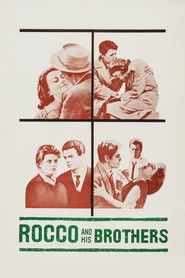
Rocco and His Brothers (1960)
Here's Visconti grafting opera onto documentary: a southern family arrives in a Milan of fog, wet pavement, and half-built suburbs, observed with neorealist patience — then the film swells into full melodrama. Giuseppe Rotunno's black-and-white photography moves between grainy social realism and charged, sculptural shadow. Watch Alain Delon's Rocco: he plays absolute goodness as a kind of paralysis, a saint who can only behold, and his stillness becomes the most active thing in the frame.
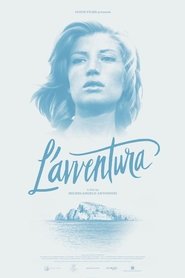
L'Avventura (1960)
Antonioni sets a mystery-plot engine running — a woman vanishes on a volcanic island, a search begins — then quietly switches it off. Watch how the frame is organized: human figures drift to the edges, get obscured by rock and walls, dwarfed by landscape until they read as incidental marks on stone. Two people can stand close enough to touch and remain unreachable, and the film holds that geometry long enough for you to feel how long holding takes.
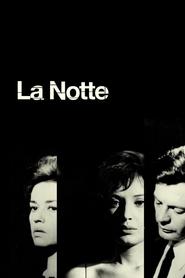
La Notte (1961)
Watch what Milan's architecture does here: cinematographer Gianni Di Venanzo photographs glass curtain walls and half-finished towers not as backdrop but as active presence, while the human figures shrink toward the edges of the widescreen frame. The film's centerpiece is a walk — a woman drifts through the city, watching things, and you keep waiting for the walk to lead somewhere. It doesn't, and that's the engine. This is a marriage rendered as space and duration rather than confrontation.

L'Eclisse (1962)
Di Venanzo's compositions here work by negative space and geometry: characters framed against walls, subdivided by windows, isolated in the vast plazas of Rome's EUR district until they become figures in an abstract design. The romance never builds toward anything it can declare; what fills the space is looking. The final minutes are among the most famous in all of cinema — a street corner, filmed at full duration — and the less you know going in, the better. Just don't look away.
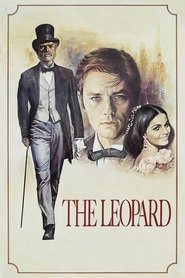
The Leopard (1963)
Rotunno organized his photography around nineteenth-century Italian painting, and the result may be the most sumptuous historical film ever made — watch how the camera moves through the ballroom crowds, a method learned from Ophüls, keeping one figure legible amid choreographed social ritual. At its center is a Sicilian prince who understands his class's demise more completely than anyone else and lifts not one finger: perception with the motor disconnected, embodied not in a refugee or drifter but in a duke. The theme is transformation without genuine change — and Visconti, an aristocrat himself, films it as elegy.
Red Desert (1964)
Antonioni's first color film, and he treats color as authorship: he had the grass along the refinery road literally painted gray so nothing growing could look alive. Once you know that, the whole film tilts — you're watching a landscape engineered to match the inside of a woman's head. Monica Vitti plays Giuliana not as numb but as flooded, registering steam, engine-throb, industrial sound she can't discharge into any action. Watch Carlo Di Palma's telephoto lenses compress Ravenna's petrochemical corridor into flat, unnervingly gorgeous planes.
Why watch these together? Because they're a conversation. Rossellini's ruined Berlin and attentive saints taught Antonioni how a landscape could carry a state of mind; Visconti's family sagas showed how neorealist streets could hold operatic feeling; Fellini turned the passive watcher into the modern condition itself; and Garrone's Gomorrah — if you extend the line forward — inherits the whole method, braiding real locations and non-professional faces into a mosaic where perceiving everything and changing nothing is the very shape of entrapment. Watched in sequence, these films retrain your eye. You stop waiting for the next event and start noticing what the frame is actually full of: a face held a beat too long, a building that outstares its inhabitants, light arriving in an empty street. That's not slowness. That's cinema discovering that watching, done seriously, is an act.