Sightlines · a mini film course
The Long Look: Twelve Films Where Watching Becomes the Drama
Most movies run on a simple engine: a character sees a problem and does something about it, and the editing hurries us from one deed to the next. The films on this list run on a different fuel. Their people see everything — often with painful clarity — but what they see can't be fixed, seized, or acted upon, and so the films slow down and let seeing itself become the event. The camera watches rather than chases. Time is allowed to stretch. A face held a beat too long, a street corner where no one arrives, a mirror that won't let you tell a person apart from her reflection: these become as charged as any chase scene. Watched together, these twelve films form a secret history of cinema learning to sit still — and discovering how much drama lives inside a pause.
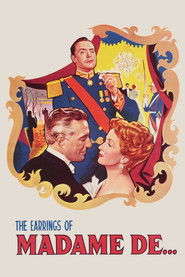
The Earrings of Madame de... (1953)
Watch how the camera never stops gliding — through doorways, around ballrooms, across whole rooms in a single breath — as if the film itself were caught in the social whirl it describes. Notice, too, that we first meet Louise in her mirror, appraising the surface she has been taught to be: keep track of when she's performing feeling and when she's actually feeling it, and notice how hard the film makes it to tell the difference. And follow the earrings themselves — a small object passed from hand to hand that quietly becomes a test of everyone who touches it.
Hiroshima Mon Amour (1959)
The film opens on two bodies shot so close they stop being bodies, while two voices argue over what one of them can truly claim to have seen. Watch how sound and image pull against each other — a voice insisting on memory while the pictures both confirm and betray it — and how the past keeps flickering into the present without warning or explanation. This is a love story built like an argument about whether anyone can really witness anything.
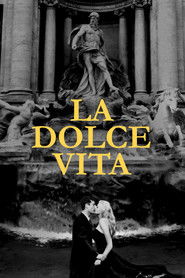
La Dolce Vita (1960)
The opening image — a statue of Christ dangling from a helicopter over Rome, while shouted words are swallowed by rotor noise — teaches you how to watch the whole film: the sacred and the trivial share the sky, and nothing quite connects. Follow Mastroianni's face, a masterpiece of intelligent, helpless receptivity; he's a professional watcher (a gossip journalist) whose seeing never turns into doing. Notice how the hard, slightly bleached light flattens the celebrities of the Via Veneto into glossy surfaces, like photographs of themselves.
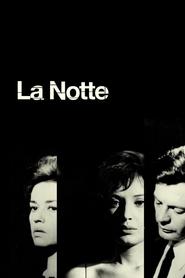
La Notte (1961)
Antonioni photographs Milan's modernist architecture — glass curtain walls, brutalist towers, half-finished buildings — not as backdrop but as a leading character. Watch the long walk Lidia takes through the city: she drifts to the edge of these wide black-and-white frames, small and almost incidental, while the buildings hold the center. You keep expecting the walk to lead somewhere, and the film's daring is in what it does with that expectation.

L'Eclisse (1962)
Here the same director pushes further: characters framed against walls, windows, and glass that subdivide the image, a woman reduced to a small figure in a vast, geometric plaza. Watch how the film gives full, patient screen time to things an ordinary movie would cut — a barrel of water, a fence, strangers passing — until empty space starts to feel like the true subject. The romance at the center keeps failing to build toward anything it can declare, and the film asks you to feel that failure as space, not speech.
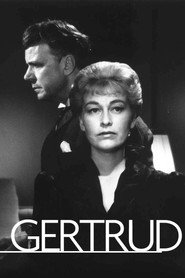
Gertrud (1964)
Built from astonishingly few shots — among the longest sustained takes in narrative cinema — this is a film where scenes unfold in something close to real time. Watch where people look when they speak of love: declarations delivered to empty air, confessions addressed to the floor, two people on a sofa who never meet each other's eyes. Once you notice it, you can't stop, and the film becomes a portrait of where a person looks when she has stopped expecting the world to answer.
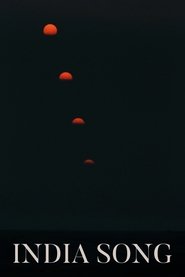
India Song (1975)
The strangest and most hypnotic experiment here: nobody on screen speaks. The figures drift through amber, smoky rooms while disembodied voices — somewhere off, half in love with the woman they're remembering — do all the talking, and the figures never answer back. Watch the great mirror shot where Delphine Seyrig appears twice, body and reflection, and you can't always say which is which: the whole film is a present tense we're told, over and over, is already finished.
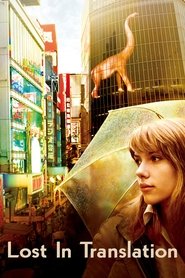
Lost in Translation (2003)
Start with Charlotte at the hotel window, knees drawn up, looking out at a Tokyo she can't read — not waiting for anything, just seeing, while the film lets her. Watch how the telephoto lens flattens the city into a wash of light behind the characters and how often they're placed at windows or in transit, suspended between lives. The film borrows the grammar of romance while quietly declining its usual payoffs, and the restraint is the point.
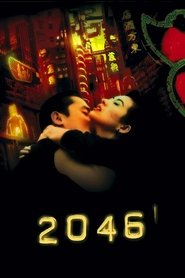
2046 (2004)
Watch for the stutter: Wong prints individual frames two or three times, so a single second of hesitation swells into something you can almost climb inside. The amber hotel corridors of 1960s Hong Kong and the cold blue train of a science-fiction serial aren't story and flashback — they're two faces of the same feeling, and names and faces migrate between them. Notice how the slatted partitions and doorways keep catching figures in reflection, so you're never entirely sure what's a person and what's a memory of one.
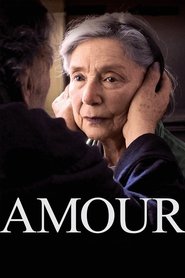
Amour (2012)
Early on, at a piano recital, the camera faces the audience instead of the stage — and in hunting for the two protagonists in that crowd, you accept the only job the film will give you: to watch. The camera stays static, at a respectful middle distance, and shots last long enough that you wait inside rooms, watching a meal prepared or a body lifted, in something close to real time. That patience isn't coldness; it's a form of moral seriousness about love, dependency, and dignity.
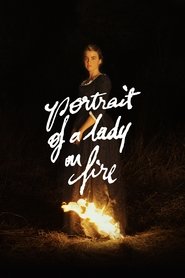
Portrait of a Lady on Fire (2019)
Here, looking is not a means to the kiss — looking is the event. Watch how the camera keeps framing people in the act of watching each other: the painter studying her subject on cliff walks, the subject studying her right back. The film's great turn is when the gaze stops being one-way theft and becomes a circuit running in both directions — and the long, still close-ups on a face registering nothing but pure attention are where the real drama detonates.
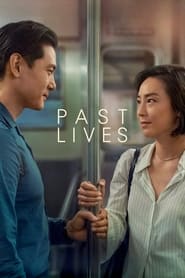
Past Lives (2023)
The opening shot hands you your job: three people at a bar, and unseen strangers guessing who they are to one another — before we know a single name, we're reading lives from the outside. Watch how physical distance between bodies becomes the film's real subject: patient, often static compositions, people held apart by doorways, frame edges, and thresholds. This is a film less about whether something will happen than about the lives we measure against the ones actually lived.
Why watch these together? Because each one trains you for the next. The gliding mirrors of Ophüls prepare you for Wong's reflections; Antonioni's empty plazas teach you to read Coppola's hotel windows; Dreyer's averted eyes make Sciamma's returned gaze land like thunder; Duras's unstuck voices echo forward from the film she wrote for Resnais. Across seventy years, languages, and continents, these filmmakers all made the same wager — that if the camera stops chasing and simply watches, if time is allowed to stretch, the viewer's attention becomes the story's missing engine. These films don't tell you what to feel; they leave a space exactly your size and wait for you to step into it. Come rested, put the phone in another room, and let them teach you their tempo. By the twelfth film, you won't be waiting for something to happen. You'll have learned that it already is.