Sightlines · a mini film course
When Watching Becomes the Action: Twelve Films About Seeing, Knowing, and the Moment the Deed Can't Keep Up
Here is a set that looks, at first glance, like a shelf of thrillers and war pictures — submarines, spies, bombers, battlefields. But watch them together and a stranger, more beautiful pattern emerges. These are films fascinated by the gap between seeing and doing. Some of them close that gap with breathtaking speed — a scream becomes a train whistle, a torpedo run cut like percussion. Others pry it open and hold it there: a burned man who can only remember, a soldier who can only be processed, a camera that keeps dancing after the human being has stopped. And in between sit the great puzzle-films of knowledge — pictures where the decisive act isn't a punch or a shot but an interpretation, a reading, a thing the audience knows that the characters don't. Move through this set and you'll feel cinema itself shifting its weight from the fist to the eye.
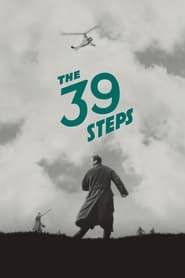
The 39 Steps (1935)
Start here, at full sprint. Watch how Hitchcock converts everything into motion — most famously the cut where a landlady opens her mouth to scream and what comes out is a train whistle, yanking you three hundred miles north in a single frame. Notice how a vast, invisible conspiracy presses down on one ordinary man, and how the film keeps the pressure everywhere and nowhere at once. This is the chase film perfected: nothing is dwelt upon, everything is fuel.
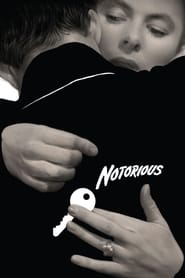
Notorious (1946)
Now watch Hitchcock do something stranger. The film's most famous shot begins high above a glittering party and travels down, without a cut, until the whole frame is one tiny object hidden in a hand. Meaning here doesn't live in deeds — it lives in what we are allowed to see that the characters can't. Notice how often the camera puts you inside someone's disorientation, and how the suspense comes not from action but from knowledge, held and withheld.
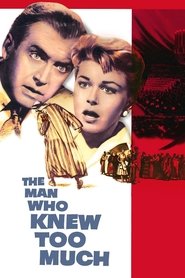
The Man Who Knew Too Much (1956)
Watch the printed concert program change hands, and feel the music become a clock. In the Albert Hall sequence — running close to real time — Hitchcock builds twelve minutes of agony out of pure information: we know a cymbal crash is coming, we know what it will cover, and we can do nothing but sit there. This is the bomb-under-the-table principle at its most orchestral. Notice, too, how much of the "spy story" is really about a marriage under strain.
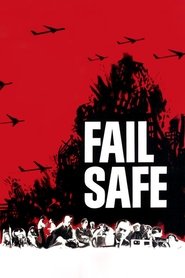
Fail Safe (1964)
Lumet strips the thriller to bare wire. Notice the deliberately flat, unglamorous lighting of the war rooms and offices — no shadows, no atmosphere, just faces under procedural stress, much of it conducted over telephones. The film has all the machinery of an action picture and quietly removes the one thing the genre needs: a villain. There is no saboteur, no enemy agent. The system itself is the antagonist, and watching people confront a problem that no heroic act can punch is the film's cold, mounting terror.
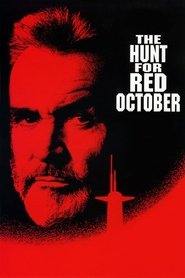
The Hunt for Red October (1990)
Watch the scene where a Soviet captain reads a letter aloud to his officers — and notice how long McTiernan holds the shot, well past where a conventional cut would land. Nothing is fired; a man reads a document, and everything changes. The whole film works this way: two navies and an intelligence bureaucracy trying to deduce one man's intentions from a course heading, a sound that isn't there. Notice the subtle color-coding of the two submarines, and how the decisive acts are acts of reading.
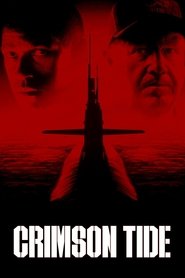
Crimson Tide (1995)
The perfect companion piece: the same steel corridors, but here interpretation becomes crisis. A radio message dies mid-word, and two officers read the same severed sentence in opposite ways. Watch Tony Scott's signature style — hard shafts of light, amber haze, smoke in every interior — turn the submarine's confinement into pressure you can feel. The film inherits a long tradition of captain-versus-executive-officer duels, and it refuses to tell you which man is simply right.

Apocalypse Now (1979)
Now the gap between seeing and doing blows wide open. Watch the opening: a ceiling fan becomes helicopter blades, jungle burns, a rock song bleeds into the hiss of insects — ten seconds that tell you to stop looking for a plot and start absorbing a state of mind. Notice Storaro's color journey, from the ambers of Saigon into blue-grey river murk and near-total darkness. And notice how passive the hero is — he watches, reads, narrates, while the river does the moving. That flatness is deliberate, and it's the film.
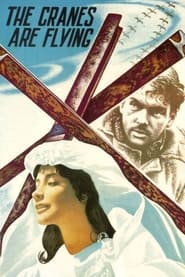
The Cranes Are Flying (1957)
Watch what the camera does when a human being falls still. In the film's most quoted passage, the camera tips up from a soldier into the wheeling crowns of birch trees, and the world takes over the motion the body has surrendered — spinning into a vision of a wedding that exists in no time and no place. Urusevsky's athletic, unchained camerawork (a spiraling staircase ascent is the other canonical sequence) made this the film that put Soviet cinema back on the world stage. Grief and what-might-have-been share a single frame.
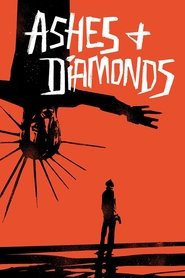
Ashes and Diamonds (1958)
The first thing you'll notice: a young man wearing dark glasses indoors, at night, shading his eyes against a glare that isn't there. Watch Wójcik's extraordinary high-contrast photography — faces half-consumed by pooled shadow, a debt to noir and to Welles — and watch how a single hotel becomes a compressed world where a whole generation's predicament plays out over one night. The hero was built to act on orders; the film watches what happens when history changes the rules mid-deed.
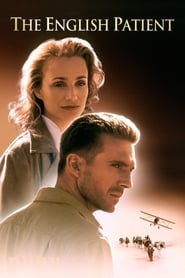
The English Patient (1996)
Watch how the desert is photographed as a body — dunes lit so that sand and skin rhyme, wind-ripples echoing the curve of a back. Then notice the film's architecture: a man burned past recognition, laid out in a bombed Italian villa, able only to remember — and the story assembles itself from fragments, out of order, the way memory does. The present tense is all texture: a dressing changed, wind in stone rooms, the drone of a remembered engine. Nothing there advances a plot; it opens a door into the past.
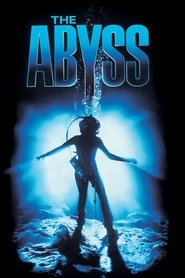
The Abyss (1989)
For its first hour, this is a machine for action — valves turned, modules flooded, bodies moving with trained economy — shot under conditions with no real precedent in studio filmmaking. Then watch what happens when a tendril of glowing seawater noses down a corridor, gathers itself into a mirror, and wears a human face back at its beholders: the first photorealistic morphing surface ever composited into a Hollywood film, and seventy-five seconds during which the movie hands its heroes, and us, nothing to do but look. Notice how the whole design equates going deeper into the ocean with going deeper into a marriage, and into ourselves.
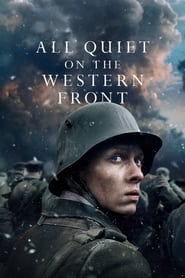
All Quiet on the Western Front (2022)
Watch the coat. In the opening minutes a soldier dies, and the film follows his uniform — stripped, laundered, stitched, folded, reissued to a boy still excited to put it on. No music; cuts with the rhythm of an inventory. Before a word is spoken, you've been shown a machine that consumes bodies and recycles the packaging. Notice the desaturated palette, the sustained shots, and the film's terrible interest in the distance between the people who fight a war and the offices that administer it.
Watch these together and you'll start to feel the current running under all of them: cinema deciding, again and again, where its drama really lives. In the chase or in the waiting? In the deed or in the knowledge of what the deed means? The Hitchcocks teach you to treasure what you know that the characters don't; the submarine films turn reading a message into life-or-death action; the war films — from the birch trees to the laundered uniform — show you what the camera does when acting is no longer possible and only looking remains. By the end of this course, you'll notice something has changed in how you watch everything: you'll feel the exact moment a film shifts its faith from the hand to the eye. That moment, it turns out, is where some of the movies' deepest feeling lives.