Sightlines · a mini film course
When the Camera Learned to Wait: An Italian Lineage
Here is a set of films that, taken together, tell the story of a quiet revolution. It begins in the rubble of postwar Rome, where filmmakers carried cameras into real streets and discovered something strange: when your characters are ordinary people crushed by circumstances too large to fight, the old machinery of movies — see the problem, act, solve it — stops working. What replaces it is a cinema of watching. The camera stops chasing the story and starts observing the world; time is allowed to stretch; faces and places are held on screen long past the point where an ordinary film would cut away. These twelve films trace that idea from its wartime birth through its lyrical and modernist flowerings, all the way to a twenty-first-century crime film that inherits the whole tradition.

Rome, Open City (1945)
This is where the new grammar gets written, under desperate conditions. Watch how the framings feel discovered rather than designed — figures caught mid-gesture, the camera reframing as if surprised by what's in front of it, depth of field dictated by whatever light was available. Rossellini refuses the polish of both Hollywood and Fascist-era studio filmmaking, and the roughness isn't a flaw: it's an ethics. The film also builds its spine on an unlikely alliance — a Communist and a priest bound by a common enemy — and never sentimentalizes it.
Paisan (1946)
Six episodes moving up the Italian peninsula with the Allied advance, each one turning on the gap between people who cannot understand each other — liberators and liberated, allies who are strangers. Notice how the camera pans, tilts, and adjusts mid-shot, responding to action rather than anticipating it, a technique with roots in documentary. Notice too how often the characters' best efforts simply fail to land: the war has broken the link between trying and succeeding, and the film lets you feel that break rather than explaining it.
Shoeshine (1946)
De Sica opens on an image of pure aspiration — two shoeshine boys and a white horse, the one gleaming thing in a grey city — and then watches the adult world close around them. The visual approach favors clarity over flourish: documentary attentiveness to postwar Rome's crowds and black markets, with the boys always legible within it. The key thing to notice is that there's no villain here; institutional indifference, not evil, drives everything, and the boys can see exactly what's happening to them without being able to reach it.
Umberto D. (1952)
Neorealism's endpoint and apotheosis: even the narrative engine of Bicycle Thieves (a theft, a search) is stripped away, leaving a retired civil servant, his dog, and a rent bill. Watch the famous sequence in which a maid simply wakes and goes about her morning — a stretch of ordinary time filmed at full length, with no plot justification, that gave a generation of later filmmakers permission to do the same. And watch the small gestures of a man defending his dignity: the film's whole drama lives in what he cannot bring himself to do.
La Strada (1954)
Fellini's road fable marks the moment Italian cinema turns from social document toward myth. Everything runs through Giulietta Masina's face — a mime's instrument in the Chaplin tradition, comedy and devastation held in a single look. Notice how Fellini photographs her in plain, even light, refusing to tell you how to feel, and holds the shot where another film would cut to what she'll do next. Nothing is done; the expression simply persists, and you read a whole soul off the surface. Around her, the countryside is shot with grainy, overcast naturalism while the circus scenes shade into something more theatrical — the film lives in that in-between.
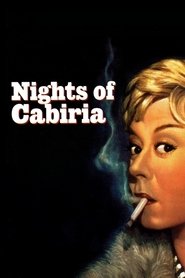
Nights of Cabiria (1957)
A woman on Rome's periphery who cannot stop expecting goodness from people, no matter how often the world corrects her. Fellini treats that expectation not as naivety but as a kind of grace. Watch the rhythm: an episodic structure of encounters in which Cabiria's efforts reveal her situation without ever transforming it — she perceives everything clearly and can change almost nothing. Aldo Tonti's photography splits the difference between raw location realism (harsh headlights on an arterial road) and something more charged and dreamlike.

L'Avventura (1960)
Antonioni sets a mystery-plot in motion — a disappearance, a search — and then quietly declines to run it the way any other film would. What fills the space is landscape: a volcanic island whose rock and sea dwarf the characters, framings in which people drift to the edges of the image or are half-hidden by walls, as if the world no longer arranged itself around them. Give yourself over to the held shots. The film asks you to feel how long looking takes, and how far apart two people can be while standing side by side.
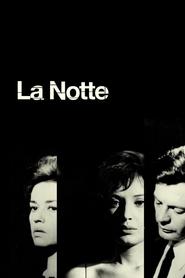
La Notte (1961)
One day and night in a marriage, shot in a Milan of glass curtain walls and half-finished buildings that Di Venanzo photographs not as backdrop but as active presence — architecture that seems to press on the characters. The centerpiece is a long walk through the city in which a woman simply looks: at a wall, a stretch of waste ground, a stranger. You keep waiting for the walk to lead somewhere; the film's boldness is in letting the looking be the event. A writer who can no longer write, a wife who understands him too well — incommunicability rendered as space.

L'Eclisse (1962)
The most radical of the trilogy. The romantic breakup that would power a conventional melodrama is already over before the titles; we arrive amid the aftermath. Watch Di Venanzo's grammar of negative space — characters framed against walls, subdivided by windows and reflections, reduced to figures in the vast abstraction of Rome's EUR district. And watch how the film treats places: corners, fences, streetlamps, observed with such patience that they begin to carry as much feeling as any face. The final minutes are legendary for exactly this reason — don't look them up beforehand.
Red Desert (1964)
Antonioni's first color film, and he uses color as no one had: he famously had the grass along a refinery road painted grey, authoring the landscape down to the chlorophyll so that the world on screen matches the inside of his heroine's head. Monica Vitti plays a woman flooded by sensation — steam, engine-throb, industrial hum — registering everything and able to discharge none of it into action. Di Palma's telephoto lenses flatten Ravenna's petrochemical corridor into something both beautiful and unbreathable. The question the film keeps open: is her distress an illness, or an accurate response to a world nobody evolved to live in?
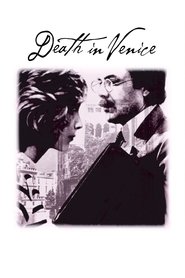
Death in Venice (1971)
Visconti — himself a founding neorealist, now arrived somewhere entirely other — gives us a composer who watches and cannot act, and builds the film's whole visual language around that condition. Note the slow zooms: the character stays seated at his café table or in his deckchair, and it's the camera that does the reaching, gliding across a hotel dining room toward a face at once close enough to touch and impossibly distant. De Santis's haze-soaked, milky photography makes the entire film feel like a slow dissolution. Desire rendered purely as looking, at operatic length.
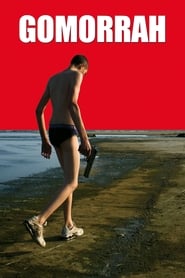
Gomorrah (2008)
And here the whole lineage arrives in the present. Garrone inherits neorealism wholesale — real locations, non-professional faces, five braided story-strands that echo Paisan's episodic mosaic — and turns it on the modern crime film. Watch what the camera refuses: no swelling music, no slow motion, no reverse angle to grant violence its drama; Onorato's handheld lens treats killing as weather and is often already drifting elsewhere. Two teenagers act out scenes from Scarface, and the film stages their fantasy precisely to puncture it: the Hollywood myth of the gangster who acts and rises has no purchase in a world that is all system and no exit.
Watched in sequence, these films train your eye. You'll see a visual language get invented under emergency conditions in 1945, watch it deepen into patience in the fifties, turn inward and abstract in the sixties, ripen into operatic stillness in the seventies, and resurface, tougher than ever, in 2008. The through-line is a single, radical wager: that a camera which waits — on a face, a street corner, a stretch of grey grass — can show you more than a camera that chases. By the end, you'll find that the "empty" moments are where these films keep their treasure, and you'll never watch a held shot the same way again.