Sightlines · a mini film course
The Cinema That Learned to Watch
There's a moment in each of these films — often quite early — when you feel something quietly unusual happening: nothing. A face is held longer than a story needs. A search leads nowhere in particular. A death arrives without music to explain it. This is Italian cinema across sixty-five years discovering, refining, and passing down one radical idea: that a movie doesn't have to be an engine of problems solved and actions completed. It can be a way of seeing — a camera that watches rather than chases, characters who look at their world more than they change it, and time that is allowed to stretch until you feel its weight. Born in wartime rubble, this sensibility runs from the founding neorealist films through their strange, gorgeous mutations, all the way to the concrete housing blocks of 2008. Watched together, these eleven films are a single long conversation about what an image can hold when it stops rushing toward the next event.
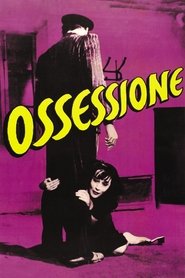
Obsession (1943)
The prologue to everything here. Watch the very first shot of Gino, arriving slumped among sacks in the back of a truck — a man presented as sheer appetite and heat before he's a character at all. Visconti, fresh from apprenticing with Jean Renoir, shoots a real roadside trattoria in the hazy flatness of the Po Valley so that you can see two worlds at once: the cluttered, workaday business on the surface, and underneath it something older and hungrier pulling everyone downhill. Notice how the doom comes from the place itself, not from shadows or stylized menace.

Rome, Open City (1945)
Shot in actual liberated Rome on scarce film stock, this is where the new grammar announces itself. Watch how the framings feel caught rather than composed — figures snatched mid-gesture, focus adjusting as if the camera is discovering the scene along with you. And notice how Rossellini refuses the usual protections a movie extends to the people we love: events strike with the unprepared suddenness of history, not the timing of drama. Anna Magnani's presence alone is worth the price of admission.
Paisan (1946)
Six episodes moving up the Italian peninsula with the Allied advance, each turning on the gap between people who cannot understand each other — literally, in language, and deeper down. Watch for the smallest gestures carrying the largest freight: a lit match offered to share a family photograph. Rossellini lets the acts of goodwill and the machinery of war collide without commentary, and the responsive, reframing camera — following its subjects rather than staging them — becomes the film's whole ethic.
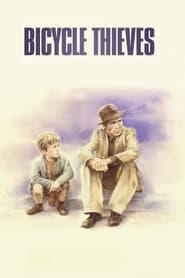
Bicycle Thieves (1948)
The purest expression of the idea. A man's bicycle — his access to work, his family's survival — is stolen, and he spends a day searching Rome for it. Watch how De Sica keeps him in long and medium shots, a body held inside social space, with close-ups rationed like precious metal. Nothing is aestheticized; there are no villains, no tilted angles, no rescue machinery. The revolution is in the gap you'll feel between what Antonio sees and what he can actually do about it — and in how the film trusts that gap to be enough.
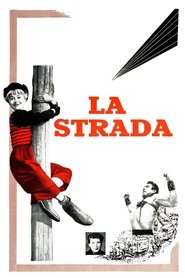
La Strada (1954)
Fellini's fable of a simple young woman sold to a brutish traveling strongman. The thing to watch is Giulietta Masina's face — held in plain, even light, hovering between comedy and grief, refusing to tell you which to feel. Her whole physical vocabulary descends from Chaplin: a single look loaded with laughter and devastation at once. Notice too how the film shifts registers — grainy, overcast roads one moment, threadbare circus magic the next — as it asks its real question: whether grace can survive contact with brutality.
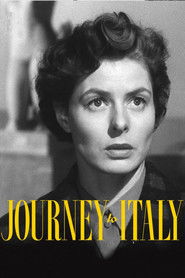
Journey to Italy (1954)
Rossellini hands Ingrid Bergman the strangest job a star had ever been given: simply to look. An English couple, strangers inside their own marriage, drive south to sell a villa near Naples, and the film becomes Katherine's encounters with statues, catacombs, steaming sulfur fields, the excavations at Pompeii. Watch the traveling shots from the moving car — Italy sliding past a face that takes everything in. The camera's attentive plainness lets the ruins and relics do the emotional speaking, and the road movie is quietly invented in the process.
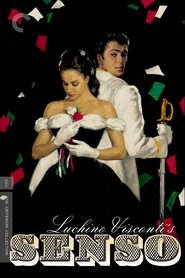
Senso (1954)
The great mutation: Visconti carries neorealism's documentary weight into Technicolor, opera, and history. Watch the opening at La Fenice — patriotic leaflets fluttering down mid-aria onto white Austrian uniforms — where Visconti tells you how to watch: history here will be staged and sung before it is lived. Everything you see is exquisite — reds and golds tuned to nineteenth-century painting, candlelit interiors shot by Robert Krasker of The Third Man — and all of it is a world rotting from inside even as it gleams. Beauty as autopsy.
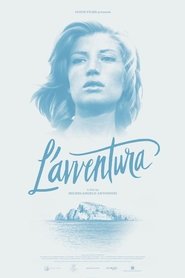
L'Avventura (1960)
A woman vanishes on a volcanic island; a search begins — and then Antonioni does something no film had done. Watch the framing: human figures drift to the edges, get obscured by walls and columns, are dwarfed by rock and sea until they read as marks on stone. Notice how people stand close enough to touch and remain unreachable, and how the landscape holds them like a beautiful trap. The film's audacity is in what it declines to deliver, and in how long it's willing to hold a shot to let you feel that.
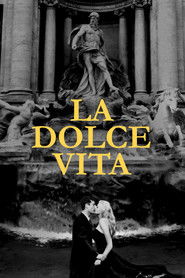
La Dolce Vita (1960)
The film opens with a statue of Christ dangling from a helicopter over Rome while a journalist in a second helicopter mimes flirtation at sunbathing women — the sacred and the trivial sharing the sky, and nobody able to hear a word. Watch Mastroianni's performance of intelligent, helpless receptivity: a professional watcher who drifts through nights and dawns of the economic-miracle years, perceiving everything, changed by nothing. Martelli's hard, bleached widescreen light flattens the Via Veneto celebrities into photographic surfaces — a paparazzo's world rendered in a paparazzo's light.
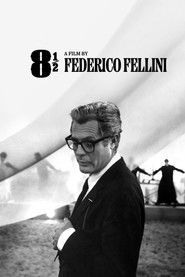
8½ (1963)
A film director can't make his film, and Fellini turns the blockage itself into the movie. The thing to watch for is the missing seam: memory, fantasy, and present-tense reality are cut together with the same hard, matter-of-fact joins — no dissolves, no misty warnings, no change in the silvery black-and-white to tell you which world you're in. Di Venanzo shoots dream and daylight on one continuous register. You will sometimes not know whether you're inside Guido's head or the world, and that disorientation is the point, and the pleasure.
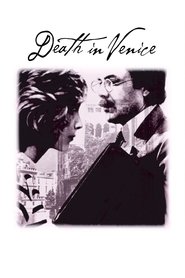
Death in Venice (1971)
Visconti's late masterpiece of pure watching. An aging composer arrives at a Venice hotel, sees a beautiful boy, and — this is the film's whole design — never crosses the room. Watch what the camera does instead: De Santis's long lens glides slowly through hazy, milky lagoon light, reaching where the man cannot. Long takes let events play out at nearly the speed of life, so that decline is something you feel in duration rather than are told about. Desire that has given up on action, filmed with heartbreaking patience.
Gomorrah (2008)
The inheritance, sixty years on. Garrone braids five non-converging strands through the Camorra's Naples — real locations, non-professional faces, a handheld camera that keeps a wary distance even from violence. Watch how killings arrive without strings, slow motion, or reverse angles — treated as weather, the way the housing projects treat them. Watch, too, the two teenagers acting out Scarface in the surf: Hollywood's gangster myth quoted precisely so the film can puncture it. Everyone here sees their situation with perfect clarity; the film's bleak power is in how little that seeing can buy.
Watched in sequence, these films teach you a way of looking. The early neorealist pictures break the old contract — that seeing a problem means solving it — out of historical necessity, in streets still scarred by war. Then each director takes the broken engine somewhere different: Fellini toward faces, dreams, and grace; Antonioni toward architecture and silence; Visconti toward gorgeous decay; Rossellini toward the pilgrim's wandering eye; Garrone, decades later, back to the streets to show the machine still stalled. The reward is cumulative. By the time you reach the long lens drifting through a Venice hotel, or the handheld camera turning away from a stairwell, you'll recognize the gesture — the camera watching rather than chasing — and you'll feel how much a held image, given time, can carry. These are films that trust your attention. Bring it, and they repay it many times over.