Sightlines · a mini film course
The Camera That Watches: Twelve Films About Seeing More Than You Can Do
There's an old promise in movies: a character sees a problem, acts, and the world changes. The films on this list — most of them Italian, born from the rubble of the war and reaching forward decades — quietly break that promise, and something extraordinary rushes into the gap. Here the camera watches rather than chases. Faces are held longer than any plot requires. Time is allowed to stretch until you can feel it passing in your own body. Watched together, these films trace how a national cinema learned that looking — patient, unblinking, sometimes helpless looking — could carry more weight than any decisive act. Take them in order, and you'll watch the idea being invented, refined, and inherited.

Rome, Open City (1945) — dir. Roberto Rossellini
This is where it starts: actual war-scarred Roman streets, scavenged film stock, professionals mixed with people recruited off the street. Watch how the framing refuses elegance — figures caught mid-gesture, off-center compositions, focus that shifts as if the camera is discovering the scene rather than staging it. Notice, too, how the film binds a Communist and a Catholic priest into a single moral spine without sentimentalizing either. Nothing here feels pre-planned, and that roughness is the point.
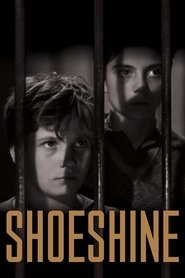
Shoeshine (1946) — dir. Vittorio De Sica
Hold onto the opening image: a white horse, gleaming and impossibly clean against a grey, occupied city — the purest thing two shoeshine boys can dream of buying. De Sica's camera favors clear, patient observation over flourish, keeping the boys legible inside the crowds and black-market bustle of postwar Rome. Watch how completely the film sees through children's eyes, and how the adult world's machinery presses on desires that simple. It founded a whole tradition of films that indict grown-up society through a child's uncomprehending face.

La Terra Trema (1949) — dir. Luchino Visconti
Begin with the women on the black volcanic rocks before dawn, standing in silhouette, watching the sea for boats that are late — held far longer than any story needs. G.R. Aldo's photography is among the most admired in Italian cinema: long, deliberate takes, deep focus, figures framed by dark doorways and the geometry of nets. The cast are actual Sicilian fishermen speaking their own dialect, yet every frame is composed like a painting. Watch that tension — the rawest realism and the most rigorous beauty, fused.
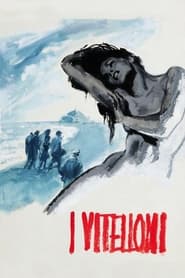
I Vitelloni (1953) — dir. Federico Fellini
An ensemble portrait of five young men suspended in perpetual adolescence in a seaside town where the off-season wind scours the empty piazza. Watch the gap the film keeps measuring, gently and without cruelty: between what these men dream — fame, art, romance — and what they actually do, which is drift. Fellini keeps neorealism's real locations and ordinary lives but turns the camera inward, toward fantasy and inertia. It's the hinge between the cinema of the streets and the cinema of the soul.
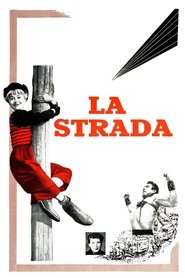
La Strada (1954) — dir. Federico Fellini
Watch Giulietta Masina's face in the first minutes, before you know anything about her — held in plain, even light, no shadow telling you how to feel, hovering between a grin and bewilderment so that you can't decide whether to laugh or grieve. That refusal to decide for you is where the film lives. Masina built her whole vocabulary from Chaplin: a single held look loaded with comedy and devastation at once. Notice how the circus is stripped of spectacle — threadbare acts, provincial venues — and becomes a place of marginality where grace goes unseen.
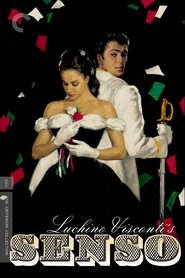
Senso (1954) — dir. Luchino Visconti
It opens inside a Venetian opera house, mid-performance, as patriotic leaflets flutter down onto white Austrian uniforms — opera, politics, and passion arriving in one shower of paper. Visconti is telling you how to watch: history here is staged and sung before it is lived. The Technicolor is tuned to nineteenth-century painting, and the photography carries a poignant seam — begun by G.R. Aldo, who died during the shoot, and finished by Robert Krasker of The Third Man, whose candlelit shadows haunt the interiors. Everything you see is exquisite, and all of it belongs to a world quietly rotting from inside.
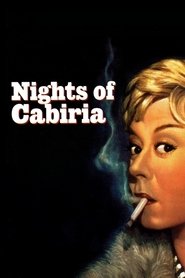
Nights of Cabiria (1957) — dir. Federico Fellini
Aldo Tonti shoots Rome's periphery raw — harsh headlights cutting through darkness, faces caught in unflattering sweeps — yet something atmospherically charged keeps glowing through. Watch the pattern the film establishes: Cabiria's efforts rarely change her circumstances, but her face keeps expecting goodness anyway, and Fellini refuses to treat that as naivety. He films it as a kind of grace. The comedy is how the film approaches suffering sideways, in the Chaplin tradition of the resilient clown.
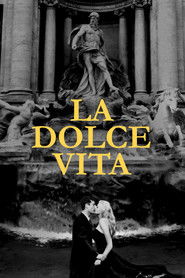
La Dolce Vita (1960) — dir. Federico Fellini
The opening image: a statue of Christ dangling from a helicopter over Rome's rooftops, while a journalist in a second machine mimes flirtations that the rotor wash swallows whole. Here is the watcher perfected — Marcello, professionally a perceiver, drifting through nights and dawns in a wide anamorphic frame that Otello Martelli lights so the Via Veneto's celebrities flatten into hard, bleached photographic surfaces. Watch Mastroianni's face: intelligent, helplessly receptive, expressive only in reaction. The film moves sideways rather than forward, and that lateral drift is its portrait of an age.
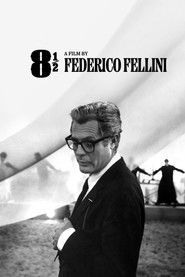
8½ (1963) — dir. Federico Fellini
The rule is set in the first two minutes: you will not be told when you've left the world for the head, or the head for the world. Fellini cuts from present to memory to daydream with the same hard, matter-of-fact join he'd use between two rooms of the same house — no dissolves, no misty harp-glissando warnings. Gianni Di Venanzo shoots all three registers on one continuous silver: no color-coding, no change of grain to grab onto. Watch for the seams, and marvel that they're gone on purpose.
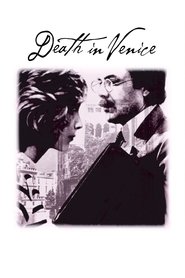
Death in Venice (1971) — dir. Luchino Visconti
Watch what the camera does that the man cannot: Aschenbach settles into his café table, his deckchair, his gondola cushions, and it is De Santis's slow zoom that does the reaching for him — gliding across a hotel dining room until a face swims close enough to touch and stays as distant as another country. The whole film is built on diffusion, haze, and the milky