Sightlines · a mini film course
The Space Between Seeing and Doing: Twelve Films About Power
Every film in this set is about power — kings, presidents, generals, tyrants, and the frightened people orbiting them. But what really binds them is something subtler: each one is fascinated by the gap between perceiving a crisis and acting on it. Some of these films give us heroes who close that gap in a single decisive stroke; others trap their characters in rooms where everyone sees the disaster perfectly and nobody can move; still others give us charmers and forgers who don't act on the world so much as manufacture a false version of it. Watch how each camera handles that gap — whether it charges forward with the hero, hovers nervously among the paralyzed, or winks at you from inside the lie.
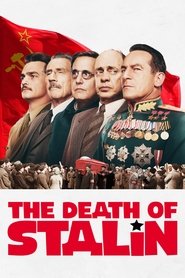
The Death of Stalin (2017)
Watch the camera float and reframe restlessly around clusters of terrified men, tracking who stands closest to power the way a nature documentary tracks a food chain. Iannucci's comedy comes from paralysis: an inner circle that perceives catastrophe with total clarity and cannot act — afraid to touch, afraid to declare, afraid to summon help. An early sequence about re-staging a concert to fabricate a recording that never existed is the whole film in miniature: under absolute power, people can't change reality, only frantically counterfeit it.
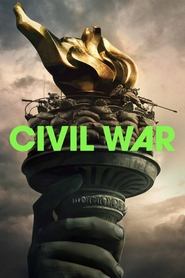
Civil War (2024)
The camera behaves like a fifth member of a press team — handheld, searching, sometimes caught flat-footed by violence erupting at the frame's edge. Then, mid-chaos, motion stops: one perfectly composed still, a shutter click, and movement resumes. Watch your own body when it happens. The film's real subject is the ethics of witnessing — whether photographing suffering is moral seriousness or a sublimated thrill, and what standing behind a camera does to the impulse to intervene.
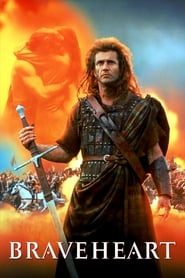
Braveheart (1995)
Here is the gap between seeing and doing slammed shut with total confidence: a man perceives a situation, moves, and the whole field moves with him — old-fashioned heroic grammar rebuilt without embarrassment in 1995. But notice how John Toll's cinematography refuses the postcard: overcast skies, flat light, undersaturated greens, so that the oppression weighing on Scotland feels physical before anyone lifts a sword. The country itself seems to demand a hero, and the massed battle formations owe a visible debt to Kurosawa's geometric staging.
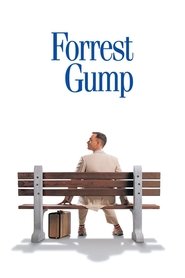
Forrest Gump (1994)
The warm, golden, classically composed images are quietly hiding one of the decade's boldest tricks: forged history. Watch the archival footage — real grain, real light, a real dead President — with a manufactured man inserted and new words in famous mouths. The film takes photography's oldest promise, the camera was there, and counterfeits it so smoothly you believe it anyway; underneath the sentiment is a genuine question about what our shared image of the past is made of.
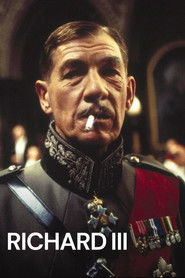
Richard III (1995)
Ian McKellen's Richard is a man who manufactures truth on the spot and is most himself while deceiving — and the film's engine is his swivel toward the lens, lying to everyone on screen and confiding only in you. Watch that early pivot from public speech to private direct address: same verse, different audience, and suddenly you're complicit. Peter Biziou shoots this imagined-fascist Britain with glossy, art-deco elegance, making tyranny look like a very good party.
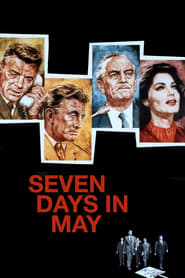
Seven Days in May (1964)
Frankenheimer and cinematographer Ellsworth Fredericks build the whole film out of deep focus and wide-angle lenses: a face looms huge in the foreground while the person who threatens him stands small and crisp in the background — one shot, two distances, the entire conflict held on a single plane without a cut. Watch how the compositions tell you who is dangerous before the dialogue does. And notice the weapons: not guns but memoranda, phone logs, letters — small disclosed fragments through which a hidden conspiracy is slowly read.
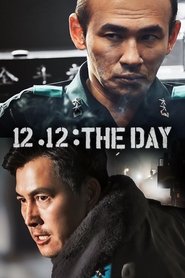
12.12: The Day (2023)
A coup staged not as battle but as switchboard: nine hours, a freezing Seoul night, and the real protagonist is the telephone — a receiver lifted one rank too late, the click of a dead line. Watch the agony of officers who see the takeover clearly and cannot convert sight into action, waiting for authorization that will never come in time. The camera stays constricted in corridors and command rooms; when it escapes outdoors, openness reads as exposure, not relief.
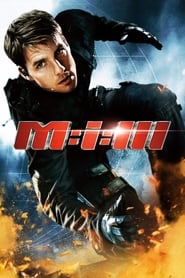
Mission: Impossible III (2006)
Abrams opens on the film's own worst moment, torn out of sequence and bolted to the front, so you spend two hours watching a life get built while dreading its demolition. This is the seeing-acting circuit restored to full gleaming health — a hero who perceives and moves, moves, moves — shot in Dan Mindel's close, handheld, long-lens style that stays glued to faces even at maximum velocity. Watch how the franchise's mask-and-disguise machinery mirrors the theme: a man whose vocation is deception trying to be honestly present in a marriage.
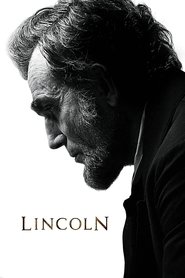
Lincoln (2012)
Watch what Daniel Day-Lewis does with hesitation. Handed an urgent decision, this Lincoln sits down and tells a wandering story — the film makes the pause between seeing and acting visible, stretchable, the whole performance. Janusz Kamiński shoots it in wintry near-darkness, shafts of window light cutting through dim rooms, and the drama is wrung not from battle but from vote-counting, bribery, and parliamentary maneuver: democracy as slow, venal, exasperating machinery that might still do something profound.
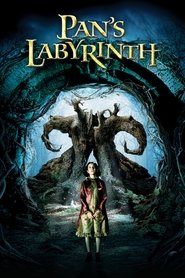
Pan's Labyrinth (2006)
Del Toro made two films at once — a war picture about hunting guerrillas in the Spanish hills, and a fairy tale about a girl given three tests — and refuses to rank them or tell you which is true. Watch Guillermo Navarro's color logic: cold steel blues for the captain's world, warm ambers for the fantasy spaces, and notice which moments each palette claims. The film's moral engine is disobedience as virtue: the girl is tested less by danger than by prohibition.
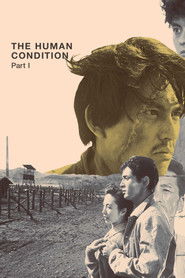
The Human Condition I: No Greater Love (1959)
Watch what the enormous widescreen frame does to one decent man: Yoshio Miyajima composes the labor camp into grids of confinement — fence lines, watchtowers, rows of workers — and stretches the Manchurian plain so wide that the idealist at its center looks like a comma in an indifferent sentence. This is a film about whether individual conscience can survive inside a coercive system, and the shape of the image argues the case before the story does. The frame is too wide for one man to fill; feel that.

The Lion in Winter (1968)
A family Christmas as siege warfare, and the coldest thing on screen is the architecture. Notice Douglas Slocombe's lighting: in a drafty, under-lit castle, the warmest and brightest object in nearly every shot is a human face — the film trains you to lean toward the one glowing thing in a dark room and read it, exactly as every member of this family reads every other. Watch Hepburn hold her surface steady while something wounded moves underneath; the camera doesn't editorialize, it just stays.
Watched together, these twelve films become a conversation about the same hinge in human affairs: the moment between seeing what's wrong and doing something about it. You'll see that hinge slammed shut by heroes (Braveheart, Mission: Impossible III), pried open into agonizing paralysis (The Death of Stalin, 12.12: The Day, The Human Condition), held deliberately ajar as a mark of wisdom (Lincoln), and bypassed entirely by forgers who simply fabricate the world they need (Richard III, Forrest Gump, Pan's Labyrinth). And you'll see the craft choices — deep focus versus handheld, still versus motion, the lit face versus the wide indifferent plain — doing the real arguing. By the end, you won't just know what each film is about; you'll feel how a camera can chase, watch, wait, or lie, and how each of those is a theory of power.