Sightlines · a mini film course
Noir Without a Net: Twelve Films Where the Truth Must Be Read, Not Found
Every film on this list wears some shade of noir — shadows, detectives, murder, a city that won't cooperate. But what actually binds them is stranger and more exciting: each one, in its own way, breaks the old promise that the story will hand you the truth at the end. In these films, evidence lies. Narrators perform. Faces do the talking while the plot holds its breath. The camera watches rather than chases, and you — the viewer — are quietly deputized as the real detective. Watched in sequence, they form a seventy-year conversation about how movies make us believe things, and what happens when a film decides to use that power against us. Here they are, roughly in the order they were made, so you can watch the trick evolve.
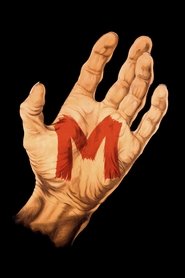
M (1931)
Fritz Lang's founding text of the serial-killer film teaches you its method in the first minutes: the worst thing that happens is never shown. A ball rolling to a stop, a balloon caught in wires, a mother's voice in an empty stairwell — Lang hands you the edges of an event and trusts you to build the center yourself. Listen, too: this is early sound cinema, and Lang uses a whistled tune the way other directors use a face, letting a melody announce danger before the image does. Notice how the deep expressionist shadows of German cinema are cooling here into something more like documentary — a whole city, top to bottom, rendered as a machine for hunting one man.
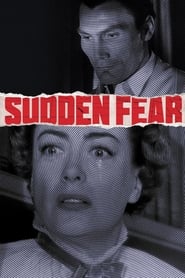
Sudden Fear (1952)
A woman-in-peril thriller built almost entirely out of Joan Crawford's face. Watch the film's light change with its story: Charles Lang's Oscar-nominated photography opens warm and airy in San Francisco courtship mode, then darkens by degrees into full noir. And watch the long, nearly wordless passages where the camera simply holds on Crawford and lets emotion travel across her features in real time — not one frozen expression but a face crossing over, from one state of being to another. Fitting, for a film about actors and playwrights, that the central question is whether love itself can be a performance.
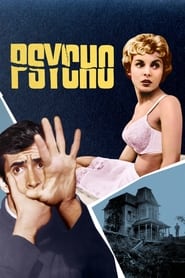
Psycho (1960)
You may think you know this one by reputation. Come to it fresh anyway, and pay attention to how much of the first act is spent simply watching someone — driving, thinking, being looked at through car windows and office doors. Hitchcock makes you a participant in all that watching, and the discomfort is the point. Notice also the lean, television-trained efficiency of the photography: no lush atmosphere, just clean frames and deep focus, so that when the film chooses to fragment the image, the shock lands with total force.
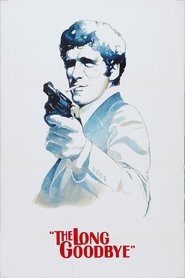
The Long Goodbye (1973)
Robert Altman opens a murder mystery with a man trying to fool his cat with the wrong brand of cat food — and that shaggy errand is the whole movie in miniature. Watch the camera: it never sits still, always drifting, zooming, repositioning, like a curious bystander who refuses to point at the important thing. Elliott Gould's Marlowe is a 1940s code of loyalty wandering through a 1970s Los Angeles that has stopped keeping score, and Altman lets you feel the mismatch in every frame. This is New Hollywood dismantling the private-eye picture with real affection and real cruelty at once.
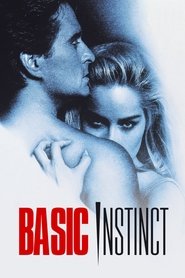
Basic Instinct (1992)
The keystone of the erotic thriller, shot by Jan de Bont in seductive pale blues and bleached coastal light — but the surface is a trap. Watch the famous interrogation scene closely: five men arranged around one woman, and notice how the gliding camera quietly tells you who actually holds the room. The film borrows Hitchcock's San Francisco and his circling, obsessive lens, then hands the pen to the woman being investigated: a suspect who is also a novelist, and who may be writing the detective's story faster than he can live it. Ask yourself, scene by scene, who is reading whom.
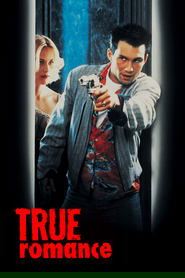
True Romance (1993)
Tony Scott shoots this lovers-on-the-run story in bruised blues and molten ambers, saturated nearly to abstraction — image as pure sensation. Watch how the film treats its hero's inner life: when Elvis appears in a bathroom mirror to offer advice, there's no dreamy dissolve, no wavy-screen signal. Scott shoots the fantasy dead literal, because Clarence is a man assembled entirely from movie posters and comic books, and the film takes his borrowed self completely seriously. Extreme violence and extreme tenderness in the same frame — that combination is the whole gamble.
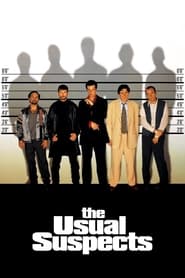
The Usual Suspects (1995)
A man tells a story in a deliberately drab, fluorescent-lit interrogation room — and the film shows you his story as vivid, fully staged, fully scored cinema. That contrast is the machine to watch: the blank white box versus the baroque flashbacks. The question the film quietly poses is one movies almost never ask: when a narrator speaks and the screen shows you pictures, why do you believe the pictures? Watch how completely the film exploits your lifelong habit of trusting what you see.
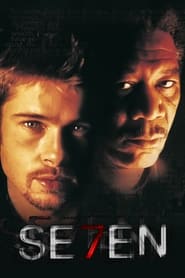
Se7en (1995)
David Fincher's detective story wants you to do homework, and that's a compliment. Each crime scene arrives as a text to be read — a word, a citation, a design — and the film's real suspense is interpretive: a detective in a library at night, pulling Dante off the shelf, and you reading over his shoulder. Watch Darius Khondji's hugely influential photography: nearly every light source is visible in the frame — a bare bulb, a flashlight, rain-streaked neon — so darkness feels earned, physical, everywhere.
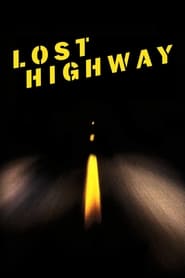
Lost Highway (1997)
David Lynch and cinematographer Peter Deming build a house out of darkness: rooms defined by what you can't see, characters walking into blackness and simply dissolving. Don't fight the film's refusal to sort things out — that refusal is the design. Most movies carefully label what's real, what's remembered, what's dreamed; Lynch withholds the labels, letting present and reflection trade places like an object and its mirror image. Watch instead for doubles, repetitions, and the creeping sense that the story is a shape rather than a line.

Dark City (1998)
Come for the image the whole film is folded into: at midnight the city falls asleep standing up, and the buildings begin to move — towers screwing up out of the pavement while no one is awake to witness it. Proyas builds his noir metropolis from the old German playbook — painted shadows, looming silhouettes, forced-perspective architecture straight out of Metropolis — and seals it into a world with no sun, no edge, no history you can trust. Watch what the film does with one small word of hope: a seaside place everyone can name and no one can find.
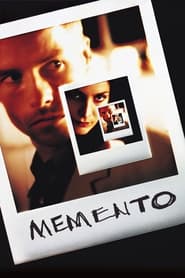
Memento (2000)
Nolan's great invention here is structural: the color sequences run in reverse order, each scene ending where the previous one began, so you're dropped into every moment with no idea how you got there — while a second strand, in noir black-and-white, runs forward to meet it. You aren't watching a man who can't form new memories; for two hours, you're the one who can't. Watch how Wally Pfister keeps the photography clean and legible, wisely refusing flourish when the structure alone carries so much weight. And watch the Polaro