Sightlines · a mini film course
The Detective Who Is Also Being Watched: Eleven Films Where Looking Is the Crime
Every film in this set is, on paper, a murder mystery. But watch them together and something stranger emerges: none of them is really about who did it. They're about the act of looking itself — the detective who watches, the killer who performs, the camera that refuses to stay neutral. In these films, seeing is never innocent. Evidence gets staged, images get forged, watchers get watched back. The through-line is a question each film poses in its own key: when you stare hard enough at something — a portrait, a window, a crime scene, a recording — where does observation end and authorship begin? These are thrillers where the camera isn't a witness. It's a suspect.
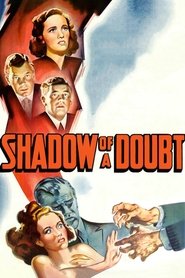
Shadow of a Doubt (1943)
Start here, at the source. Hitchcock films small-town Santa Rosa in flat, documentary daylight — and then lets shadow creep sideways into that sunlit house whenever a certain visitor enters a room. Notice that the suspense almost never lives in an action; it lives in who knows what, and what each person knows about the other's knowing. The menace needs exactly two people to exist, and the film pins your knowledge to one young woman's, so you feel her isolation as your own. Watch how bright, legible surfaces conceal everything.
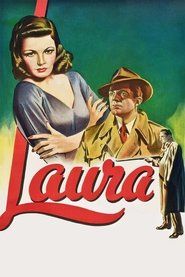
Laura (1944)
A detective investigates a dead woman by living in her apartment — drinking her Scotch, reading her letters, falling asleep under her portrait. Watch how the film builds a person entirely out of objects and other people's distorted testimony, so that an image of Laura exists before Laura ever could. LaShelle's lighting sculpts Gene Tierney's face into something almost too perfect, and the painting is lit a half-shade warmer than the room around it — a small, deliberate cheat that keeps the picture more alive than the space. The question the film keeps open is whether anyone here loves a woman or a picture of one.
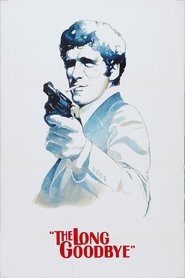
The Long Goodbye (1973)
Altman opens a murder mystery with a long, loving sequence about a man trying to trick his cat with the wrong brand of cat food. That "wasted" errand is the film in miniature: a private detective with an old-fashioned code of loyalty, moving carefully through a 1970s Los Angeles that has stopped keeping score. Watch the camera — always drifting, zooming, repositioning, like a curious bystander who won't commit to what matters in the frame. The detective keeps investigating; notice how rarely his effort converts into anything. The genre's engine has been quietly unhooked, and the film lets you feel it idle.

The Postman Always Rings Twice (1981)
Rafelson hired Sven Nykvist, Bergman's great cinematographer, to shoot American pulp — and the result is a noir lit like a Depression roadhouse actually looked: dim bulbs, diffused daylight, no glamour. Watch how appetite is filmed as one continuous thing: hunger for food, for a body, for money, for escape, all in the same plain light — the first seduction happens in a kitchen, among flour and dough. Where the 1946 version dressed its heroine in white and sublimated everything, this one strips the story back to raw drive and lets you watch people slide down a slope they don't understand.
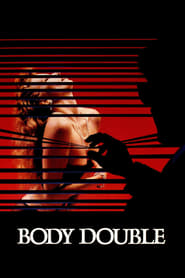
Body Double (1984)
De Palma hands you a telescope and makes you look through it. Watch how he refuses to let the act of looking dissolve into the story: the round vignette of the eyepiece, the wobble of magnification, the split-diopter shots holding a face and a distant doorway both knife-sharp. You're always aware of vision as vision — a little guilty, a little thrilled. The whole film is built from doubles and substitutions (one woman performing another's dance, an actor doubled by another, De Palma doubling Hitchcock's Rear Window and Vertigo almost shot for shot), so keep asking: which version of what I'm seeing is the real one?
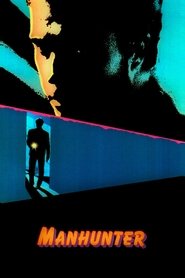
Manhunter (1986)
Michael Mann's cool, designed frames — blues, teals, hard horizons, empty space — house a profiler whose entire craft is standing where a killer stood and seeing what he saw. Watch the film's obsession with watchers: a man alone in the dark running a family's home movies and talking to them; the camera forever filming someone in the act of looking. Spinotti's architecture-heavy compositions turn glass-and-concrete space into psychology. The drama here isn't deduction. It's occupation — renting another person's eyes and paying the toll.
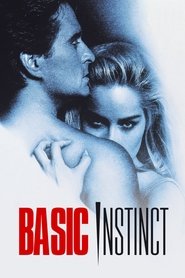
Basic Instinct (1992)
The famous interrogation scene is a lesson in reversal: five men around one woman in white, and the gliding camera slowly reveals that the people asking the questions are the ones being read. Watch de Bont's cool, affluent palette — bleached Pacific light against noir-dark interiors — and the smooth, circling camera lifted from Vertigo's San Francisco. The deeper game is that confession, evidence, and seduction might all be performances, and the woman at the center might not be inside the plot but writing it. The film never lets you peel fact from fabrication — that's the pleasure, not the flaw.
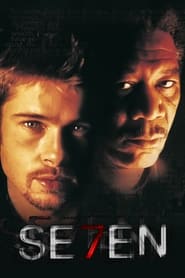
Se7en (1995)
A detective story that wants you to do homework. Each crime arrives with a caption, and the film's real suspense is interpretive: a detective in a library at night, pulling Dante off the shelf, teaching himself — and you — to read the murders as a single authored text. Watch Khondji's lighting: every source is visible in the frame — a bare bulb, a flashlight, streetlight through wet glass — and the camera positions itself to let shadow take everything else. You're deputized as a reader alongside the detective, and the film's rain-soaked, nameless city becomes the page.
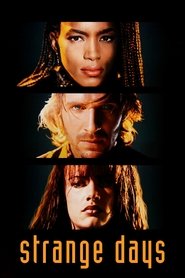
Strange Days (1995)
Bigelow opens the film inside someone else's eyes — a robbery, a rooftop sprint, all in unbroken first person — before you know whose eyes you've borrowed. Watch how the film keeps two distinct kinds of image running: the grimy, neon-wet "real" Los Angeles, and the recorded first-person clips people buy and replay inside their own skulls like a drug. The film built custom rigs to shoot this years before GoPros and bodycams made first-person footage ordinary, and it asks the uncomfortable question underneath: what does it mean to want to watch, and what does watching make you complicit in?
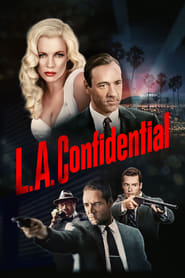
L.A. Confidential (1997)
Watch a woman lit like the memory of a movie star — full 1940s glamour-portrait reverence — for a character whose whole trade is being a forgery of a movie star. Spinotti's warm amber light, the venetian-blind shadows inherited from classic noir, all of it lavished on a city built from manufactured surfaces: tabloids, a TV cop show, counterfeit Veronica Lakes. The film's real subject is the gap between the official story and what institutions actually do — and it refuses to choose between finding the fake beautiful and knowing it's fake. Hold both.
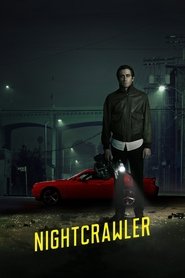
Nightcrawler (2014)
Elswit shoots nocturnal Los Angeles as a glittering, depopulated grid — genuinely beautiful, which is precisely the problem. Watch for the moment the film's cameraman-protagonist stops recording a scene and starts arranging it: nudging the world into better light, a more legible composition. The observer becoming the author of what he observes is the film's whole argument — about news that runs on fear, about a culture that rewards initiative without asking what it's initiative toward. It plays as noir, satire, and dark comedy at once; notice how often you catch yourself admiring what should horrify you.
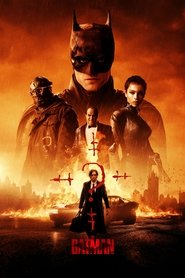
The Batman (2022)
Reeves opens with a man at a window watching another man through glass, and teaches you immediately that in this Gotham, watching is the plot. Fraser's radically underlit frames — near-monochrome dark punctuated by sodium orange and blood red, faces falling into shadow — descend from the darkest traditions of American crime photography. Then a killer starts leaving ciphers addressed to the detective, turning every crime scene into a message that must be read. Watch how the film runs on decoding rather than action set-pieces: the detective interprets, and you interpret over his shoulder.
Why watch these together? Because they're one long conversation across eighty years about the same nervous question. Hitchcock and Preminger plant it in the 1940s: the drama of knowing, the danger of loving an image. The 1970s and '80s films dismantle the detective's confidence — his actions stop working, his gaze becomes the crime. The '90s films turn the screw: now the killers and femme fatales are authors, staging evidence for detectives to read, and the films stop pretending truth and forgery can be separated. By Nightcrawler and The Batman, the watcher openly composes the world he claims to witness. Seen in sequence, you'll start noticing the relay: a portrait becomes a telescope becomes a home movie becomes a recorded memory becomes a cipher addressed to you. Every one of these films knows you're watching — and each one, in its own way, asks what that makes you.