Sightlines · a mini film course
Reading in the Dark: Noir as a Machine for Doubt
Every film on this list is, one way or another, a detective story. But watch closely and you'll notice something strange: almost none of them are really about catching anyone. They're about the problem of knowing — how a shadow, a photograph, a confession, or a face can lie to you while looking exactly like the truth. From Billy Wilder's Venetian blinds in 1944 to Matt Reeves's rain-soaked Gotham in 2022, these twelve films form one long conversation about light, deception, and the viewer's own eyes. You are never just watching these movies. You are being taught to read them — and then, often, being taught how badly you read.

Double Indemnity (1944) — dir. Billy Wilder
Start here, because nearly everything else on this list descends from it. Watch how John Seitz's lighting prints slanted Venetian-blind shadows across faces and bodies — the bars of a cell the characters haven't entered yet. Notice the structure: the story is confessed into a Dictaphone by a man already doomed, so every competent, decisive action he takes runs alongside a fate that never budges. And study Barbara Stanwyck's flat, unreadable surface — a femme fatale built from Weimar-era models, a face the camera cannot get inside. Half the films below will borrow this confessional shape and this woman.
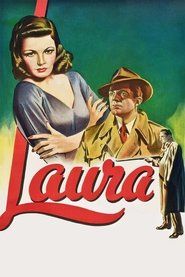
Laura (1944) — dir. Otto Preminger
The same year, a gentler mystery — but no less slippery. A detective investigates a dead woman by inhabiting her apartment, reading her letters, and falling for her portrait, which the lighting keeps a half-shade warmer and more alive than the room around it. Watch how selective, elegant light sculpts Gene Tierney's face into an ideal rather than a person, and notice the long, held shots that let power relations play out within a single frame. The question the film plants — where does a real woman end and the image others made of her begin? — it never fully settles, and that's the point.
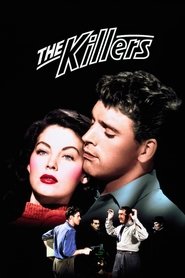
The Killers (1946) — dir. Robert Siodmak
The opening is one of noir's great inversions: a man learns killers are coming for him and simply waits, face to the wall. The rest of the film is the autopsy of that stillness, assembled — like Citizen Kane — from the testimony of multiple witnesses reconstructing a dead man's life out of order. Watch Woody Bredell's aggressive restriction of light: hard beams raking down onto a diner counter while the killers sit half-swallowed in shadow. This is the film where the hero stops being someone who acts and becomes someone who can only look and listen — and American crime cinema tilts on that axis.
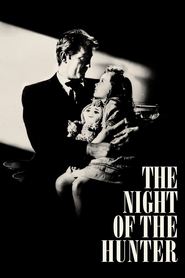
The Night of the Hunter (1955) — dir. Charles Laughton
Laughton directed exactly one film, and it's built the way a frightened child thinks: in pictures too large and too clear. Watch Stanley Cortez's shadows — the preacher arrives as a black cut-out on a bedroom wall, hat and arm, before the man himself does, straight out of Nosferatu. Notice how the film abandons realism for storybook space: painterly river passages, silent-film staging, Lillian Gish cast as a deliberate salute to Griffith. Its predator isn't a psychology; he's a shape — pure appetite wearing a Bible — and the film is scarier for refusing to explain him.
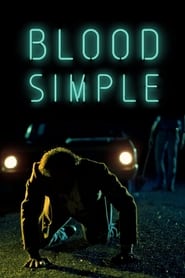
Blood Simple (1985) — dir. Joel Coen
The Coens' debut is a Texas crime picture that behaves like a geometry proof: every disaster flows not from what people do but from what they wrongly believe someone else has done. You'll usually know more than any character on screen — the film hands you superior knowledge, Hitchcock-style, and then makes you squirm with it. Watch the low angles that make ordinary rooms loom, and the way sight-lines through windows and doorways generate dread from what can and can't be seen. The title, from Hammett, names the fog that settles after violence, when you can no longer read the room you're standing in.
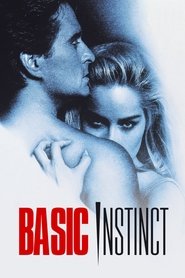
Basic Instinct (1992) — dir. Paul Verhoeven
Verhoeven and cinematographer Jan de Bont brought a cool, ironic European eye into the Hollywood erotic thriller, and the surface here is deliberately seductive: pale blues, bleached coastal light, a camera that glides rather than cuts. Watch the famous interrogation scene as a piece of staging: five men arranged around one woman in white, the camera circling — and notice how, by the end, the interrogation has quietly run backward, and the questioners are the ones being read. The film's real subject is a woman who may be writing the story the detective thinks he's investigating. Keep asking who's authoring whom.
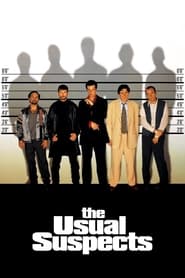
The Usual Suspects (1995) — dir. Bryan Singer
A man tells a story in a deliberately drab, fluorescent-lit interrogation room, and the film does what films always do with narration: it shows you his account, fully lit, fully scored, fully convincing. That's the trap. Watch how the flashbacks carry every visual marker of trustworthy memory, and ask yourself why you believe images just because a movie shows them to you. This is Double Indemnity's confession-to-an-authority-figure structure crossed with Rashomon's competing testimonies — and it tests, more nakedly than any film here, whether the camera is evidence or performance.
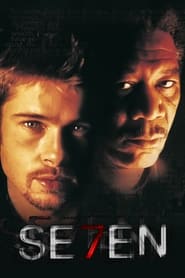
Se7en (1995) — dir. David Fincher
A detective story that wants you to do homework, not watch a chase. Each crime scene arrives with a caption, a text authored for the investigator to read, and the film's patient procedure — library nights, index cards, Dante under Bach — makes interpretation itself the suspense. Watch Darius Khondji's lighting: every source is visible and motivated — a bare bulb, a flashlight, rain-streaked streetlight — and the frame is positioned to allow maximum darkness. You'll be deputized alongside the detectives, taught to read the murders as a single text before you ever meet their author.
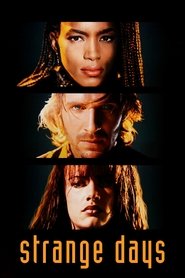
Strange Days (1995) — dir. Kathryn Bigelow
The boldest formal gamble on this list. Bigelow builds two distinct ways of looking: a grimy, neon-soaked, sodium-lit Los Angeles shot conventionally — and long, unbroken first-person passages recorded by a device that captures someone's entire lived sensation for playback inside another skull. You don't watch these sequences; you wear them. Made years before GoPro, bodycams, and VR, the film asks what happens to a witness when seeing becomes a substance you can deal, buy, and get hooked on — and whether watching a recorded atrocity makes you complicit in it.
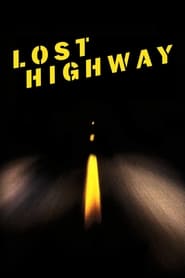
Lost Highway (1997) — dir. David Lynch
Come to this one rested and don't demand a map. Lynch strips neo-noir of motive, explanation, and detection and keeps only the dread: a house whose rooms are defined by what can't be seen, characters who walk into blackness and dematerialize, sun-blasted exteriors set against engulfing dark. Watch how the film refuses the cuts that would tell you what's real, what's remembered, and what's dreamed — one actress plays two women, or possibly one woman dreamed twice, and the film will not decide for you. Its shape is a loop, not a line; let it close around you.
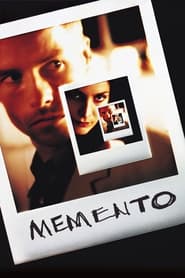
Memento (2000) — dir. Christopher Nolan
A man who can't form new memories builds a prosthetic mind out of Polaroids, notes, and tattoos — and Nolan's real invention is making the film's structure inflict the condition on you. The color scenes run in reverse order, each ending where the last began, so every scene drops you in with no idea how you got there; a black-and-white strand runs forward until the two meet. Watch how Wally Pfister's photography stays clean and legible — a deliberate mercy, given how hard the structure works you. It inherits noir's confessional voiceover from Double Indemnity and then corrupts it beautifully.
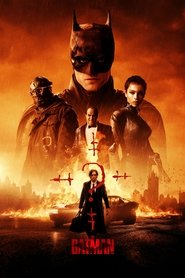
The Batman (2022) — dir. Matt Reeves
The whole tradition arrives in Gotham. Watch Greig Fraser's radically underlit frames — faces top-lit, eyes lost in shadow, light coming from visible sources — a grammar borrowed straight from Gordon Willis's work on The Godfather. Notice that this is a detective story before it's a superhero film: a killer who addresses cipher-laden crime scenes directly to the hero, in the lineage of Se7en and Zodiac, so that Batman decodes and we decode over his shoulder. And watch how the film frames watching itself — everyone in this city is observing someone, and the hero is simply the most patient watcher of all.
Why watch these together? Because they teach each other. Double Indemnity's doomed confession echoes through The Usual Suspects and Memento; the shadows Cortez threw on a child's bedroom wall in 1955 fall across Gotham in 2022; the unreadable woman Stanwyck invented gets rewritten by Verhoeven and dreamed twice by Lynch. Watched in sequence, these films stop being twelve thrillers and become one long experiment: how much can an image lie, how little can light reveal, and how far will you trust what a movie shows you? By the last one, you'll be watching differently — checking the light sources, doubting the flashbacks, noticing who's really doing the reading. Which is exactly what these filmmakers wanted: not a passive audience, but an accomplice.