Sightlines · a mini film course
Most movies are engines: someone wants something, acts, and the world changes. The films on this list are built differently. In each of them, at some crucial point, action fails — a man is trapped in an elevator, a soldier falls, a burned body can only remember — and the film doesn't stop. Instead, the camera takes over. It spins into trees, glides down corridors, floats over a border town, holds on a face for a breath too long. These are films about watching, made by directors who trusted images to carry what plot cannot: grief, obsession, memory, dread. Watch them together and you'll start to feel the moment in every film where the story lets go of the wheel — and something stranger and richer takes over.
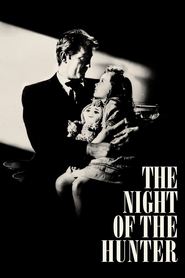
The Night of the Hunter (1955)
Charles Laughton directed exactly one film, and he built it out of shapes rather than psychology: a predator arrives first as a silhouette — the conical hat, the long arm — thrown huge on a bedroom wall, more alive than the man casting it. Stanley Cortez's lighting carves the frame into pools of light and engulfing dark, borrowing directly from silent German horror (Nosferatu's looming shadow, Caligari's storybook unreality). Notice how the film sees the way a frightened child sees: in pictures too large and too clear. It sits between noir, fairy tale, and American folk sermon — and belongs fully to none of them.
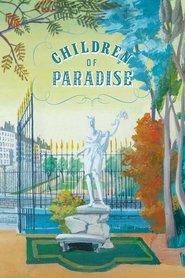
Children of Paradise (1945)
Made under the Occupation, this is French studio craft at its absolute height — a teeming 19th-century theater district built and lit like living paintings. Watch Jean-Louis Barrault's mime, Baptiste: a trained body whose every posture is already a sentence, set deliberately against another actor's torrential spoken bravura. Two whole traditions of performance argue with each other inside one film. Notice how the silent man is always the more eloquent one, and how the film keeps folding theater and life into mirrors of each other.
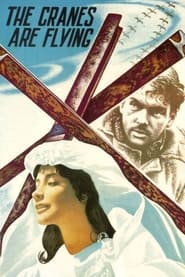
The Cranes Are Flying (1957)
The revelation here is Sergei Urusevsky's camera — handheld, athletic, seemingly unchained from gravity, reviving the wild experiments of 1920s Soviet cinema and pointing them at private feeling instead of the state. Watch the famous staircase shot, where the camera spirals upward with a character in one sustained breath of movement. And watch for the moments when a person falls still and the camera keeps moving — when the world itself seems to take over the motion a body has surrendered. This film broke the Soviet war picture open: away from monuments, toward the home front and the wounded heart.
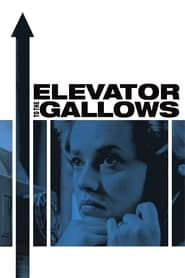
Elevator to the Gallows (1958)
A film with two visual voices: hard-edged shadow for interiors — the murder itself shot with clinical, unglamorous efficiency — and something looser and more modern for the Paris night outside. The great idea is the trap: every modern convenience (the car, the elevator, the camera) turns on its user, and a man who has planned everything perfectly finds that the plan's very perfection is what closes around him. Watch what happens when a careful man can no longer act — how the film's attention drifts out into the night, where things unravel without him.
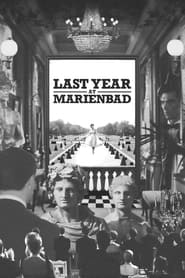
Last Year at Marienbad (1961)
Stand in the garden: the hedges throw long shadows, and the people among them throw none. That's the film telling you, wordlessly, that you're not watching a record of anything that happened. A man insists on a shared past; a woman doesn't remember; the camera supplies the remembered room — and then the room is wrong, a gown changes color mid-conversation, nothing settles. Sacha Vierny's gliding tracking shots move through ornate corridors without ever giving you a stable map. Don't fight it; watch how the images correct and contradict themselves, like memory arguing with itself in real time.
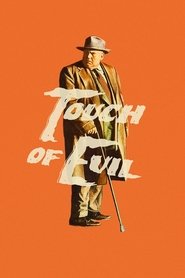
Touch of Evil (1958)
It opens with one of the most famous shots ever made: a car with a bomb in its trunk, followed for three unbroken minutes over rooftops and through border-town traffic, no cut, until the whole town feels like a single breathing organism. Against that openness, Welles gives you Hank Quinlan — shot from floor level, ceiling pressed down on his head, wide-angle lenses rendering him monstrous. The film lives in the tension between a camera that can't stop telling the truth and a cop who can't stop forging it. Often called the last word of classic noir: every element of the genre pushed to gorgeous excess.
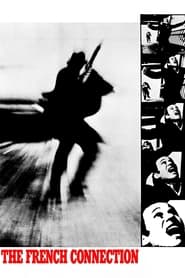
The French Connection (1971)
Shot in the grays and browns of a real New York winter, with telephoto lenses and available light — you can feel the cold in the frame. Watch the wordless class portrait Friedkin builds: a cop stamping his feet over cold pizza on a sidewalk while, through restaurant glass, his elegant quarry lingers over wine. No dialogue explains it; you're just made to stand on the cold side of the glass. This is detective cinema as thread-pulling — each small act (a tail, a frisk, a hunch) lighting up one more inch of a hidden shape — and obsession filmed as pathology, not heroism.
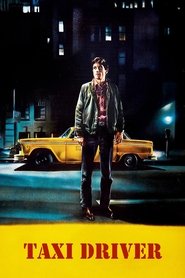
Taxi Driver (1976)
Michael Chapman's camera performs a delicate contamination: it rides inside the cab with Travis — neon smeared across wet windshields, pedestrians caught and lost in headlights — close enough to infect you with his way of seeing, then steps outside to watch him from across a diner. The screenplay borrows the shape of a classic rescue mission (Schrader lifted it consciously from The Searchers) and hollows out its engine: a man who perceives everything and can convert none of it into anything sane. Watch how driving becomes the film's rhythm — circulation without arrival.
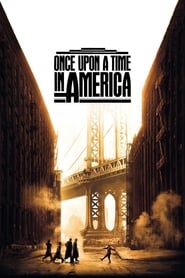
Once Upon a Time in America (1984)
Leone tells his gangster epic through color temperature: childhood and Prohibition bathed in honeyed amber light, other eras cooler and grayer, so you always know when you are by how the light feels. Morricone's score was written before shooting, and the great set pieces were staged to the music — scenes that breathe at operatic length. Watch how little the protagonist does in the later scenes: he looks through peepholes, across banquet tables, into the past. Passivity isn't a flaw here — it's the whole design. This is a film built out of layers of memory, and it wears its fairy-tale title honestly.
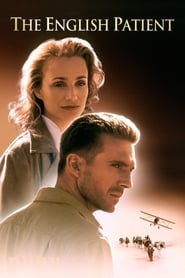
The English Patient (1996)
John Seale shoots the Sahara as an abstraction: dunes worked by wind into the curve of a hip, a back, a sheet — sand and skin lit to rhyme, so landscape and body keep dissolving into each other. The present tense of the film belongs to a man who cannot move and can barely speak; all that's left to him is looking, listening, remembering. Watch how the film builds its past not from a plot but from pure sights and sounds — wind in stone rooms, the drone of an engine — each one a door into another time. It inherits David Lean's desert grammar and Citizen Kane's architecture of reconstructing a life from fragments.
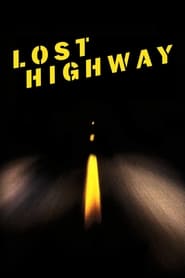
Lost Highway (1997)
Peter Deming photographs a house as engulfing darkness — rooms defined by what can't be seen, characters walking into blackness and dematerializing — set against bleached, sun-struck exteriors. Lynch takes the full noir kit (femme fatale, gangster, surveillance, doomed Los Angeles) and strips out motive, explanation, and detection. Watch how the film refuses the cut that would tell you whether what you're seeing is real, remembered, or dreamed — whether two women played by one actress are two women or one. That refusal isn't a puzzle to solve; it's the film's whole texture. Let it wash over you like a bad dream you can't wake from.
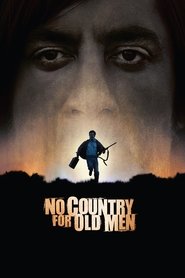
No Country for Old Men (2007)
Roger Deakins works by strategic restraint: long lenses compress human figures against featureless desert, and the landscape becomes a participant, emphasizing distance and exposure. The film's sound design does the work a score usually does — the rustle, the drone, the room tone (a grammar inherited from The Conversation). Watch the gas-station scene: a coin on a counter, fluorescent light, and a tension that has nowhere to go. And watch how meticulously the film honors every mechanic of the chase thriller — man finds money, killer hunts, lawman follows — while quietly unplugging the machine. What's left is dread as weather.
Why Watch These Together
Run these films in sequence and a single lesson emerges from twelve directions: cinema's deepest power isn't in what characters do, but in what the image holds. A spiraling camera in a birch wood, a shadow on a wall, a gown that changes color between shots, amber light that means memory — each film finds its own way to let time stretch, let space become a trap, let the camera watch rather than chase. You'll notice the lineages, too: Welles's wide-angle world feeding Laughton's; the Soviet camera's freedom echoing into the French night; Leone and Lynch and the Coens each inheriting the noir trap and bending it into something stranger. By the last film, you won't just be following stories. You'll be reading light, movement, and stillness — which is to say, you'll be watching movies the way they were made to be watched.