Sightlines · a mini film course
The Watchers: Twelve Films Where Seeing Replaces Doing
Most movies run on a simple engine: a character sees a problem, acts on it, and the world changes. The twelve films on your list all, in one way or another, cut that wire. Their protagonists are people to whom things happen as images — memories that resurface uninvited, rooms that rearrange themselves, reflections that stop obeying. Again and again, the camera watches rather than chases, time is allowed to stretch, and space becomes a trap. What connects these films isn't genre — you've got Soviet art cinema next to J-horror next to a New York breakup movie — it's a shared conviction that the most frightening and most moving thing cinema can show is a person who can only look: at their own past, their own mind, their own dissolving world. Here's what to watch for.
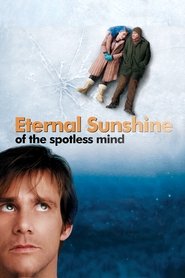
Eternal Sunshine of the Spotless Mind (2004)
Watch for the moment in a bookstore when the signs above the shelves go blank and the titles slide off the spines — a remembered place being quietly subtracted while someone stands inside it, unable to save it. Ellen Kuras shoots the present in raw, handheld, wintry naturalism and lets the memory scenes go fluid and unstable, so you always feel which world you're in even when the film won't say. Notice how the editing cuts mid-scene from now to then without warning — a grammar borrowed from Hiroshima mon amour — and how the film's central wager is that erasing pain might also erase the self that pain built.
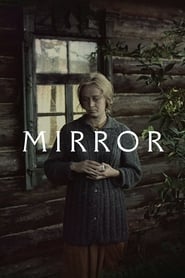
Mirror (1975)
Early on, a gust of wind runs through a field of buckwheat for no reason the story requires — and that's the lesson: this film wants you to feel time itself moving through things. There is no plot to follow; a dying narrator we hear but never see circles his unresolved memories of mother, father, war, and son. Watch how Georgy Rerberg lights interiors with windows and candles, faces emerging from shadow like Rembrandt portraits, and how the past isn't fenced off with "twenty years earlier" — it simply arrives, whole and present, as if it never left.

Dark City (1998)
Hold onto the image the film gives you early: a city that rebuilds itself while its citizens sleep standing up, towers screwing out of the pavement with no witnesses. Dariusz Wolski shoots in near-total night, hard sourced light carving figures out of darkness like 1940s noir pushed toward the grotesque, while the sets descend directly from Metropolis and Caligari — architecture as psychology. Watch how everyone can name a sunlit place called Shell Beach but nobody can say how to get there, and what that does to a world that seems to have no edge.
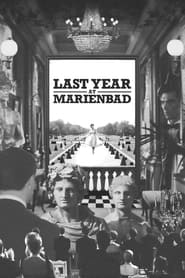
Last Year at Marienbad (1961)
Look at the famous garden shot: the hedges and statues throw long shadows, the people throw none. The film is telling you, wordlessly, that you're not watching a record of anything. A man insists he met a woman here last year; she doesn't remember; the camera supplies the room he describes — and then the room is wrong, her gown changes color between shots of one continuous conversation. Watch Sacha Vierny's gliding tracking shots through ornate corridors that never let you build a map, and notice how the man's relentless narration works as a kind of coercion: a voice trying to talk a past into existence.

Shutter Island (2010)
Keep your eyes on the small things: a woman drinks from a glass that isn't there, then is, then isn't. Scorsese seeds his most important information inside apparent slips and excesses, so the film asks you to read images, not just watch them. Robert Richardson's signature hard top-light haloes faces and blows out backgrounds, giving the institution a feverish glow, while Thelma Schoonmaker's editing starts with the measured tread of a procedural and gradually admits ruptures and mismatched details. It's built as a loving anthology of older forms — noir, gothic, the psychoanalytic thrillers of the 1940s — all doing double duty.

Black Swan (2010)
Watch the back of Nina's head. Matthew Libatique's camera rides inches behind her shoulder through corridors and dressing rooms, putting you somewhere that has no name — not inside her mind, not safely outside it, but shadowing her until intimacy curdles into surveillance. Then watch the mirrors, because the film can't stop: reflections that lag a half-beat, that turn when she doesn't. Its lineage runs from The Red Shoes (perfection and survival as mutually exclusive) through Polanski's Repulsion (an apartment warping to match a mind), and it earns both inheritances.
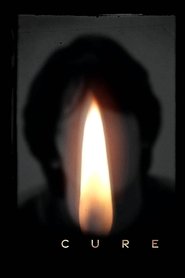
Cure (1997)
Notice the distance. Kurosawa holds his figures in wide, desaturated frames — concrete grays, fluorescent sickliness — refusing the close-ups that would tell you where to look, so dread seeps in from the edges. Then notice that the villain's method is basically cinema itself: a point of light in the dark, a patient voice, a watcher emptied of resistance. Where Se7en and The Silence of the Lambs aestheticized the brilliant killer, Cure answers by subtraction — no grand design, no spectacle, just a slow, circular question ("who are you?") that sounds like nothing and undoes everything.
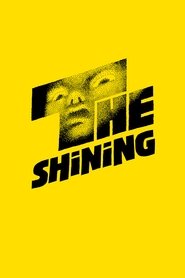
The Shining (1980)
Listen to the trike: carpet, hardwood, carpet — the wheels going loud and soft as Danny rounds each corner, and you find yourself bracing before every turn. Garrett Brown's brand-new Steadicam was built to smooth out shaky shots; Kubrick turned it into a way of moving through a hotel that seems to arrange itself ahead of the characters. Watch the one-point-perspective corridors receding to a vanishing point, and try — as decades of viewers have tried and failed — to map the Overlook's geography. The failure is the point: this isn't a building, it's something the characters are moving inside.

Open Your Eyes (1997)
The famous opening: a man drives into central Madrid at rush hour and the Gran Vía is empty. No distortion, no fog — Hans Burmann's light is clean, every line in focus, and that honesty is exactly what makes it unbearable. Amenábar finds dread in the one place horror never looks: broad daylight, sharp focus, an ordinary street with the people subtracted. Watch how the film's glossy realism never announces itself as unreal, so that when the uncanny erupts, you have no visual grammar to fall back on. It stands at the leading edge of the late-90s wave of reality-bending films, and it borrows Vertigo's engine: a man whose idealized image of a woman warps his grip on the world.
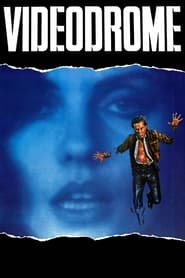
Videodrome (1983)
The key choice is what Cronenberg withholds: when a television screen swells toward a man's lips and the glass gives like skin, Mark Irwin shoots it with the same flat, clinical calm he gives an ordinary office meeting. No cue tells you you've left the real. Watch the protagonist curdle from fast-talking opportunist into someone who no longer investigates but submits — a detective story whose detective slowly stops being able to act. The muted institutional palette — grays, sickly greens, the blue glow of screens — makes the eruptions of red flesh land twice as hard.
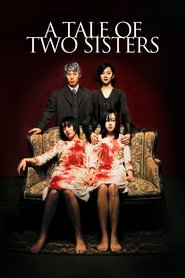
A Tale of Two Sisters (2003)
You'll remember the wallpaper before you remember the plot: green and floral, lit like a children's book, repeating down every hallway of a house too beautiful to be safe. Lee Mo-gae shoots these rooms with a painter's care — warm woods, deep ambers, symmetry framed through doorway after doorway — and the prettiness is the trap. Kim Jee-woon hides horror not in the dark but in the well-lit corner of a lovely room. Its ancestors are The Innocents and The Haunting — films where the house may be haunted or the mind may be, and the not-knowing is the terror.
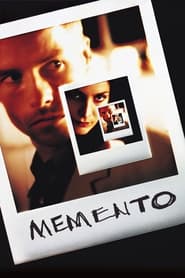
Memento (2000)
Watch the Polaroid fade — a photograph running in reverse, detail draining back into blankness. It's a simple practical effect and it's the whole film in three seconds. Nolan's real invention is structural: the color scenes run backward, each ending where the previous began, so every scene drops you in with no idea how you got there, while a black-and-white strand runs forward toward the hinge where they meet. You're not watching a man who can't make new memories; for two hours, the film makes sure you can't either. Wally Pfister's restrained, legible photography is the wise counterweight — the structure carries the vertigo, the image stays clear.
Why watch these together? Because they teach each other. Tarkovsky's drifting wind and Resnais's shadowless garden are the art-house ancestors of Nolan's fading Polaroid and Proyas's self-rebuilding city; Kubrick's unmappable hotel and Kim Jee-woon's too-pretty house are the same idea — space as a mind — at two different temperatures. Seen in company, you start noticing the shared toolkit: the camera that watches rather than chases, the cut that slides from now to then without a signpost, the small visual "slip" that turns out to be a confession. These are films that reward the viewer who becomes what their characters are — a patient, attentive watcher. Sit close. Let time stretch. The images are doing the talking.