Sightlines · a mini film course
The Discipline of Watching: Twelve Films Where Seeing Is the Drama
Every film on this list carries the same quiet obsession — faith, doubt, and what a person does when confronted with something too large to act on. And every one of them answers with the same radical formal choice: the camera watches rather than chases. Takes are allowed to stretch. Cuts arrive before the big moment or after it, almost never during. Plot slows until looking itself becomes the event — a face held past comfort, a village studied at a distance, a door nobody walks through. Watched together, these twelve films form a secret tradition: a cinema that trusts you to sit with a question rather than hand you an answer.
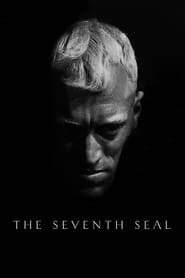
The Seventh Seal (1957)
This is where the tradition announces itself: a knight, a chessboard on a grey beach, and a lot of stillness where a lesser film would put swordplay. Watch Gunnar Fischer's high-contrast photography — faces set against blown-out white skies or carved out of deep shadow, an inheritance from silent-era masters like Murnau and Dreyer. Notice how often the drama is simply someone looking at the world and receiving no answer back. The suspense isn't whether anyone survives; it's whether the sky will speak.
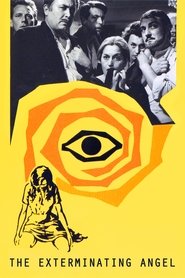
The Exterminating Angel (1962)
The premise is a perfect deadpan joke: dinner guests gather in a drawing room and, for no visible reason, find they cannot leave. No lock, no rope, no explanation — Buñuel refuses to give you one, and that refusal is the engine. Watch how Gabriel Figueroa's elegant black-and-white and the guests' impeccable manners treat the outrageous as utterly mundane. The comedy and the horror come from the same source: people who can see the open door perfectly well.
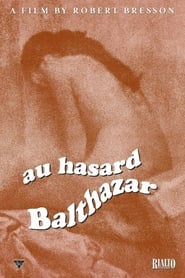
Au Hasard Balthazar (1966)
Bresson keeps cutting back to a donkey's eyes — dark, wet, giving nothing back — and trusts that unreadable gaze to carry the whole film. Watch the editing, which deliberately skips past the cruel moment and rejoins the story in its aftermath, and listen to how footsteps, clinks, and scraping metal do work that dialogue would do elsewhere. Bresson cast non-professionals he called "models," drained of theatrical expression; the flatness isn't a failure of acting but a method for letting grace show through plainness.
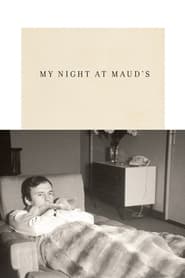
My Night at Maud's (1969)
Proof that a long conversation can be as suspenseful as a heist. Rohmer stages his centerpiece almost entirely in one snowy-grey apartment — Néstor Almendros lights it to feel lived-in, never dramatized — and lets talk about chance, faith, and Pascal's wager carry all the tension. Watch how little the protagonist actually does, and how much he narrates and rationalizes; the gap between his words and his behavior is the film's real subject.

Salò, or the 120 Days of Sodom (1976)
The most demanding film here, and it should be approached knowingly: Pasolini's reckoning with fascism is deliberately austere horror, structured like Dante's descent rather than a story. Watch what Tonino Delli Colli's cool, even lighting does — it films atrocity like an official document, refusing every sensationalist reflex. Notice, above all, how the film frames the act of watching itself: distance, in this villa, is never neutral. It stands utterly apart from exploitation in intent, and its rigor is the reason.
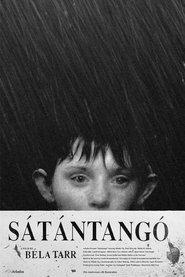
Satantango (1994)
It opens with several unbroken minutes of cows shuffling through a ruined farmyard — and by the end of that first shot, Tarr has taught you how to watch the next seven hours. Individual takes run five, eight, ten minutes; the film asks you to feel time moving through a decaying place rather than count events. Watch for how rain, mud, and waiting become the actual material of the film. It's the most extreme experiment on this list, and the one that rewires you most completely.
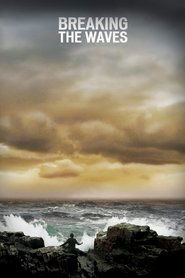
Breaking the Waves (1996)
Where the others hold still, von Trier's handheld camera lurches, pushes in, and reframes as if as bewildered as its heroine — but the goal is the same: to watch a face past the point where decorum says cut. Emily Watson's face becomes the film's landscape, and the great innovation is what it holds: faith and desire not as opposing forces but as a single current. The lineage runs straight back to Dreyer's silent close-ups of Joan of Arc — martyrdom filmed at zero distance.
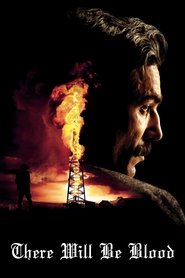
There Will Be Blood (2007)
Anderson opens with roughly fifteen minutes of nearly wordless cinema — a man prospecting alone, injured, hauling himself across rock — so you learn Daniel Plainview the way you'd learn an animal: by watching what it does to survive. Watch Robert Elswit's deep-focus compositions, which stage power differences across the depth of the frame instead of cutting, an inheritance from Citizen Kane. And notice how the film keeps insisting that its oilman and its preacher are running the same confidence game with different vocabularies.
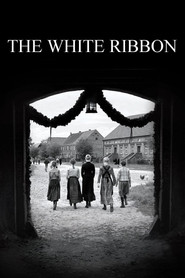
The White Ribbon (2009)
A German village, just before the First World War, where troubling things keep happening — and Haneke's locked-off camera keeps refusing to show you the cause. Watch how scenes end before their climax: a punishment approaches and the door closes on it; we rejoin events in the flat aftermath. That withholding isn't coyness — it's the film's argument about how evil grows inside respectable, hierarchical communities without ever showing its hands.
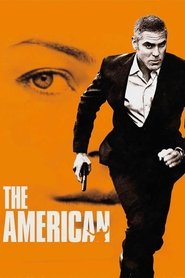
The American (2010)
Corbijn loves to film Clooney from behind, a small figure walking into converging medieval stone streets — beautiful, and quietly a trap. Stop waiting for the chase the trailer promised; watch instead the long, nearly silent rituals of a professional at work — exercises, coffee, the patient filing of steel — descended from Melville's laconic hitmen. The film even screens Once Upon a Time in the West within itself, tipping its hand: stillness before the event is the event.
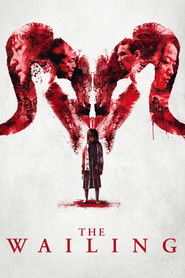
The Wailing (2016)
A rural policeman investigates strange afflictions in his village, and Na Hong-jin builds the horror on a devastating inversion: daylight that promises clarity and delivers none. Watch Hong Kyung-pyo's two competing visual registers — early scenes shot with warm, almost sociological curiosity, later ones curdling into dread. The film's real subject is how we decide what evil looks like when the evidence won't resolve, and it will keep you arguing with yourself long after.

Small Things Like These (2024)
The most intimate film here: a coal merchant in 1980s Ireland, a convent, and a conscience that lives entirely in small physical gestures held a beat too long. Watch Cillian Murphy's face — Frank van den Eeden keeps the camera close and the light low and wintry, let