Sightlines · a mini film course
The Cinema of Watching: Twelve Films Where Looking Becomes the Story
Most movies run on a simple engine: a character sees a problem, does something about it, and the doing carries us forward. The films on this list quietly unplug that engine. Their people — a village schoolteacher, a dying priest, a donkey, a knight, a hitman, two children in a field of white grass — are faced with things too large, too slow, or too mysterious to act upon. They can only look. And so can we. What these directors discovered, each in their own idiom, is that when action drains out of a film, something else floods in: time itself, felt in your own body; spaces that press and trap; sounds that carry meaning no dialogue could. The camera watches rather than chases. Duration becomes the drama. Here's what to look for.

Pather Panchali (1955) — dir. Satyajit Ray
Begin here, chronologically and spiritually. Subrata Mitra was a still photographer who had never shot a movie, and it shows in the best way: patient framings of a courtyard, rain on a pond, wind moving through grass, faces in soft available light. Watch young Apu, who is played largely as a pair of watching eyes — the film builds an entire sensibility out of a child's looking. And wait for the train sequence: two children chasing a sound through white kaash grass, then simply standing still as the world passes. Nothing "happens," and everything does.
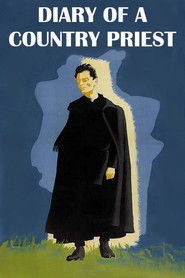
Diary of a Country Priest (1951) — dir. Robert Bresson
Notice the doubling right away: a hand writes in a journal, a tired voice speaks the words, and then the images show us what the words have just named. Nothing is dramatized; something is recorded. This is the film where Bresson stopped directing actors and started arranging what he called "models" — people emptied of theatrical performance, their feeling driven inward until it shows only as fatigue. The grey, even, undramatic light refuses to tell you what to feel. Let the restraint work on you slowly.
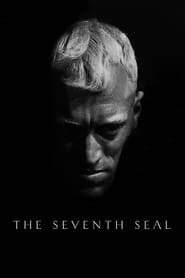
The Seventh Seal (1957) — dir. Ingmar Bergman
A knight plays chess with Death on a grey beach, and almost nothing about the game is hurried. Watch Gunnar Fischer's high-contrast photography — faces set against overexposed skies or swallowed by shadow, a visual grammar inherited from silent-era masters like Dreyer and Murnau. The film's real subject is a man who wants desperately to act — to do one good thing — and keeps discovering that the deed won't present itself. Stillness, here, is not emptiness; it's the pressure of an unanswered question.
Au Hasard Balthazar (1966) — dir. Robert Bresson
Start with the donkey's eyes, filmed in tight frontal close-up, dark and wet and giving nothing back. We lean in for a reaction and find none — and Bresson trusts that blankness to carry a whole fallen world. Listen as much as you look: isolated sounds (footsteps, clinking, scraping) do narrative work that other films assign to dialogue and music. And notice how the editing slips past the moments other films would dwell on, rejoining the story in the aftermath. What's withheld becomes what you feel most.
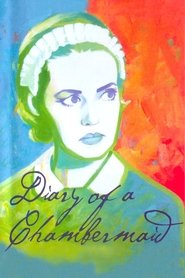
Diary of a Chambermaid (1964) — dir. Luis Buñuel
The surprise of late Buñuel is how calm it looks. Level camera, plain grey light, no music telling you how to feel — a meal, a fetish, a corpse, all lit exactly the same. That evenness is a method: Buñuel refuses, absolutely, to be surprised by the bourgeois household he's dissecting, and the refusal is what exposes it. Watch how objects — boots, especially — carry charges of desire and cruelty the camera declines to explain. The widescreen frames place people inside their rooms like specimens.
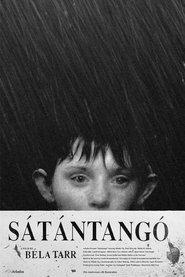
Satantango (1994) — dir. Béla Tarr
Seven hours, and the opening shot is several minutes of cows shuffling out of a ruined farmyard in the rain. That shot is a lesson: Tarr is teaching you how to watch what follows — not for events, but for time moving through a collapsing place. Individual takes run five, eight, ten minutes; the film shifts your inner clock from the rhythm of cuts to the rhythm of inhabiting. Watch the doctor at his window, cataloguing his neighbors in a notebook — a man who has stopped intervening in the world and can only observe it, which the film suggests may be the only verb left.
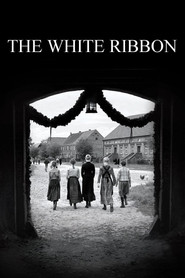
The White Ribbon (2009) — dir. Michael Haneke
Start with what you don't see. A wire strung across a path injures a rider; we see the fall, never the hands that tied the wire — and the film keeps the cause hidden, deliberately, for two and a half hours. Christian Berger's camera rarely moves, holding at a middle distance in locked-off long takes, and Monika Willi's editing ends scenes before their climax: a punishment approaches and the door closes on it. Notice how this withholding, inherited from Bresson, becomes the film's real subject — a study of how ordinary hierarchies of village, church, and family can breed something monstrous, without ever showing you the moment it's born.
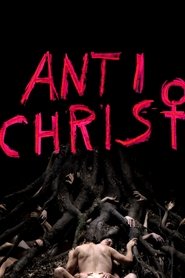
Antichrist (2009) — dir. Lars von Trier
Watch the film corrode its own beauty. It opens in lustrous black-and-white slow motion — every droplet legible, consciously gorgeous — and then the camera turns restless and handheld once the couple reaches the forest. Listen for the acorns falling on the cabin roof all night: not weather, but nature tirelessly producing and rotting, a sound that says what no dialogue can. This is horror rebuilt as art cinema, drawing on Tarkovsky's reveries of wind and water and Bergman's two-person chamber drama, and its true subject is the arrogance of trying to reason grief away.
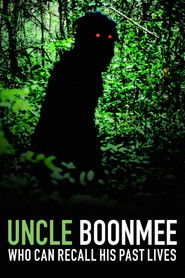
Uncle Boonmee Who Can Recall His Past Lives (2010) — dir. Apichatpong Weerasethakul
Watch the dinner on the veranda. In low oil-lamp light, a family talks, and a chair that was empty is no longer empty — a ghost arrives not with a music sting but by slow degrees, surfacing out of the dark like a photograph developing. Nobody screams; food gets passed. The wonder lands precisely because no one on screen treats it as wonder. Sayombhu Mukdeeprom's photography preserves real darkness, and the camera watches rather than chases — long, patient, frontal takes in which the supernatural and the everyday share the frame as equals.
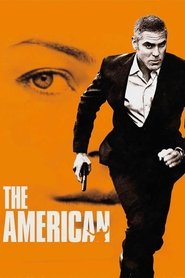
The American (2010) — dir. Anton Corbijn
Stop waiting for the chase; there isn't going to be one in the way the trailer promised. Corbijn, a photographer by trade, films George Clooney small within wedges of converging medieval stone, the town beautiful and vise-like at once — space itself becomes the antagonist. This is the art-house hitman film in the Melville tradition: character built from gesture and routine, long wordless sequences of a professional filing steel and making coffee. When action finally comes, it's over in a second. The tension lives entirely in the watching.
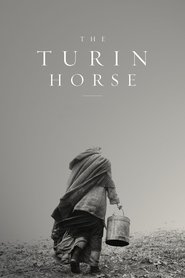
The Turin Horse (2011) — dir. Béla Tarr
Watch them eat the potato. The father tears at it with his one good hand, too hot, fast and angry; the daughter eats hers slowly; nothing is explained, and the camera holds. Fred Kelemen's black-and-white cinematography is among the most sustained achievements of its era, and Tarr builds the whole film from a handful of enormous takes across six days of wind and repetition. You don't receive information about a world running down — you inhabit the running-down, and the waiting becomes the film.
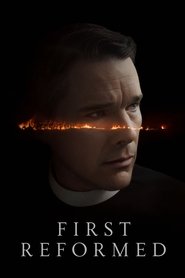
First Reformed (2018) — dir. Paul Schrader
Schrader brings this whole European tradition home to America. A man writes by hand in a notebook he has sworn to burn; the camera holds him head-on and does not move. Alexander Dynan's frames are locked-off and almost liturgically symmetrical, and camera movement is rationed so severely that when it comes, it lands like an event. The film openly mirrors Diary of a Country Priest — the journal, the ailing cleric, the parish that offers no comfort — and adds ecological dread to the old questions of faith and despair. Before it shows you a single act, it teaches you a posture: sit still, look, endure.
Watched together, these films form a conversation across sixty years and four continents — Bresson teaching Haneke and Schrader, Dreyer haunting Bergman and Bresson both, Tarkovsky flowing into Tarr and von Trier, the whole tradition surfacing on a Thai veranda and in an upstate New York rectory. The reward isn't just recognizing the lineage. It's what the films do to you: they retrain your attention, slow your pulse, and make you notice how much ordinary cinema hurries you past. By the last of them, you'll find that a held shot of a face, a field, or a boiled potato carries more suspense than any chase — because you've learned to watch the way these films watch: patiently, without flinching, letting time do its work.