Sightlines · a mini film course
Growing Up Is Mostly Watching: Eleven Coming-of-Age Films Where the Camera Learns to Wait
Every film in this set is about young people — but that's not really what binds them. What binds them is a shared discovery about how to film youth: adolescence isn't a string of decisive actions, it's a long stretch of seeing, feeling, and enduring things you can't yet do anything about. So these filmmakers, across seven decades and five countries, quietly retooled the machinery. The camera watches rather than chases. Time is allowed to stretch. Places press in on people until the space itself becomes a character. Bodies say what dialogue can't. Watch these films for what the characters notice — and for how the filmmaking makes you notice with them.
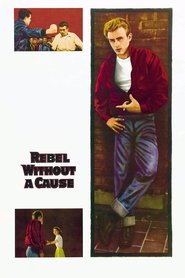
Rebel Without a Cause (1955)
Before a word of plot, James Dean tells you everything with his body — watch the very first minute, and then keep watching his posture all the way through: the slouches, the draping, the hands that can't find the right thing to do. Nicholas Ray films performance as stance rather than speech, and gives those held attitudes room to breathe in widescreen color, with Jim's red windbreaker working almost like a graphic signal across the frame. This is where the sensitive-teen film relocates trouble from the mean streets to the comfortable suburb — and finds it in the living room.
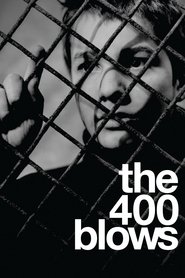
The 400 Blows (1959)
Truffaut's landmark runs on a boy who sees everything — the cramped apartment, the arbitrary teacher, the locked doors — and whose every response somehow lands wrong. Watch how Henri Decaë's austere winter-lit black-and-white Paris keeps framing Antoine inside spaces that don't fit him, and how the adults (drawing on Vigo's schoolboys-versus-cartoonish-authority tradition) never quite see the particular child in front of them. Notice, too, the running: this film loves motion that isn't going anywhere the institutions would recognize as progress.
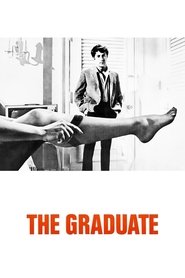
The Graduate (1967)
Mike Nichols hands his hero every advantage and then films a person who can't use any of them — Benjamin is the most watchful protagonist imaginable, and things mostly happen at him. The visual system is all enclosure: doorways, car windows, aquarium glass, transparent barriers between Benjamin and the world. Watch the pool scenes especially, and notice how the editing borrows European tricks — fragmenting time within a single place — to make drift itself the subject.
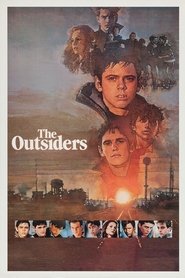
The Outsiders (1983)
Coppola takes a plainspoken novel about poor Tulsa teenagers and photographs it like grand romantic spectacle: amber and crimson sunsets, silhouettes against burning skies. That clash — hardscrabble material, lush dream imagery — divided critics, but it's the whole point: the film sees these boys the way they'd want to be seen, as tragic romantic figures in the Dean lineage. Watch how class draws every line in the frame, and how the film keeps pausing its own momentum to let beauty in.
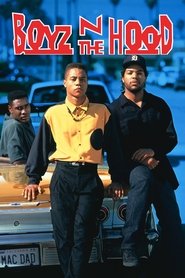
Boyz n the Hood (1991)
Listen before you look: the helicopter overhead, its drone running under barbecues and porch talk — the sky itself is policed. Singleton and cinematographer Charles Mills keep the camera steady and observant, refusing to turn violence into spectacle, and keep framing bodies inside the architecture of the neighborhood until the geography becomes a character pressing on everyone. Watch what the film argues about fatherhood, and how the ordinary domestic moments are given as much weight as anything else.
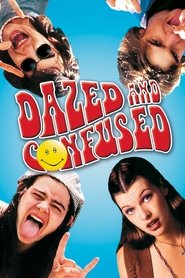
Dazed and Confused (1993)
In the first minute — a black GTO gliding into a parking lot, a song coming up as if from the next car over — Linklater tells you the deal: this film isn't going to chase anyone, it's going to hang around. There's no goal, no engine, just a camera drifting through the social spaces of one Texas night, picking up a face and letting it go. Watch how the ensemble structure (inherited from American Graffiti) turns a plotless night into a group portrait, and how golden, dust-lit naturalism does the emotional work a plot would normally do.
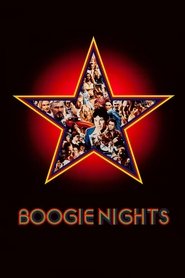
Boogie Nights (1997)
The opening shot comes down off a neon marquee and refuses to stop moving — one unbroken take that introduces the entire cast as a single moving body. Anderson's gliding camera keeps insisting that this chosen family of the marginalized is one organism: it breathes, parties, and panics together, and the long takes decline to cut it apart. Watch how the camera behaves like a guest who already knows everybody, and how the wall-to-wall period needle-drops carry the story's changing weather.

Y Tu Mamá También (2001)
The real engine here is not the road trip — it's the gap between what two teenagers see and what the film knows. A calm, unhurried narrator's voice keeps interrupting, telling you things about the world outside the car that the boys will never learn; picture and voice tell two different stories that never quite meet. Watch also Lubezki's long unbroken takes inside the car, which trap you in the discomfort of three people's proximity, and notice how class is embedded not in speeches but in habits, spaces, and who expects to be served.
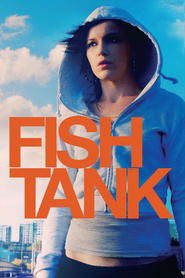
Fish Tank (2009)
Andrea Arnold shoots in a tall, narrow, boxed-in frame — the fish tank of the title — cropping the wide world away so Mia is always hemmed in by the edges of the image. The handheld camera stays locked behind her, close and tactile, never cutting away, and the film trusts dance over speech: Mia's body keeps trying to say what her situation won't let her say. Watch how a posture or a routine makes her whole predicament visible without a line of explanation.
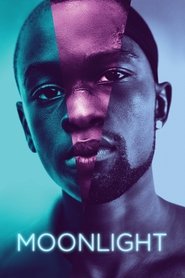
Moonlight (2016)
Jenkins inherits the milieu of the hood film — the drug corner, the struggling parent — and drains it of violence-as-spectacle, replacing it with quiet. The camera is sensuous and choreographic: it opens by orbiting a conversation rather than cutting through it, and elsewhere lingers on faces in shallow focus until looking becomes the story. Watch the water scenes, and watch how the three-part structure (borrowed from Hou Hsiao-hsien's Three Times) splits one emotional life across distinct blocks of time, letting duration do what dialogue won't.
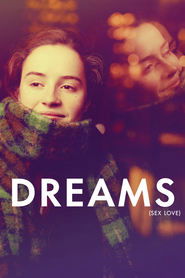
Dreams (2024)
A teenage girl reads aloud the thing she wrote about being in love — and the film's real subject is not the romance but the reading of it: family members bent over a manuscript, deciding whether it's good, whether it's true, who it belongs to. Haugerud, working in the Rohmer tradition of talk as drama, treats a queer awakening entirely without crisis, in patient, stable framings of Oslo kitchens and stairwells. Watch how conversation itself supplies the plot, and how the film keeps asking what happens to a feeling once it becomes text.
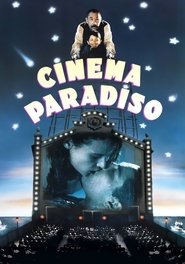
Cinema Paradiso (1988)
A film about watching films — about the cinema as communal ritual, substitute family, and site of collective dreaming in a small Sicilian town. Tornatore's camera works in controlled classicism, warm shallow interiors, the projector beam itself used expressively; the deeper structure, borrowed from Fellini and Leone, is memory as raw material, with the score doing the time travel. Watch how looking — the child's gaze at the screen, the village gathered in the dark — is treated as a form of feeling in its own right.
Why watch them together? Because you'll start to see one long conversation. Ray's held postures return in Arnold's dancing girl; Truffaut's misfit boy echoes in Jenkins's; Singleton's neighborhood-as-pressure and Coppola's class lines rhyme; Linklater's drift and Anderson's glide are two answers to the same question about ensembles and time. Each of these films, in its own idiom, bets that a young person absorbing the world is more cinematic than a hero conquering it — that if the camera waits long enough, watching becomes its own kind of event. Slow down with them. The reward isn't finding out what happens; it's learning to see the way they see.