Sightlines · a mini film course
The Camera That Waits: Ten Ways of Looking at Japan on Film
There's a thread running through this watchlist, and it isn't samurai or ghosts or monsters — though you'll get all three. It's a question about action: what it means to act, what happens when acting becomes impossible, and what the camera does when its characters can't move. Half these films are built on decisive deeds — the sword drawn, the charge sounded, the revenge sworn. The other half are built on the opposite: people who can only watch, wait, and endure, while the camera holds its distance and refuses to console anyone with a close-up. Watched together, they become a conversation across seventy years of Japanese cinema (and two American films leaning hungrily toward it) about doing versus seeing, motion versus stillness, and the strange power of an image that simply stays.
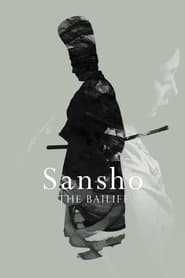
Sansho the Bailiff (1954)
Watch how rarely Mizoguchi cuts. His signature is the mobile long take — the camera tracking and craning through a scene like a hand-scroll slowly unrolling — and in the film's most devastating moments he holds the shot from far away, denying you the reaction close-up any other film would hand you. What you feel arrives sideways, through distance and patience. Miyagawa's silvered mists and reed-textured landscapes make suffering look almost unbearably beautiful, which is precisely the point.
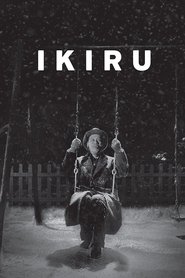
Ikiru (1952)
Notice how Kurosawa builds a trap out of geometry: deep-focus rows of identical desks, towers of petition folders, a bureaucrat framed like a piece of furniture in his own office. The space itself argues that nothing will ever happen here. Then watch what the film does when its protagonist's life-in-motion seizes up — and how Kurosawa, like Mizoguchi, refuses to rush in close when emotion peaks. The fixed, slightly distant frame is the film's whole ethic.
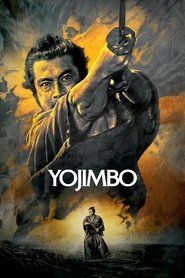
Yojimbo (1961)
The hero of this sardonic masterpiece spends a surprising amount of time not fighting — perched on a watchtower, a rooftop, a sake barrel, assessing everything and committing to nothing. Watch how he invents himself on the spot, even forging his own name from a mulberry field glimpsed out a window, and how he sells his loyalty to each faction in turn. Miyagawa shoots the corrupt village in harsh, dusty daylight — a deliberately harder look than his lyrical work on Rashomon — perfect for a film whose morality is all deadpan.
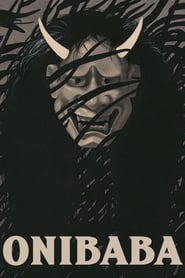
Onibaba (1964)
Start with the grass. Kuroda's camera goes low, beneath the towering susuki reeds, so the silver field churns across the widescreen frame and swallows the human figures — landscape as protagonist, and a hungry one. This is a period film stripped of heroism and a ghost story stripped of decorum: war reduces people to scavengers, and desire cuts through everything. Notice how the film feels amoral rather than immoral — these characters aren't wicked, they're driven, and the camera watches them the way it watches the wind in the grass.
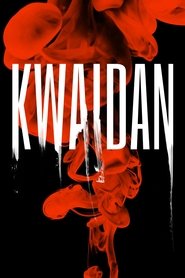
Kwaidan (1965)
The opposite strategy: where Onibaba is wild, Kwaidan is a painting that knows it's a painting. Look at the sky in "The Woman of the Snow" — eyes have literally been painted into it. Kobayashi and cinematographer Miyajima lay the widescreen frame out like a picture scroll, figures flattened against designed, saturated, deliberately unreal backdrops, and cuts that reveal new tableaux rather than chopping up action. The film asks you to stand still in front of it, and rewards you enormously if you do.
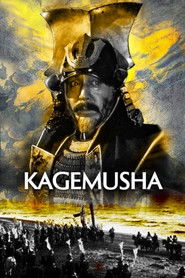
Kagemusha (1980)
The opening shot is one of the great declarations in Kurosawa: three men in identical dress, seated in a row, held in a single unbroken static frame until you start hunting for the difference between them. One is a warlord; one is a thief who shares his face. Watch how the film turns identity into a question of performance — whether a nobody can hold an army together by sheer continuity of posture — and note the color-coded clan banners, a system Kurosawa was prototyping for his next epic.

Ran (1985)
Here that system blooms: each son's army wears a primary color — yellow, red, blue-green — legible from across a battlefield, while the old warlord is stripped down to white, the color of mourning. Watch for the moment Kurosawa drops all battle sound and lets only the orchestra play over smoke and catastrophe. The director who spent forty years perfecting men of action gives us a man who can see everything and do nothing — and it's the most powerful image in the film.
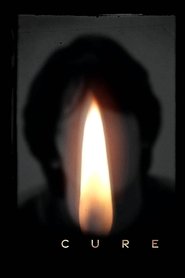
Cure (1997)
Kiyoshi Kurosawa's method is subtraction. Where the serial-killer thrillers of its era gave you grand designs and charismatic monsters, Cure gives you distance: wide, desaturated frames that hold figures inside their drained gray environments, dread built from what's held back. Watch the flame of a cigarette lighter, the drip of water, a patient circling voice — and notice how the film's hypnosis works on you through the oldest screen technology there is: a point of light in the dark and a watcher leaning in.
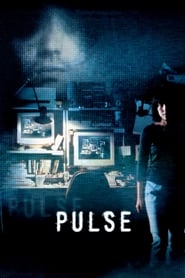
Pulse (2001)
Horror usually shows you the thing; Pulse shows you the space where the thing was. Watch for the stains — dark smudges on walls like after-images of people — and for how cinematographer Hayashi underexposes interiors until rooms seem to be losing their grip on visibility. This is a film about loneliness as a contagious condition, and its most radical choice is that its characters mostly stop: they sit, they stare into dim rooms, and the film dares you to keep looking at absence.
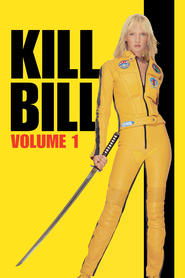
Kill Bill: Vol. 1 (2003)
Tarantino builds a whole film out of climaxes. Watch how nearly every image is a pose — duelists frozen in ritual stillness, arterial spray staged as a stylized geyser, a standoff stretched until time itself seems to hold its breath — each one lovingly citing the exploitation and samurai cinema it descends from (Lady Snowblood above all). Richardson's hot top-light halos everything with graphic crispness. It's the maximalist answer to everything else on this list: revenge as ritual, and ritual as pure style.

The Last Samurai (2003)
Hollywood looking toward Japan — and specifically toward Kurosawa. Watch for the direct echoes: the rain-and-mud village combat of Seven Samurai, the cavalry-into-gunfire tableau of Kagemusha, the color-coded banners and static wide battlefield frames of Ran. John Toll's painterly landscape photography carries the film's real argument — tradition versus industrial modernity, sword against rifle — in images of force meeting force across open ground.

Godzilla Minus One (2023)
The newest film here reaches back to the oldest questions. Watch for the restraint: Shibasaki's cool, hard palette refuses to prettify the postwar rubble, and the creature is revealed in fragments — a roar before a shape, bystanders as scale — following a grammar that runs from King Kong through the 1954 original. At its core is a man frozen at the trigger, and the whole film asks whether he can learn to act at all. It's the action film interrogating its own engine.
Watched together, these films teach each other. You'll see Miyagawa's camera move from Rashomon's legacy through Sansho's gliding takes to Yojimbo's dusty streets; you'll see Kurosawa's color-coded armies rehearsed in Kagemusha, perfected in Ran, and borrowed wholesale by Hollywood; you'll see the ghost-story tradition split into Onibaba's wild grass and Kwaidan's painted skies, then mutate into the dim rooms of Cure and Pulse. Most of all, you'll start noticing the choice every one of these directors makes, scene by scene: chase the action, or hold still and watch. The films that hold still may haunt you longest.