Sightlines · a mini film course
Bodies That Speak Before Words: A British Cinema of Watching and Waiting
Here's a secret that connects these twelve films, from a 1945 railway platform to a 2009 Essex council estate: they're all fascinated by the gap between what people feel and what they can actually do about it. Again and again, you'll watch characters who see their situations with total clarity — the dead-end job, the impossible love, the future already decided — and who can't simply act their way out. So the films find other channels. A face held perfectly still over a teacup. A body that starts dancing before its owner decides to. A convex mirror that warps a whole household into one image. These are movies where the camera watches rather than chases, where time is allowed to stretch, and where a posture or a room tells you more than any speech. Watch the bodies. Watch the spaces. That's where the real drama lives.
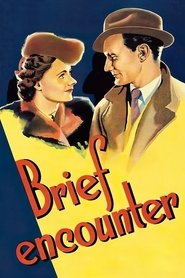
Brief Encounter (1945)
The earliest film here, and in some ways the boldest: the drama plays out almost entirely on Celia Johnson's face while nothing "happens" on it. Watch for the tension between spaces — Robert Krasker shoots the interiors (the station refreshment room, a railway carriage) in charged, shadowy light, while the outside world gets a harder, documentary clarity. Notice too how the film circles back on itself, opening and closing on the same minutes, so you realize you've been living inside a memory being replayed. The feeling is enormous; the visible action is almost zero. That gap is the film.
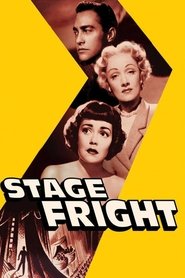
Stage Fright (1950)
Hitchcock, back in England, plays a magnificent trick on you in the first reel — and the whole trick depends on your trust in the camera. For decades, cinema had a quiet rule: characters may lie with their mouths, but the image doesn't lie. Watch the opening flashback carefully, note how clean and trustworthy the cutting feels, and then spend the rest of the film feeling the splinter. It's also a delicious study of performance itself: an actress heroine, a theatrical milieu, and a running suspicion that acting and lying are next-door neighbours.
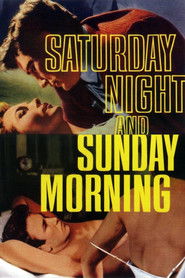
Saturday Night and Sunday Morning (1960)
It opens on a lathe, not a face — Albert Finney's hands feeding metal into a machine, so close you can't find the seam between worker and tool. Freddie Francis shot it entirely on real Nottingham locations, in deep-focus compositions that embed Arthur in his environment: terrace rows, factory floors, the whole social geography visible in a single frame. Watch how the film equates human rhythm and factory rhythm, and how a man who acts constantly — drinking, fighting, defying — somehow changes nothing. The body wears the life.
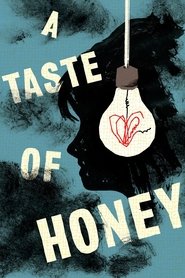
A Taste of Honey (1961)
Start with the walks. Jo drifting through Salford past canal water, latticed ironwork, fairground neon against grey sky — Walter Lassally finds genuine beauty in industrial desolation without ever prettifying poverty, and crucially, the walks aren't going anywhere plot-wise. That refusal is the point. Rita Tushingham's Jo is "an intelligence making continuous small adjustments to conditions she did not choose": watch how the film builds its power through accumulation of behaviour in real spaces rather than plot machinery.
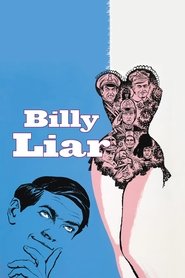
Billy Liar (1963)
The great comic hinge of this whole set. Schlesinger cuts — no dissolve, no warning — from a cramped Yorkshire front room straight into Ambrosia, Billy's imaginary nation where he's the dictator, and then straight back. Watch for those unmarked cuts between drab reality and fantasy: the joke is also a diagnosis, because the daydreaming that lets Billy escape in his head is exactly what stops him escaping in fact. Denys Coop's photography catches a Yorkshire mid-transformation — the old town being demolished around a young man who can't decide whether to leave it.
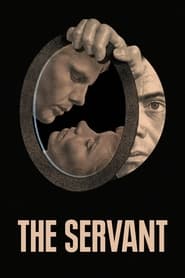
The Servant (1963)
Turn the kitchen-sink camera upward, onto a decadent London townhouse, and you get this: a chamber piece where the house itself is the battlefield. Douglas Slocombe's BAFTA-winning photography — deep focus, low oblique angles, in a visual grammar descended from Citizen Kane — makes staircases, banisters, doorframes, and above all a recurring convex hall mirror do the storytelling. Watch that mirror: it bulges the room, folds people together, and slowly makes it impossible to say which is the man and which is the image of the man. Space becomes a trap; power becomes reversible.
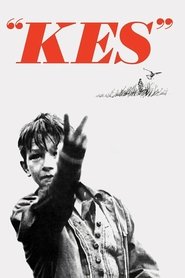
Kes (1970)
Watch what Billy Casper's body does when the kestrel falls out of the grey sky toward his fist: it goes completely still. The boy who flinches through every other scene — ducked at home, cuffed at school — opens up, just for those moments. Chris Menges's camera is the key: it stands back, uses long lenses to watch from across a field or a room, so behaviour can unfold without the actors being pressed by the apparatus. This is patience as a style — a film about a boy for whom the future feels foreclosed, told by a camera that refuses to hurry him.
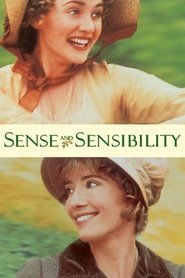
Sense and Sensibility (1995)
A period romance built almost entirely inside the pause between feeling something and doing something about it. Emma Thompson's Elinor perceives everything and acts on almost nothing; Marianne feels and immediately acts. Ang Lee stages that contrast with wonderful precision — watch what people manage not to do. Notice too how Michael Coulter's cinematography deliberately drains the golden Merchant-Ivory glow: cool greens and greys outdoors, genuinely dim candlelit interiors indoors. Restraint in the palette, restraint in the performance — the film thinks in one register throughout.
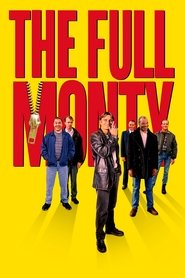
The Full Monty (1997)
Watch the dole-queue scene: six unemployed Sheffield men, bored stiff, and when "Hot Stuff" comes on their hips start moving before they decide to. That involuntary shimmy is the whole movie in miniature — bodies that carry what the men can't say aloud about work, worth, and being seen. John de Borman keeps the camera close and refuses to prettify post-industrial Sheffield, grounding the comedy in the same observational tradition as Kes and Saturday Night and Sunday Morning — this is that lineage's factory-floor men, a generation on, after the factories closed.

Dancer in the Dark (2000)
Two films in one, and the seam between them is everything. The dramatic scenes are deliberately rough — Robby Müller shooting handheld, washed-out, jittery, with snap zooms that betray the camera. Then a machine's rhythm — a factory press coming down, and down, and down — tips over into music, and the grey workplace becomes a stage. Watch for those switches: how industrial noise becomes a beat, how a heroine who is losing her sight builds a whole inner world out of listening. It's a musical made by someone at war with what musicals promise, and the tension is devastating.
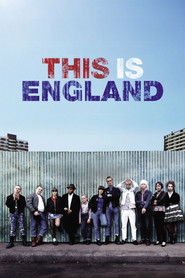
This Is England (2007)
Watch the shape of the energy. In the early gang scenes, Danny Cohen's handheld camera seems to be discovering the action — loose, playful, alive — and the twelve-year-old at the centre is all motion: he sees a warmth, a belonging, a way to be, and reaches for it. Each reach changes his situation. Then notice how, gradually, the film's rhythm changes as the reaching stops working. Meadows builds his 1983 with scrupulous period fidelity, but this is an anti-nostalgic period film — a study of how radicalization arrives not as an idea but as an answer to loneliness.
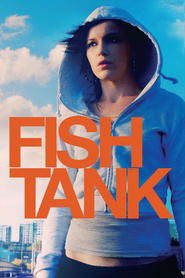
Fish Tank (2009)
The first thing Arnold shows you is Mia alone in a gutted flat, headphones on, drilling the same eight counts of a dance routine — no audience, no mirror. That tells you how to watch everything after: this is a girl with no words for her situation, whose body keeps trying to say what she can't. The boxy 1.33:1 frame is the masterstroke — it crops the wide world away, sealing Mia inside tall, narrow compositions that make the title literal. Robbie Ryan's handheld camera trails her everywhere, never cutting away, never judging. The film descends directly from Kes — a tethered animal, a working-class kid, a camera that trusts behaviour over dialogue.
Watched together, these films teach you a way of seeing. The through-line from Krasker's shadowed refreshment room to Ryan's boxed-in council flat is a cinema that trusts the visible surface of things — a held face, a still body, a warped mirror, an unhurried walk — to carry meanings that dialogue and plot never could. You'll start noticing how each film handles the same problem differently: comedy in Billy Liar and The Full Monty, chamber menace in The Servant, elegy in Kes, formal daring in Stage Fright and Dancer in the Dark. And you'll watch a tradition talk to itself across sixty-five years — Kes echoing in Fish Tank, the factory floor of 1960 haunting the dole queue of 1997. Give these films your patience. They watch rather than chase, and they'll reward you for doing the same.