Sightlines · a mini film course
When Seeing Is the Story
Most movies run on a simple engine: someone spots a problem, does something about it, and the world changes. The twelve films on your list are all, in their different ways, tinkering with that engine — slowing it, jamming it, running it backwards, or handing you the eyes themselves. In these films the camera watches rather than chases. Characters look more than they act. Time is allowed to stretch until you feel its weight. Space becomes a trap, a stage, or a strange new world seen for the first time. Watch them as a set and you'll start noticing not just what happens on screen, but how a filmmaker decides what your eyes are allowed to do.

Rome, Open City (1945)
This is where so much of modern cinema starts. Rossellini's framings are off-center, figures caught mid-gesture, focus adjusting on the fly — the camera seems to be discovering events rather than staging them, and the result feels torn from the streets of occupied Rome. Notice how the film refuses the usual guarantees: it will not promise you that the story protects the people you care about. That refusal shocked audiences in 1945 and still stings today.
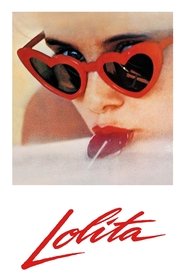
Lolita (1962)
Kubrick opens at the end — a strange, theatrical confrontation in a cluttered mansion — then spends the rest of the film circling back to it. Everything you watch afterward arrives pre-doomed, confessed after the fact by a narrator with every reason to lie. Watch how Oswald Morris's long, fluid black-and-white takes let scenes breathe so that performance itself becomes the evidence, and listen for the gap between what Humbert's voice-over claims and what your eyes can plainly see.
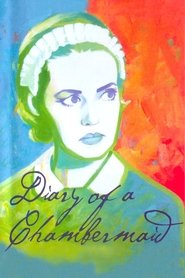
Diary of a Chambermaid (1964)
Buñuel films everything — a dinner, a fetish, an act of cruelty — with the same level camera, plain grey light, and no music to tell you how to feel. That evenness is the whole method: he refuses, absolutely, to be surprised by the bourgeoisie, and the refusal exposes them more ruthlessly than any outrage could. Watch for objects charged with unexplained meaning (a pair of boots, especially), and for how the widescreen frame quietly stages an entire class through its house, its servants, its rituals.
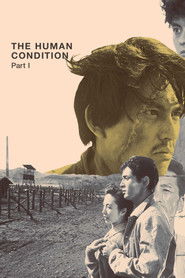
The Human Condition I: No Greater Love (1959)
Kobayashi's hero arrives in Manchuria believing one decent man can reform a brutal labor camp. Watch how Yoshio Miyajima's enormous widescreen compositions already argue otherwise: fence lines, watchtowers, and rows of laborers organize the frame into grids of confinement, and a single figure looks like a comma in a long, indifferent sentence. The tension between what Kaji intends and what the shape of the image keeps telling you is the film's real drama.
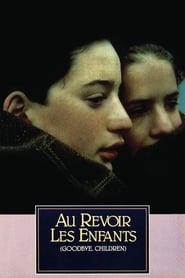
Au Revoir les Enfants (1987)
Malle rebuilt his own boyhood — a Catholic boarding school in occupied France — with disciplined restraint: cold winter light, grays and browns, a camera that holds at a watchful distance. His young lead performs almost entirely through watchfulness rather than deed; the film's power lives in the eyes of a child slowly realizing that history is real and lethal. Notice how much weight Malle can put on a single look.
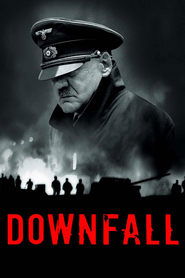
Downfall (2004)
A war film set where the war can no longer be fought: a bunker under Berlin, where maps are consulted and orders issued to armies that no longer exist. Watch the tension in Rainer Klausmann's camera between claustrophobic handheld closeness inside and the exposed world above — and watch the machinery of command grind on in a vacuum, generals reporting phantom forces in the measured tones of men describing real ones. It's a portrait of how a closed system of belief keeps running after reality has left the room.
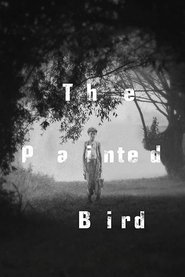
The Painted Bird (2019)
The title image — a bird painted a bright, alien color, released back to a flock that no longer recognizes it — is staged with no commentary, no music, no cut to spare you. The boy at the film's center can only watch; Marhoul builds everything to keep him, and you, in that position. Notice Vladimír Smutný's near-static, painterly black-and-white widescreen, which places the child small in landscapes that dwarf and endanger him — beauty and menace composed into the same frame.
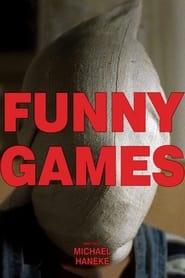
Funny Games (1997)
Haneke takes the home-invasion thriller and surgically removes everything the genre exists to deliver. The camera stays static and frontal, the light even, the terrible things offscreen — and then a shot holds, and keeps holding, far past comfort, until waiting itself becomes the experience. Watch what happens inside you when the cut you expect doesn't come; that discomfort is the film's actual subject, a question aimed directly at the person in the seat.
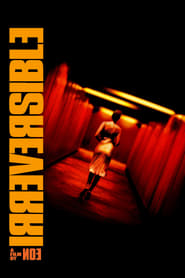
Irreversible (2002)
The premise is printed on the poster — time destroys everything — and the structure enacts it: the story runs from last scene to first, so nothing anyone does can change what you've already seen. Watch Benoît Debie's camera in the early sequences, corkscrewing and tumbling through space, unmoored from any human viewpoint, then notice how the image gradually settles as the film travels backward toward calm. Fair warning: this is the harshest film on the list, and it means to be.
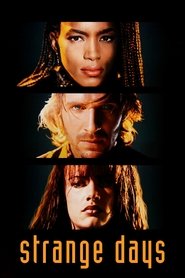
Strange Days (1995)
Bigelow opens by putting you inside someone else's body before telling you whose — a robbery lived through borrowed eyes, shot with custom first-person rigs years before GoPro or VR made that vision ordinary. Watch the film's two distinct ways of looking: the grimy, neon-soaked noir camera of its near-future Los Angeles, and the seamless, breathless first-person "clips" people buy and sell like a drug. The film keeps asking what it means to want to watch — and it's asking you.

X (2022)
Ti West shoots 1979 rural Texas in the grammar of 1979: golden dusty exteriors, patient wide framings, slow zooms instead of jittery coverage. The dread lives in the gap between a look and an act — watch how long West lets someone simply watch before anything happens. Notice, too, how the film keeps composing youth and age into the same frame, mirroring desire and its loss until the horror and the pathos become the same thing.
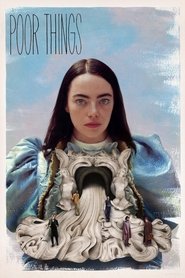
Poor Things (2023)
Lanthimos begins not with a story but with a way of seeing: fisheye lenses, bulging frames, circular irises — the world pouring in at the corners the way it does for a consciousness meeting everything for the first time. Then watch the optics slowly relax and normalize as Bella matures. Perception is the plot here; you are literally watching a mind calibrate its lens, wrapped in dark comedy and a gleefully strange Victorian world.
Watched together, these films become a conversation about the most basic choice in cinema: where to put the eye, and how long to leave it there. Rossellini's camera catching history mid-gesture; Buñuel's and Haneke's refusing to flinch or explain; Kobayashi's and Marhoul's dwarfing lone figures in frames too wide to master; Bigelow's and Lanthimos's handing you perception itself as the subject. You'll start to feel how a held shot can be an argument, how a lens can be a state of mind, how the order of scenes can change what a story is even about. None of these films will tell you how to feel. That's exactly the point — and by the end of the set, you'll notice how rare, and how generous, that refusal is.