Sightlines · a mini film course
The Camera That Refuses to Flinch
Every film in this set is, in one way or another, a dark comedy — but none of them tells jokes in the usual sense. Their shared method is stranger and more unsettling: they show you appalling things with total composure. A corpse and a dinner are lit the same. A war is shot like a recruitment ad. A man's repeated deaths are discussed like a status update. These twelve films understand that the deadliest satire doesn't editorialize — it presents. The camera watches rather than chases; the frame stays level while the world inside it tilts; and the discomfort of not being told how to feel becomes the whole point. Watch for the gap between the elegance of the image and the horror of what it contains. That gap is where these films live.
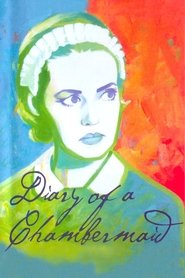
Diary of a Chambermaid (1964)
The great surrealist working in his most disciplined register: eye-level framing, flat grey light, no expressive distortion, no music cueing your emotions. Watch how Buñuel films a meal, a fetish, and a corpse with exactly the same evenness — a deliberate refusal to be surprised by the bourgeoisie, which turns out to be the surest way of exposing them. Notice too the widescreen upstairs/downstairs staging, inherited from Renoir's The Rules of the Game: a whole class anatomized through the parallel lives of its servants.
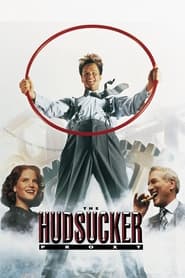
The Hudsucker Proxy (1994)
An Art Deco corporate fantasy built entirely on soundstages — miniatures, matte paintings, forced perspective, no real Manhattan anywhere. Watch how the great clock in the Hudsucker tower doesn't just decorate the story but seems to run it: the score ticks, the mail-tubes hiss, and time itself behaves like the author of the fable. Deakins's restless, metallic camerawork gives the whole thing the gleam of a machine — which is exactly what the film thinks capital is.
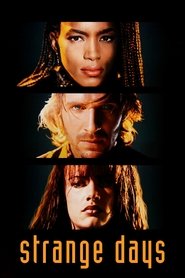
Strange Days (1995)
Bigelow's decisive move is to split the film into two kinds of looking: the grimy, neon-soaked noir photography of near-future Los Angeles, and the unbroken first-person "clips" recorded straight from someone's nervous system. Watch the opening — you don't observe it, you wear it, borrowing a stranger's eyes before you know whose they are. Built years before GoPro, VR, or bodycam footage, it's the film that asked what happens when experience itself becomes merchandise.
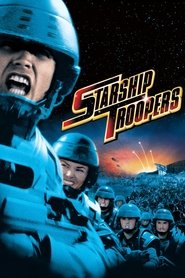
Starship Troopers (1997)
The trap is on the surface. Verhoeven shoots the human world like an advertisement — high-key light, saturated color, square jaws — and executes a rousing bug-war spectacle with total sincerity while quoting the visual grammar of fascist propaganda underneath it. Watch the recruitment reels and their chipper "Would you like to know more?" — your own eagerness to click through is the film's real subject. The satire works precisely because nothing on screen ever winks.
Fight Club (1999)
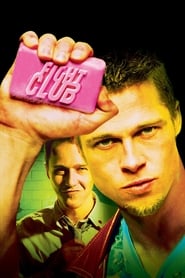
Cronenweth's photography makes ugliness a value: institutional greens, bilious yellows, available-light grit. But the thing to watch for is subtler — Fincher hides single frames of Brad Pitt in the film before the story admits he matters, a prank spliced into the one place a moviegoer never thinks to doubt: the image itself. This is a film that lies to you with a straight face, and the lying is the meaning. Pay attention to the gap between what the narrator says and what the pictures show.

Songs from the Second Floor (2000)
The camera never moves. Not once — no pans, no tracking, no zooms. Each scene is a single fixed wide shot, built on painted studio sets with painterly deep focus, held until the discomfort becomes the subject. Watch how Andersson lets incident unfold at multiple depths simultaneously, like Tati's Playtime drained of joy, and how the desaturated grey palette makes an entire society look like it's been dusted with ash. It's Swedish cinema's answer to Bergman: the wide social frieze instead of the intimate face.
Lord of War (2005)
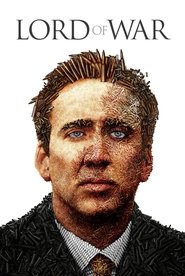
The film opens with a two-minute shot from the point of view of a bullet — born in a stamping press, boxed, shipped, chambered, fired — a camera belonging to no one, riding the merchandise itself. That's the thesis before a word is spoken. Then comes Yuri Orlov's voiceover, breezy and seductive in the GoodFellas mode, and the rest of the film is a tug-of-war between his charm and what the glossy, well-lit images actually show. Watch how the polished surface makes the arms trade look like any other business — which is the accusation.
Children of Men (2006)
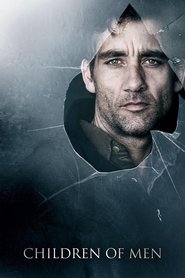
Cuarón and Lubezki take away the cut in exactly the moments a thriller depends on it most. Watch the famous long takes — handheld, at arm's length from the actors — and watch for the moment blood spatters the lens and stays there, uncleaned, unapologized for. The camera behaves like a documentary witness trapped inside a genre film, and the refusal to look away is the film's moral position. Time is allowed to stretch, and you feel the floor go.
Nightcrawler (2014)
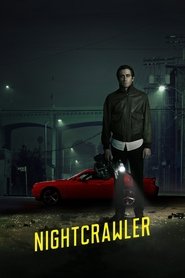
Elswit shoots nocturnal Los Angeles as a glittering, depopulated grid — genuinely beautiful, which is the trap. Watch what Lou Bloom does with his camera at crime scenes: the moment an observer starts arranging what he observes is the moment the film's media satire snaps into focus. It descends from Ace in the Hole and Network, but its real bite is how completely the culture of ambition and initiative produces, and rewards, a creature like this.
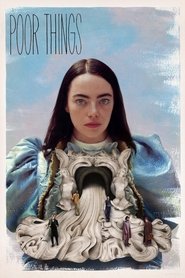
Poor Things (2023)
The film begins with an optics, not a story. Ryan's fisheye and wide-angle lenses, sometimes pinched inside circular irises, bulge the world at its edges when we're near Bella's point of view — the distortion is her rawness, a consciousness meeting everything for the first time. Watch what happens to the framing as she learns: the fisheye relaxes, the compositions normalize. You are literally watching a mind calibrate its lens. The episodic structure — a woman's education told as a series of encounters with authorities who all turn out to be interested and partial — owes debts to both Buñuel and Godard.
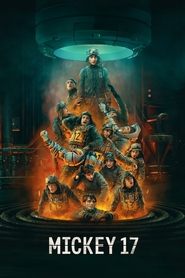
Mickey 17 (2025)
Bong's cruelest joke is tonal: a man's repeated deaths are treated as an operational cost, and the question "what's it like to die?" lands like a request for a status update. Watch Pattinson's performance — a man worn translucent by accumulated dying, playing exhaustion as physical comedy and horror at once. Khondji's photography and the film's bureaucratic deadpan inherit directly from Verhoeven's RoboCop and Starship Troopers: institutional violence normalized without a single ironic wink.
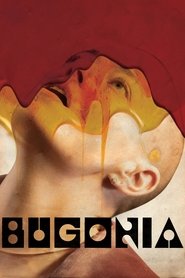
Bugonia (2025)
Two men, a woman tied to a chair, and a wide-angle lens that bows the cinderblock walls outward until the room itself seems skeptical. Watch how Lanthimos uses optical distortion as a statement about knowledge — the warp of the image encoding the warp of certainty. The film keeps two mutually exclusive stories alive at once and refuses to adjudicate between them; the composure the captive woman wields is a weapon nobody in the room can see. It joins the 1970s paranoid-thriller tradition of The Parallax View while refusing that cycle's promise that the truth is recoverable.
Why Watch These Together
Seen in sequence, these films teach a single lesson twelve ways: that the frame is never neutral. Buñuel's level camera, Andersson's locked-down tableaux, Verhoeven's recruitment-poster gloss, Cuarón's uncut witnessing, Lanthimos's bulging lenses — each is a decision about how much to help you, and each of these filmmakers decided to help you less than movies usually do. No music telling you when to feel. No cut arriving as mercy. No narrator you can trust. What replaces that help is your own attention, suddenly load-bearing. You'll start noticing where a camera chooses to stand, what a lens admits or excludes, when a film's beauty is a lure and when its ugliness is a kindness. That's the real course here: not twelve stories, but twelve ways of looking — and by the end, you'll have caught the habit yourself.