Sightlines · a mini film course
When Looking Becomes the Action: Twelve Films About Watching
Most movies run on a simple engine: a character sees a problem, acts, and the action fixes (or fails to fix) things, with the editing hurrying us along that chain. Every film in this set, in its own way, unplugs that engine. Here are heroes who watch more than they act — a boy in a cold classroom, a policeman whose every move misfires, a girl at the edge of a bumper-car rail — and cameras that watch with them: steady, level, patient, refusing to chase, refusing to tell you how to feel. Across seventy years and five countries, these filmmakers discovered the same secret: when action stalls, seeing itself becomes the drama, and time — stretched, folded, remembered — becomes the true subject.
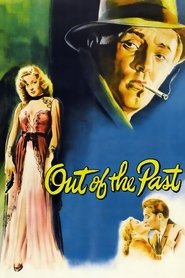
Out of the Past (1947)
Nicholas Musuraca's photography is a founding document of noir: one low, raking key light, and everything else allowed to fall into genuine black — faces split by shadow, venetian-blind slats striping the frame. Watch how the film's long confessional flashback works: a man driving through the night, narrating his own past like a verdict being read back. The past here isn't behind him as memory — it's out ahead of him, waiting.
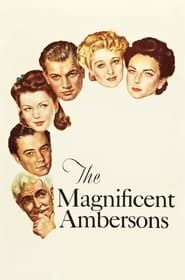
The Magnificent Ambersons (1942)
Welles and cinematographer Stanley Cortez keep the whole depth of the frame in focus, so figures on different landings of the great dark staircase share a single shot — the living and the already-fading breathing the same air. Watch the ball sequence, where mirrors multiply the dancers into a vanished abundance the budget couldn't afford. The house itself is photographed as a beautiful thing slowly consuming itself, and the camera's softness of shadow is the film's grief made visible.
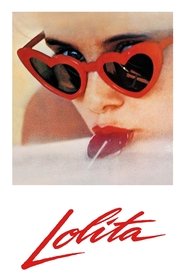
Lolita (1962)
Kubrick opens near the end of his story and circles back, so nothing simply unfolds — it is confessed, after the fact, by a narrator with every reason to lie. Watch how Oswald Morris's long, fluid takes let scenes play out in real duration, so you can catch performance doing what the voice-over won't admit. The irony is entirely in the gap: what Humbert tells you versus what the camera quietly shows.
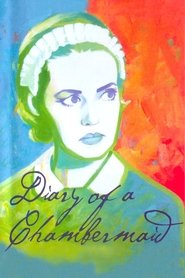
Diary of a Chambermaid (1964)
Made at the height of the New Wave, this is emphatically not a New Wave film: Buñuel, rooted in 1920s Surrealism, shoots with almost classical sobriety — eye-level framing, flat grey light, no music to cue your feelings. Watch how objects (a pair of boots, most famously) carry charged meaning the camera absolutely refuses to explain. The evenness is the method: a household filmed as if nothing could surprise it, so that everything feral underneath shows through the polite surface.
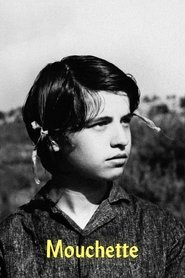
Mouchette (1967)
Start with her hands. Bresson builds the film from isolated gestures and fragments of bodies, cast with non-professionals whose faces are drained of performed feeling — and that famous blankness is not amateurism but design. Listen as closely as you look: sounds arrive from off-screen, carrying weight the images withhold, so your ear is always being handed something the frame won't show. Ghislain Cloquet's overcast, unadorned black-and-white simply holds steady and observes.
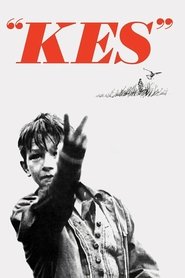
Kes (1970)
Chris Menges shoots from across the room or across the field, on long lenses, so behaviour unfolds without the self-consciousness a nearby camera creates — one of the founding statements of British observational style. Watch what Billy Casper's body does in the flying scenes: a boy who flinches through every other moment goes completely still, and a face the film has kept shut like a fist opens. Everything the film wants to say about class and possibility is in that contrast.
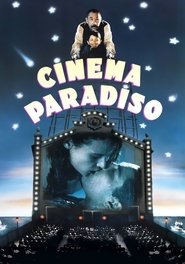
Cinema Paradiso (1988)
The film begins not with a goal but with news — a late-night call from home — and what it triggers isn't a plan but a flood of memory. Watch how Blasco Giurato uses the projector beam itself as a light source, turning the booth and the village square into spaces where the whole community dreams together. This is a film staking everything on the idea that watching, held long enough, is itself a form of feeling.
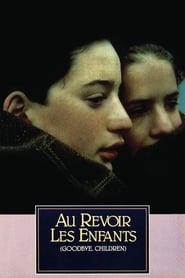
Au Revoir les Enfants (1987)
Renato Berta's naturalism is cold and tonally narrow — greys, browns, the bluish white of winter light in an unheated wartime school — and the camera keeps a watchful distance through the rhythms of dormitory, refectory, and classroom. Watch the young lead, Gaspard Manesse: he plays almost entirely through watchfulness, rarely through deed. Malle, drawing on his own childhood, builds the entire film toward the weight a single look can carry — and toward the terrible fact that a child's eyes are the one thing he cannot control.

Dancer in the Dark (2000)
Von Trier runs two films at once, and the switch between them is everything. The dramatic scenes are shot by Robby Müller in a deliberately ugly register — handheld, jittery, washed-out, snap zooms betraying the camera's presence — while the musical numbers erupt when industrial noise (a factory press, wheels on rails) locks into rhythm and the grey world briefly becomes a stage. Watch for the exact moment sound becomes music, and the exact moment it stops. Deneuve's presence is a deliberate echo of the classic musicals this film both loves and dismantles.

Three Billboards Outside Ebbing, Missouri (2017)
Notice the opening: one slow lateral tracking shot along three red rectangles — the only formally deliberate camera move in the film, and McDonagh spends it on billboards, things that can't move or act. Ben Davis otherwise shoots with striking restraint: frontal, still compositions, wide frames that hold characters against an indifferent landscape. Watch how grief keeps converting itself into action, and pay attention to what the world hands back each time.
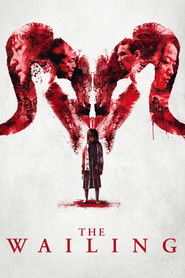
The Wailing (2016)
Hong Kyung-pyo builds two competing visual registers — a bemused, almost pastoral distance on this wet Korean village, and something far less stable — and the film pointedly never reconciles them. Watch the light: horror has trained you to expect that daylight settles questions, and Na Hong-jin shoots morning clarity as a promise the film has no intention of keeping. Here is a policeman, the genre's designated agent of seeing-then-doing, in a story where seeing has stopped leading anywhere.

Misericordia (2024)
Claire Mathon's photography is the film's most quietly expressive element: flat, unemphatic light over a village and its forests, and frames held a beat past comfort, so you honestly can't tell whether to brace or laugh. Guiraudie works in the great French provincial-crime lineage — a rural community cracked open by a death, its appetites surfacing — but watch how he gives aftermath more screen time than event, and how the camera absolutely declines to tell you how to feel. Killing, grieving, desiring, and m