Sightlines · a mini film course
Scanning the Frame: Twelve Serial-Killer Films About the Act of Watching
Every film in this set has a killer in it. Almost none of them is really about the killer. What connects them is a shared obsession with looking — where the danger sits in the frame, how long the camera is willing to hold still, and what your own eyes are doing while you wait. Some of these films turn you into a nervous searcher, scanning wide empty compositions for a shape that shouldn't be there. Some turn the camera into an accomplice, or a weapon, or a mirror aimed back at your seat. Watched together, they form a course in a single question: when a movie shows you something terrible, what exactly is your role?

Halloween (1978)
The founding move happens in the very first minutes: a long, gliding, unbroken shot that lends you a pair of eyes before you know whose they are. After that, watch how Dean Cundey's widescreen photography uses emptiness — a pale shape at the soft edge of the frame, half behind a hedge, gone when a character looks properly. Carpenter teaches you to distrust the corners of the image, and the whole slasher cycle learned it from him.
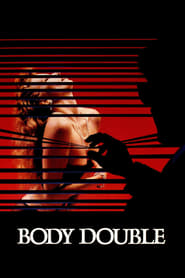
Body Double (1984)
De Palma never lets the act of looking dissolve into the story — the telescope's round vignette, the wobble of magnification, the apparatus always visible. Watch for the split-diopter shots that hold a face and a distant doorway both knife-sharp at once, and for the way the glossy L.A. light makes voyeurism feel luxurious right up until it feels guilty. This is Rear Window and Vertigo rebuilt with the seams deliberately showing.
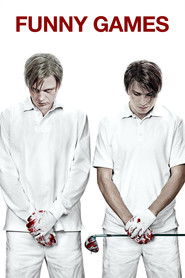
Funny Games (1997)
Haneke shoots a home-invasion thriller with everything the genre uses to excite you surgically removed: flat even light, long static takes, violence kept offscreen while the camera holds on rooms and faces far past comfort. Watch how the film refuses to cut when you most want release — the stillness itself becomes the confrontation. It's a chamber piece built to make you feel your own appetite for what isn't being shown.
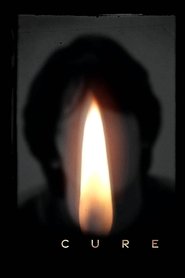
Cure (1997)
Where the '90s serial-killer film gave you charismatic monsters and grand designs, Kurosawa answers by subtraction. The camera keeps its distance — wide, desaturated, patient — holding figures inside grey environments rather than rescuing them with close-ups. Watch the flame of a cigarette lighter, the drip of water, a slow circling voice: the film builds its hypnotist's method out of the same materials cinema uses on you, a point of light in a dark room and a watcher gone quiet.

Dark City (1998)
A detective story dipped in near-total night: hard, sourced light carving figures out of darkness, canted angles, a vertical city inherited straight from German Expressionism's painted shadows. Watch the architecture itself — this is a metropolis with no visible sun and no trustworthy edges, and the film makes the geography your mystery. Notice how often a place-name is spoken like a prayer.
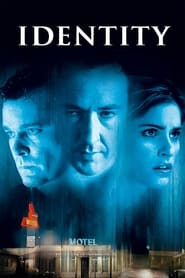
Identity (2003)
A storm, a Nevada motel, ten strangers, and a countdown — the old Agatha Christie closed-circle machine soaked in sodium-vapor amber and silver rain. Watch how deliberately artificial the space feels: identical numbered doors, wet reflective surfaces, a stagey, sealed-in quality that is doing quiet work under the thriller mechanics. Keep an eye on the room keys and trust nothing about what they seem to be counting.
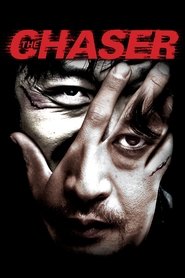
The Chaser (2008)
Na Hong-jin reverses the usual manhunt: here, finding out comes early and cheap, and acting on it is the agonizing part. The handheld foot chases through Mangwon-dong's steep stepped alleys are a masterclass in concrete geography — you always know who is above, who is below, who is one blind corner away. Watch how the film uses institutional dysfunction as its real antagonist, so that knowledge and helplessness ride in the same car.
Funny Games (2008)
Haneke's own near shot-for-shot English-language remake, and the doubling is the point: same rooms, same held takes, now with recognizable American stars whose faces carry a lifetime of your expectations into the house. Watch how the casting itself is a device — everything you've been trained to predict from a star's presence gets put on the table and interrogated. Seeing it alongside the 1997 version turns you into exactly the self-aware viewer the film is addressing.
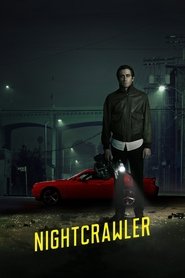
Nightcrawler (2014)
Robert Elswit shoots nocturnal Los Angeles as a glittering, depopulated grid — empty freeways, fluorescent convenience stores — and dares you to find it beautiful. Watch the evolving relationship between Lou Bloom and his camera: the question of where observation ends and authorship begins is the film's true crime. It's a noir where the sensational image itself is the commodity, and the market is you, watching the news.
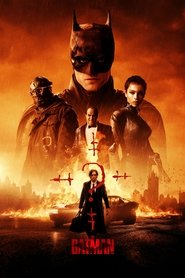
The Batman (2022)
Greig Fraser underlights this by blockbuster standards — faces falling into shadow, sodium-orange rain, a grammar borrowed from The Godfather's prince-of-darkness photography and Zodiac's cipher-driven procedural. Watch how the film makes watching the plot: everyone surveils everyone, and the killer's clue-laden messages are addressed to the detective, which means they're addressed over his shoulder to you. Notice how rarely this "comic-book film" behaves like one.
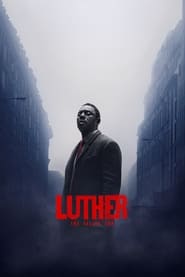
Luther: The Fallen Sun (2023)
Start with the coat — that rumpled overcoat John Luther inhabits like weather, a whole moral position worn as posture. This is the classical manhunt engine running at full glossy power: a city terrorized, a man who breaks every rule to act, London rendered as saturated, architectural night against blinding contrasts elsewhere. Watch it as the tradition the other films in this set complicate — the machine, intact and roaring.
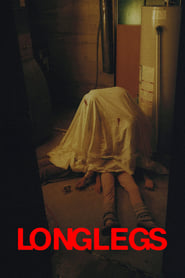
Longlegs (2024)
Andrés Arochi's compositions are the film's method: wide, symmetrical, drained to institutional grey, with the human figure marooned small in the frame and huge dead zones left for you to scan. Watch where the film puts its monster — at the top edge, cut off, slightly out of focus, pressing in from somewhere the frame refuses to hold. Your eye goes hunting before your mind admits it's afraid; that hunting is the whole experience.
Watch these together and something cumulative happens. Halloween teaches you to search the frame; Longlegs, nearly fifty years later, weaponizes that exact habit. Body Double and Nightcrawler make the camera itself the moral problem; the two Funny Games ask what you were hoping to see; Cure quietly suggests that sitting in the dark, watching a point of light, is not so different from being hypnotized. The manhunts — The Chaser, The Batman, Luther — show the pursuit machine running rough, running clever, and running clean, so you can feel exactly what the others are dismantling. None of these films will tell you where the killer is. All of them are watching you look.